


Commercial Mortise Lock vs Cylindrical Lock: Which to Spec & Why
Posted by ZenSupply Locksmith Desk on May 6th 2026
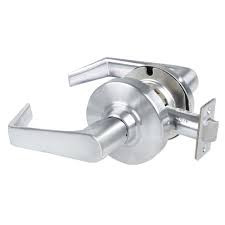
TL;DR — Quick Pick

- Schlage L9080 or Sargent 8255 mortise: spec for institutional, healthcare, and high-security openings where the door body can accept a 6"H × 4"D × 1"W pocket.
- Schlage ND80PD or Sargent 10X cylindrical: spec for offices, retail, and retrofit work where install speed and cost matter more than feature density.
- Mortise wins on function variety, trim options, and resistance to sustained abuse — but it costs more in both hardware and prep labor.
- Cylindrical wins on install time, retrofit compatibility (ANSI A115.2 prep is everywhere), and lower upfront cost.
- Both are ADA-compliant when specified with lever trim that meets §404.2.7 — the lock body type isn't the deciding factor.
What's the difference between a mortise lock and a cylindrical lock?

A mortise lock is a rectangular lock body that drops into a pocket machined into the door edge. A cylindrical lock is a chassis that passes through a 2-1/8" cross-bore in the door face with a 1" edge bore for the latch.
The mortise pocket is a standard 6" H × 4" D × 1" W on Schlage L-Series prep. That pocket holds the latch, deadbolt, auxiliary deadlatch, and all internal trim functions in a single steel case. Cylindrical locks separate functions — the latch is in the door, the deadbolt (if used) is a separate commercial deadbolt above it.
The split matters for spec. Mortise gives you one body doing more work. Cylindrical gives you faster prep and easier field service. Both are core commercial mechanical locks and both are widely stocked across Schlage, Sargent, BEST, and Yale.
How does each lock work: body, prep, and door cutout differences?

Mortise prep requires a routed pocket plus face-bore holes for the cylinder, thumbturn, and lever spindles. ANSI A115.1 governs the prep dimensions. A locksmith with a mortising jig can knock out a new prep in 30–45 minutes; on a steel door, expect longer.
Cylindrical prep is ANSI A115.2: a 2-1/8" cross-bore and 1" edge bore. Any door with prior cylindrical prep accepts a new cylindrical lock with no door modification. That's why Schlage L9000-series mortise lock bodies rarely show up in retrofit jobs unless the door was already mortise-prepped.
If you're converting from cylindrical to mortise on an existing door, plan on either replacing the door or using lock adapters and wrap-arounds to cover the old cross-bore. Going the other direction (mortise to cylindrical) almost always requires filler plates.
Is a mortise lock really more secure than a cylindrical lock?

At the same BHMA grade, the security gap is smaller than spec sheets suggest. Per A156.13, Grade 1 mortise operational = 1,000,000 cycles minimum. Per A156.2, Grade 1 cylindrical = 800,000 cycles minimum. Both grades require the same forced-entry resistance protocols within their respective standards.
Where mortise pulls ahead: the lock body is fully enclosed in steel inside the door, the deadbolt and latch share the same case, and trim attachment is through-bolted to the body rather than to the door face. That makes prying and wrenching attacks harder. Grade 1 cylindrical lever locks from Schlage, Sargent, and BEST are still highly resistant to attack — but the chassis is exposed to lever torque in a way mortise isn't.
For openings with elevated abuse risk, pair either lock type with door armor and protection plates. The frame and strike are usually the failure point, not the lock.
Which lock type lasts longer in high-traffic openings?
BHMA cycle minimums tell the story: Grade 1 mortise = 1,000,000 cycles minimum per A156.13. Grade 1 cylindrical = 800,000 cycles minimum per A156.2. In real-world institutional service — schools, hospitals, dorms — Grade 1 mortise bodies routinely outlast cylindrical chassis by years on the same door.
The reason is mechanical: the mortise body uses larger internal components, separate latch and deadbolt linkages, and serviceable parts. Cylindrical knob locks and lever locks pack everything into a smaller chassis, which simplifies install but accelerates wear at the spring cage and spindle on heavy-use doors.
For either type, plan replacement programs around replacement lock parts rather than full lock swaps — both Schlage L-Series and ND-Series are designed for field service.
How does cost, labor, and install time compare?
Mortise hardware lists higher than cylindrical at every grade. Expect a hardware premium of roughly 50–100% for mortise vs cylindrical at Grade 1. Add labor: mortise install on an unprepped door runs 2–3× the time of a cylindrical install, even for an experienced locksmith.
On a new construction spec where doors arrive factory-prepped, the labor delta narrows considerably. On retrofit work — especially commercial tenant turnover — cylindrical wins on total installed cost almost every time. Budget commercial lock parts and accessories for keying, strikes, and trim regardless of which body type you spec.
Need to spec a building's worth of locks now? Browse our commercial mechanical locks inventory — Schlage, Sargent, BEST, and Yale in stock with quote pricing on volume.
When should you spec a mortise lock: schools, healthcare, multifamily?
Spec mortise on:
- Patient room and exam room doors where you need hospital push/pull latches or specialty functions.
- Restroom and conference room doors needing indicator mortise locks (occupied/vacant).
- Dormitory and apartment entry doors — the L9080/8255 classroom and storeroom functions are institutional standards.
- Doors that take heavy abuse: gym entries, mechanical room doors, back-of-house in food service.
- Openings where the spec calls out architectural trim (escutcheon-style) not available on cylindrical.
When does cylindrical win: offices, retail, quick retrofits?
Spec cylindrical on:
- Standard office, retail, and tenant-improvement work where doors are pre-prepped A115.2.
- Retrofit jobs replacing existing cylindrical hardware — no door modification needed.
- Budget-driven specs where Grade 1 ND80PD or Sargent 10X meets the abuse profile.
- Openings where install speed matters and the GC is paying labor by the door.
For office and retail openings, the ND-Series and Sargent 10 Line cover most functions. Pair entries with separate Grade 1 cylindrical lever locks on storefront and a deadbolt only where the function calls for it.
What about electrified, keyless, and access control versions?
Both platforms electrify. Mortise: Schlage L9080EU/EL, Sargent 8200 with EL/EU prefix, BEST 45HW. Cylindrical: Schlage ND-Series electrified variants, plus the Schlage NDE-Series wireless cylindrical (NDE80LD/NDE80PD) for ENGAGE-managed openings.
Schlage's networked mortise platform is AD-Series — AD-200 standalone, AD-300 hardwired, AD-400 wireless 900 MHz to a PIM400 gateway. AD-Series is mortise form factor; cylindrical electronic equivalents are NDE-Series. See electrified mortise locks for spec sheets, or electronic keypad locks for standalone keypad options.
How Schlage, Sargent, BEST, and Yale stack up head-to-head
Schlage sets the institutional spec on both sides — L9080 mortise and ND80PD cylindrical are the most-spec'd commercial locks in North America. Allegion brand. Strongest for: spec consistency, parts availability, IC core compatibility (LFIC and SFIC).
Sargent (Assa Abloy) competes head-to-head with Schlage in institutional. The 8200 mortise series and 10X cylindrical match Schlage feature-for-feature, often at slightly lower list. Strongest for: school districts and federal GSA work where Sargent is on the spec.
BEST (dormakaba) leads on small-format IC core integration. The 45H mortise and 9K cylindrical are built around BEST SFIC keying — if the facility runs BEST cores, spec BEST locks. Strongest for: universities, K-12, and any campus on a BEST master key system.
Yale Commercial (Assa Abloy) — 8800 mortise and 5400LN cylindrical are competitive Grade 1 hardware. Strongest for: multifamily and hospitality where Yale residential familiarity carries into the commercial spec.
Choose Schlage when:
- The architect's spec calls for "Schlage or equal" — easier to hold the spec than substitute.
- You need the broadest IC core compatibility (Everest, Primus, classic).
- Replacement parts availability matters over a 20-year facility horizon.
- You're standardizing across mortise (L9000) and cylindrical (ND) on one keyway.
Choose Sargent when:
- You're on a federal, state, or school district contract where Sargent is approved.
- The 8200 mortise lever options match the architectural finish requirement.
- Lead times favor Sargent over Schlage on the current order.
- You need Signature Key Control restricted keyways.
Choose BEST when:
- The facility already runs BEST SFIC — keep the keying system intact.
- You need fast core swaps without pulling locks (the SFIC value).
- The campus standard already references BEST 45H or 9K.
- You want dormakaba-platform compatibility with electronic add-ons.
| Brand/Series | BHMA Grade | Cycle Rating | Best For | List Price Tier |
|---|---|---|---|---|
| Schlage L9080 (mortise) | Grade 1 per A156.13 | 1,000,000 minimum per A156.13 | Institutional, healthcare, dorms | $$$$ |
| Schlage ND80PD (cylindrical) | Grade 1 per A156.2 | 800,000 minimum per A156.2 | Offices, retail, retrofits | $$ |
| Sargent 8255 (mortise) | Grade 1 per A156.13 | 1,000,000 minimum per A156.13 | Schools, federal, GSA spec | $$$$ |
| Sargent 10X (cylindrical) | Grade 1 per A156.2 | 800,000 minimum per A156.2 | Commercial offices, multifamily | $$ |
| BEST 45H (mortise) | Grade 1 per A156.13 | 1,000,000 minimum per A156.13 | Campuses on BEST SFIC | $$$$ |
| BEST 9K (cylindrical) | Grade 1 per A156.2 | 800,000 minimum per A156.2 | K-12, universities | $$ |
| Yale 8800 (mortise) | Grade 1 per A156.13 | 1,000,000 minimum per A156.13 | Hospitality, multifamily | $$$ |
Spec the lock that matches the opening's abuse profile, install context, and existing keying system — then order from ZenSupply's commercial mechanical locks inventory for stock pricing on Schlage, Sargent, BEST, and Yale.