


Commercial Automatic Door Operators Buying Guide: Specs, Brands & ADA
Posted by ZenSupply Facility Solutions Team on Jun 11th 2026
At a Glance
- Low-energy operators (ANSI/BHMA A156.19) — LCN Senior Swing, Norton Rixson 6000/5800 ADAEZ series, dormakaba ED100/ED250 — fit the majority of interior accessible entries and don't require guide rails or presence sensors.
- Full-power operators (ANSI/BHMA A156.10) — Record 8100, Stanley, Horton — required at high-traffic entrances with sensor-activated operation; mandate safety sensors and guide rails.
- For ADA actuators, the 5 lbf interior opening force limit (ADA §404.2.9) doesn't apply when a power operator is provided — the actuator handles the work.
- Spec the operator to the door: weight, width, swing direction, and whether you need fire-rated (UL-listed) electromechanical hold-open with alarm release.
- Budget early for the BOM: operator + actuators + wiring + electric strike + power supply. The operator alone is half the install.
What is a commercial automatic door operator?
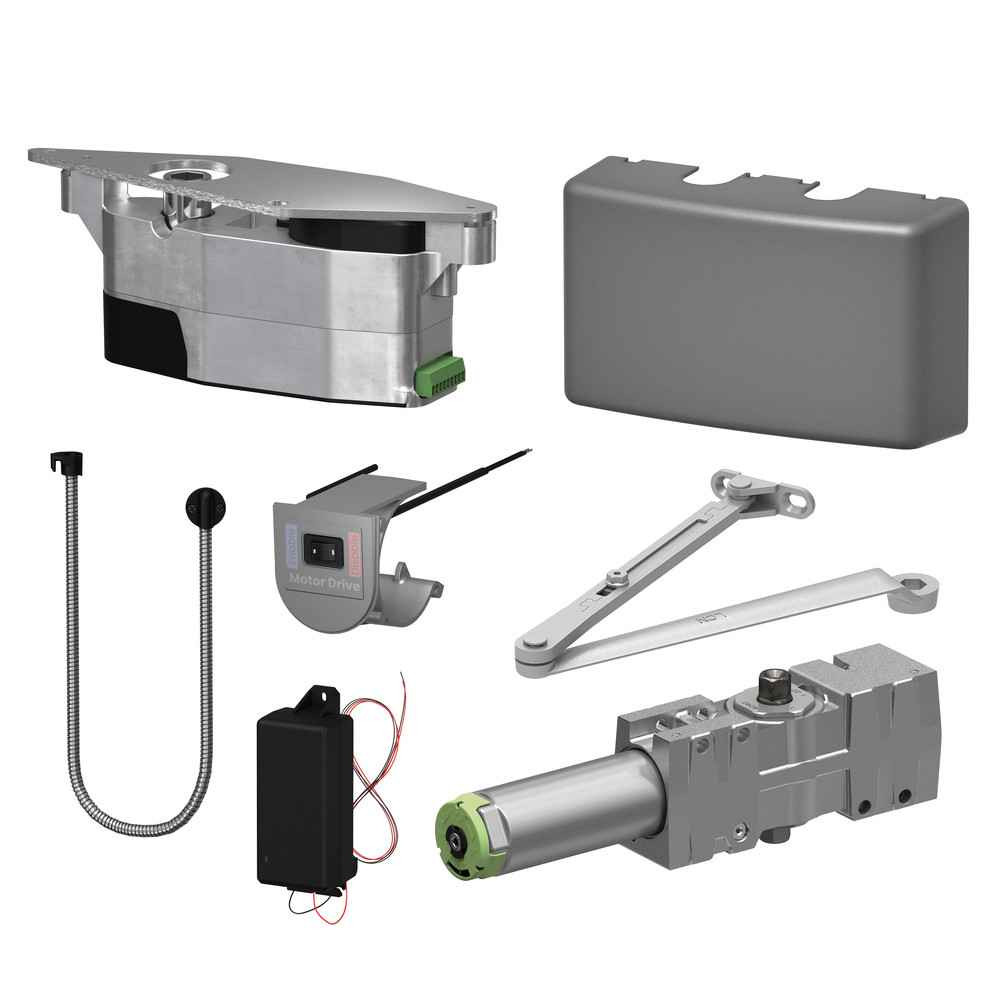
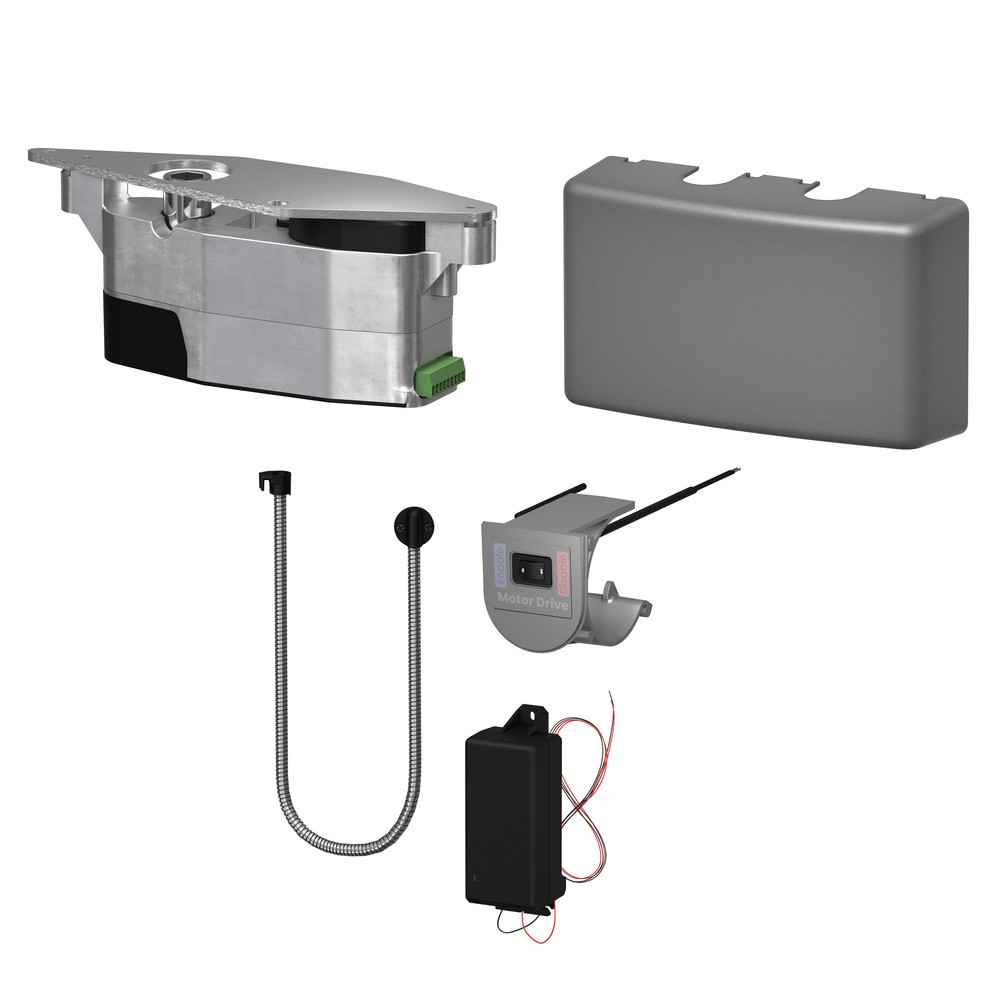
A commercial automatic door operator is a header-mounted (or, less commonly, concealed/floor-mounted) device that drives a swing door open and controls its closing cycle on command from a push plate, wave sensor, card reader, or building automation signal. Unlike a manual door closer, an operator powers the opening swing — typically with an electrohydraulic or electromechanical drive — and then functions as a closer on return.
Most commercial automatic door operators sold today are surface-mounted, swing-door, low-energy units. They're the workhorse of accessible entries at offices, schools, healthcare facilities, and multi-tenant buildings.
Low-energy vs. full-power operators: which do you need?
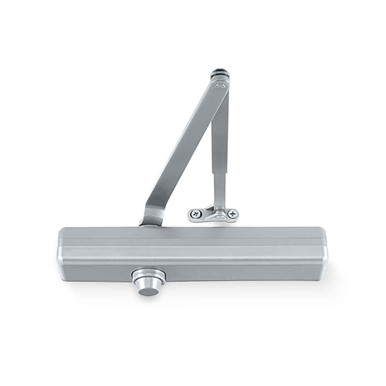
Low-energy (A156.19) operators are "knowing act" devices — the user must trigger them (push plate, wave, fob). Opening time is slowed (minimum opening time based on door width and weight) and opening force is limited so a person standing in the swing path isn't injured. No guide rails or presence sensors required.
Full-power (A156.10) operators open faster and respond to automatic sensors (motion detectors). Because the door can swing into someone unknowingly, the standard mandates safety mats or presence sensors and guide rails on the swing side. These belong at high-volume entrances — retail, hospitals, transit.
For most facility-manager projects — staff entries, restrooms, conference room ADA upgrades — low-energy is the answer. If you're replacing an existing manual closer like an LCN 4040XP, a low-energy operator drops onto the same header prep with minimal modification. See related surface mounted door closers for non-powered alternatives.
How do automatic operators meet ADA and ANSI/BHMA A156.19 / A156.10?
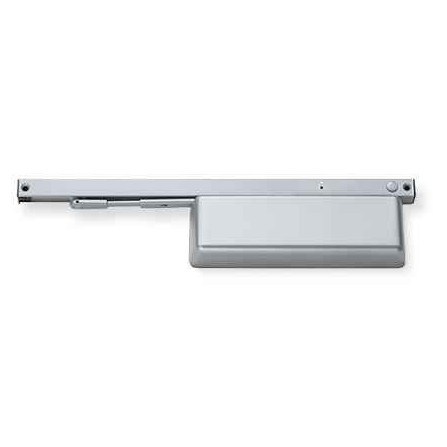
ADA 2010 Standards §404.2.9 caps interior manual door opening force at 5 lbf. Adding a power operator bypasses that requirement because the user no longer pushes the door open — the actuator does. Operators must still allow the door to be operated manually in a power-off condition.
A156.19 specifies low-energy operator behavior: minimum opening time, maximum kinetic energy in the swing, and break-out force requirements. A156.10 covers full-power including safety sensor zones. Both standards require manual operation if power is lost.
On fire-rated openings, NFPA 80 (2025) permits power operators provided the door still closes and latches on fire alarm signal. Electromagnetic hold-open built into operators (Norton Rixson SafeZone, LCN with smoke detector input) is permitted — mechanical hold-open is not. Coordinate with fire and life safety door control components when specifying for rated assemblies.
How does LCN compare to Norton Rixson, dormakaba, and Record?
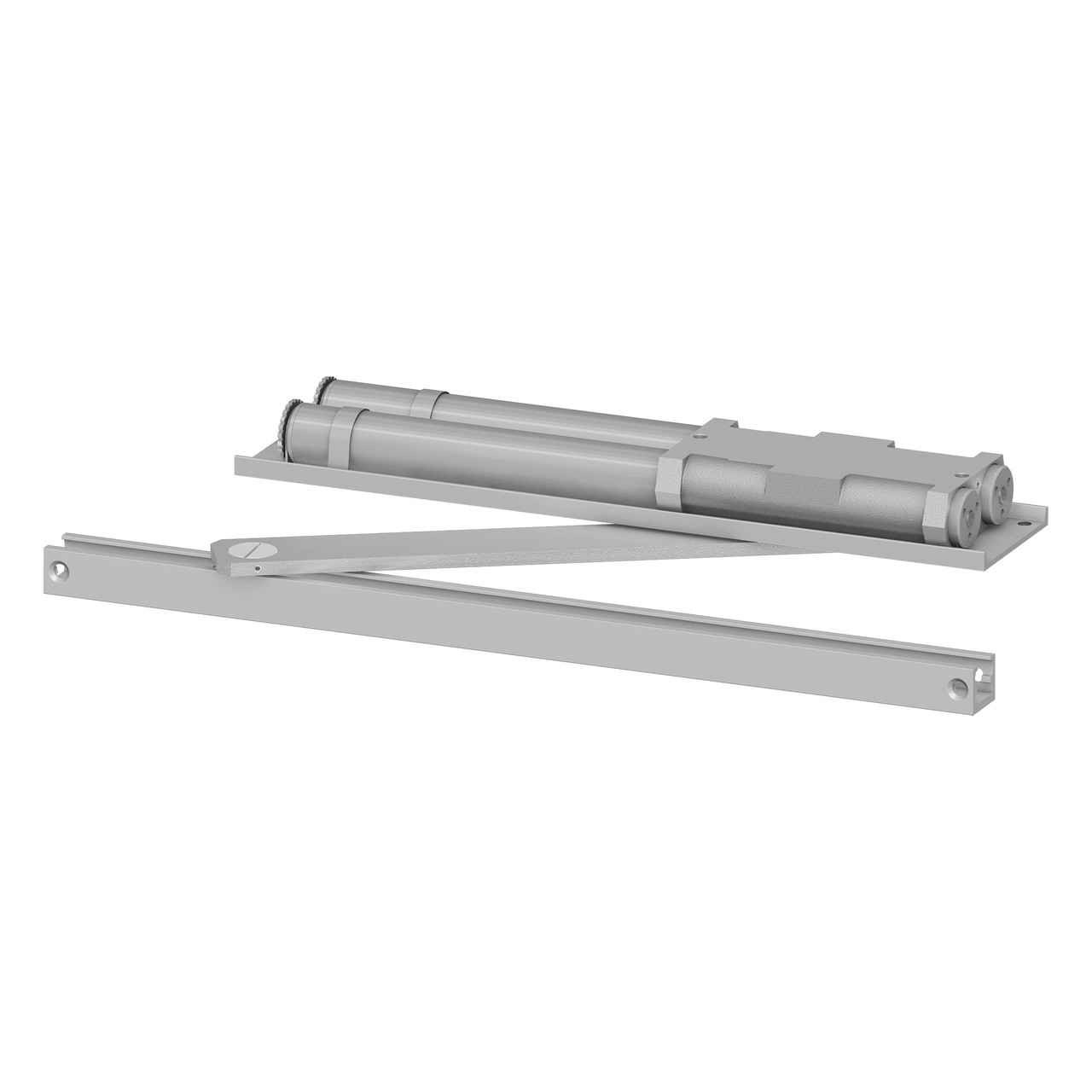
LCN (Allegion) dominates the spec sheet on institutional and government projects. The Senior Swing line is the legacy low-energy benchmark — robust electrohydraulic drive, field-serviceable, and shares the closer-family parts ecosystem with the LCN 4040XP world that mechanics already know. Premium tier on price.
Norton Rixson (Assa Abloy) splits the line: the 6000 Series electrohydraulic operators handle medium-duty single and double-door applications, while the 5800 ADAEZ Pro adds wireless programming and battery backup for retrofit-friendly installs. Strong choice when you want options without LCN's premium.
dormakaba ED100 and ED250 are common Euro-style electromechanical operators — quiet, compact header, good for clean modern interiors. Service network is real but smaller than LCN/Norton in North America. Record USA 8100 is a sensor-driven full-power operator typically seen at retail and healthcare main entries — not a low-energy direct competitor.
Choose LCN when:
- The project is institutional, government, or healthcare with a strict spec.
- You want a 30-year parts ecosystem and standardized field service.
- The opening already runs LCN closers — header prep and finish match.
- Budget allows premium tier for long-term TCO.
Choose Norton Rixson when:
- You need wireless programming or app-based commissioning (5800 ADAEZ Pro).
- Paired-door coordination matters via Norton Rixson 6000 Series master/slave configurations.
- The project mixes single and double doors and you want one brand.
- You want Assa Abloy's hardware ecosystem (Sargent, Norton, HES) on one spec.
Choose dormakaba or Record when:
- Architectural aesthetic drives the spec — slim header, minimal visual footprint (ED100/ED250).
- The opening is a high-traffic sensor-driven main entry (Record 8100, full-power).
- You're matching an existing dormakaba or Record service contract.
- European spec coordination is required.
Need to spec an operator now? Browse our commercial automatic door operators inventory — bulk pricing and same-day quotes for facility managers and GCs.
| Brand/Series | BHMA Standard | Cycle Rating | Best For | List Price Tier |
|---|---|---|---|---|
| LCN 9540 Senior Swing | A156.19 Low Energy | Per ANSI/BHMA A156.19 endurance test cycles | Institutional ADA entries, restrooms, offices | Premium ($$$$) |
| Norton Rixson 6000 Series | A156.19 Low Energy | Per A156.19 endurance test cycles | Retrofit installs with WiFi commissioning | High ($$$) |
| Norton Rixson 5800 ADAEZ Pro | A156.19 Low Energy | Per A156.19 endurance test cycles | Battery-backed retrofits, wireless actuators | High ($$$) |
| dormakaba ED100 / ED250 | A156.19 Low Energy | Per A156.19 endurance test cycles | Modern interiors, slim header aesthetic | High ($$$) |
| Record 8100 | A156.10 Full Power | Per A156.10 endurance test cycles | Sensor-driven main entries, retail, healthcare | Premium ($$$$) |
How are automatic operators activated — push plate, wave, or card reader?
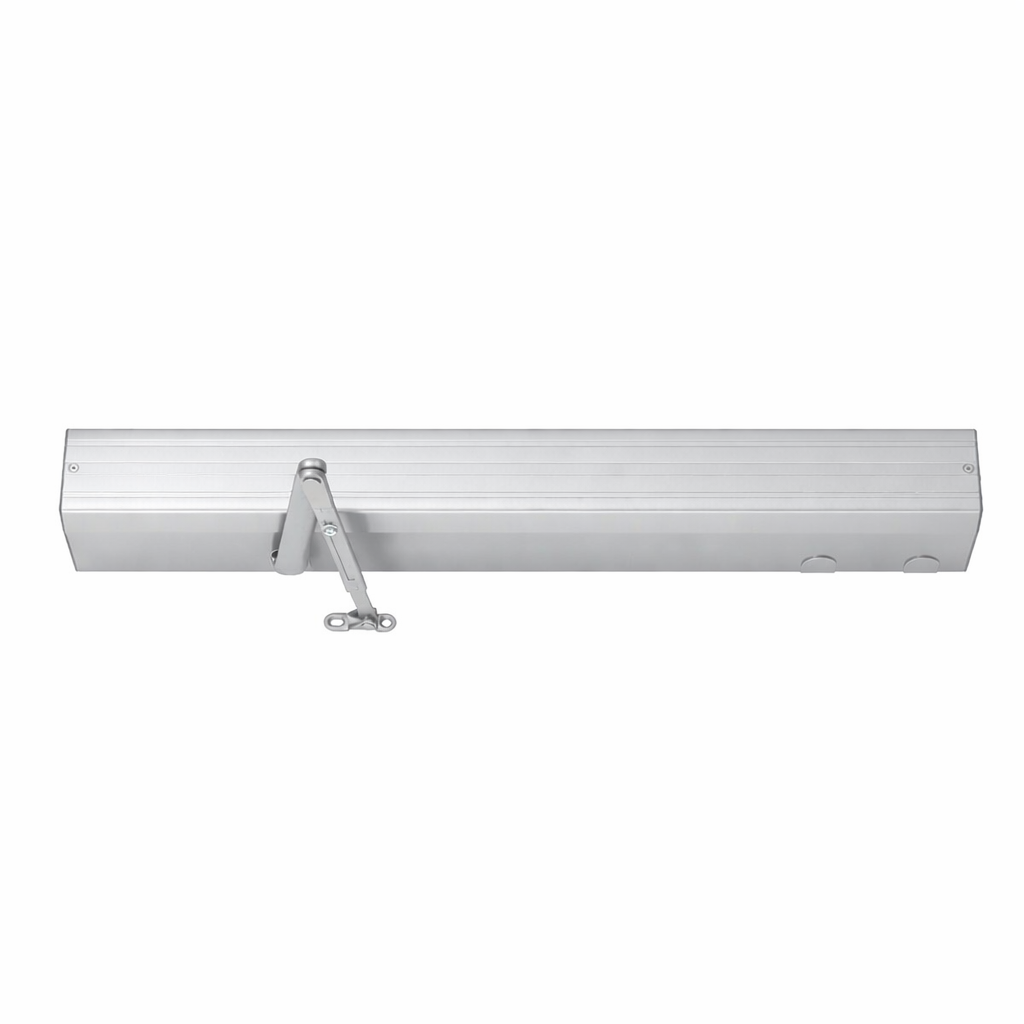
Push plates (4.5" or 6" round, jamb-mounted or wall-mounted at 34"–48" AFF per ADA reach ranges) are the cheapest and most reliable activator. Hardwired or wireless (RF) — Norton's wireless RF actuators and LCN wireless actuators eliminate the conduit run.
Wave/touchless sensors became standard post-2020 in healthcare and food service. Norton's Wave-to-Open and equivalent IR sensors mount in the same J-box as a push plate.
Card reader / access control integration: the reader unlocks the electric strike and pulses the operator's activation input simultaneously. Tie the access control relay output to the operator's dry-contact input. Coordinate keypads and readers with the operator's input voltage spec (most accept dry contact regardless of reader voltage).
How do operators wire into electric strikes and access control?
Standard sequence: credential read → access control unlocks strike → after a programmed delay (typically 0.5–1 second), the operator's activation input fires and the door swings. The delay prevents the operator from driving the door into a still-latched strike.
Most operators include a built-in time delay or a separate latch-retraction output. For exit devices, use an electric latch retraction (EL/QEL) exit device rather than a strike — Von Duprin 99-EL or equivalent pulls the latch before the operator opens. Spec the matching electric strikes by frame type and voltage (12 or 24 VDC; fail-safe vs. fail-secure per code).
Power planning: the operator typically wants its own 120 VAC dedicated circuit. Access control, strike, and reader run off a separate low-voltage power supply with battery backup. Don't piggyback.
What do installers need to know about header prep, hinges, and door weight?
The operator only works as well as the opening it's mounted to. Three failure modes show up in the field:
Hinges: upgrade to heavy-weight ball-bearing or continuous geared hinges for operator-driven doors. The cyclic load from an operator on a standard-grade hinge burns it out fast. Spec Grade 1 hinges per ANSI/BHMA A156.1 for power-operated doors. Browse commercial hinges for matched ratings.
Door weight and width: verify the operator's published capacity. Most low-energy units handle 36"–48" interior doors up to ~200 lbs. Beyond that, step up to a heavy-duty model (a heavy-duty Norton Rixson 6000 Series operator, LCN heavy-duty Senior Swing) or paired master/slave configuration for doubles.
Header prep: verify the frame can carry the operator's weight and screw pattern. Hollow metal frames usually need reinforcement; aluminum storefront needs a continuous backer.
How much do commercial automatic door operators cost installed?
Operator hardware itself runs from value-tier wireless retrofit units through premium institutional electrohydraulics — expect a meaningful step up versus a manual closer. The full BOM matters more than the operator price: actuators (1 per side minimum, often 2), low-voltage wire, conduit, electric strike or electrified exit device, power supply, and labor for header coordination.
Single-door interior low-energy retrofit typically lands in the lower install range; pair-door entries with access control integration sit substantially higher. Get the spec right before pricing — wrong operator class doubles the redo cost. For higher-security openings, compare against high security door closers first to confirm a power operator is required at all.
Ready to spec your project? Shop commercial automatic door operators at ZenSupply for LCN, Norton Rixson, dormakaba, and full integration components — or request a quote for project pricing on multi-opening installs.