


Commercial Door Thresholds and Weatherstripping: Complete Guide
Posted by ZenSupply Facility Solutions Team on Jun 11th 2026
TL;DR — Quick Pick

- Pemko — Industry standard for fire-rated and smoke-rated seals; extensive UL 1784 listings for smoke control assemblies
- NGP (Assa Abloy) — Premium automatic door bottoms and perimeter seals; reliable mechanical actuation for sound and thermal control
- Hager (independent, family-owned) — Cost-effective thresholds and weatherstripping for high-traffic openings; broad ADA-compliant product line
- ADA compliance — Maximum 1/2" vertical rise per ADA Section 404.2.5; beveled edges required for heights 1/4" to 1/2"
- Fire-rated assemblies — Use UL 1784-listed gasketing and seals; mechanical hold-opens prohibited per NFPA 80 (electromagnetic hold-opens with fire alarm release permitted)
What Are Commercial Door Thresholds and Weatherstripping?
Commercial door thresholds are horizontal transition components installed at the base of a door opening to bridge the gap between floor surfaces, provide weather protection, and meet accessibility requirements. Weatherstripping encompasses perimeter seals, gaskets, sweeps, shoes, and astragals that seal gaps around door edges to control air infiltration, sound transmission, smoke migration, and thermal transfer.
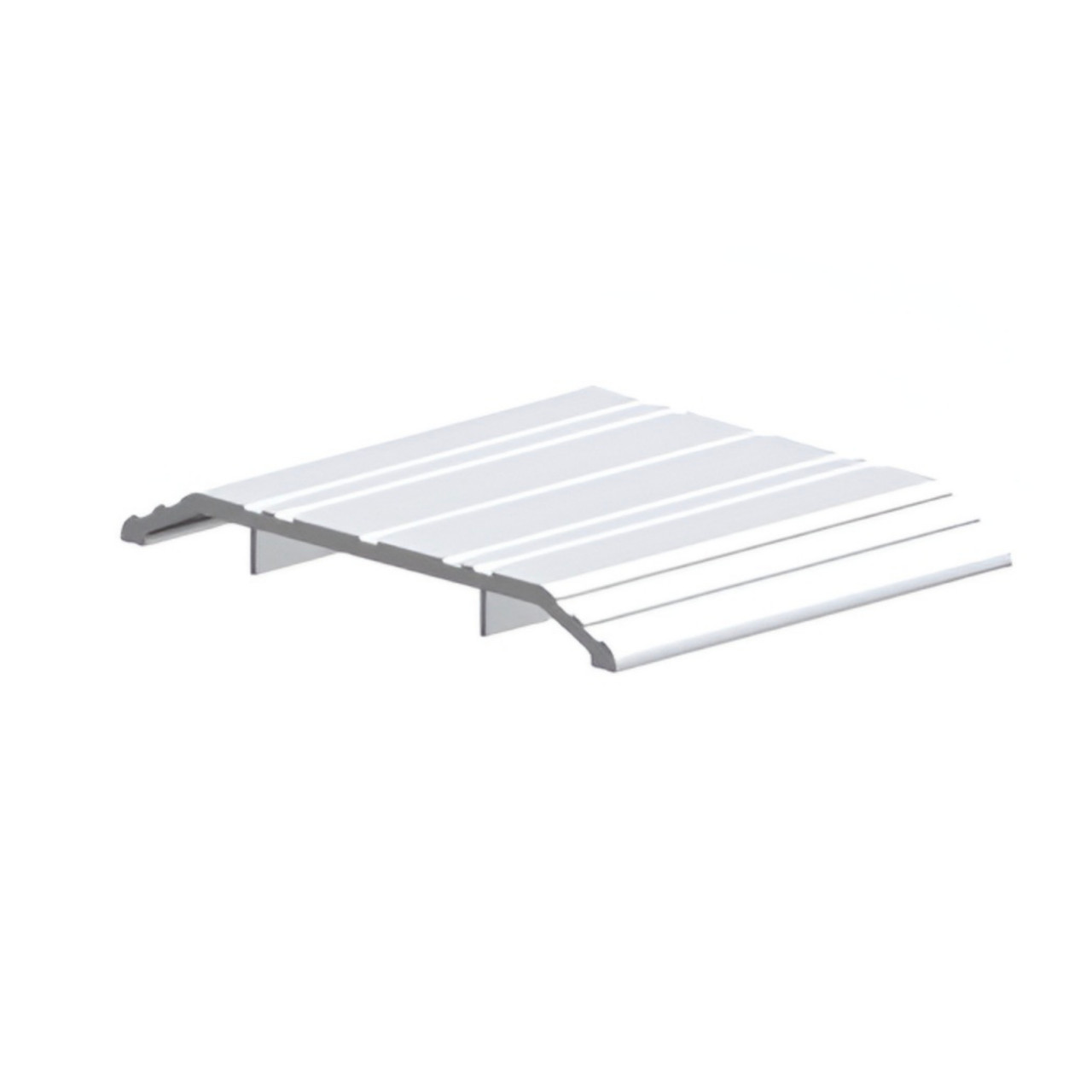
Thresholds serve three primary functions: they create a smooth transition between dissimilar floor heights, anchor weatherstripping components, and provide a mounting surface for door bottom seals. In commercial applications, thresholds must meet ADA Section 404.2.5 height restrictions (maximum 1/2" vertical rise, beveled if over 1/4"), accommodate high foot traffic without creating trip hazards, and integrate with fire-rated or smoke-rated door assemblies when required.
Weatherstripping systems address four performance criteria: air infiltration (measured in CFM per linear foot at specified pressure differentials), sound attenuation (STC ratings for acoustic assemblies), smoke control (UL 1784 certification for smoke-rated assemblies per NFPA 105), and thermal performance (U-factor and R-value for energy code compliance). Pemko weatherstripping solutions dominate fire-rated and smoke-rated applications due to extensive UL listings and NFPA 80 compliance documentation.
Material selection depends on opening type, traffic volume, and environmental exposure. Aluminum and stainless steel thresholds handle heavy traffic and exterior exposure. Bronze offers corrosion resistance for coastal installations. Vinyl, neoprene, and silicone seals provide compression recovery and durability across temperature extremes. Fire-rated assemblies require intumescent seals that expand under heat to block smoke and flame passage.
What Types of Commercial Door Thresholds Are Available?
Saddle thresholds span the full width of the door opening with a flat or slightly crowned profile. They're the most common type for interior applications where minimal height transition is acceptable. Saddle thresholds typically measure 3" to 6" wide and mount with screws or adhesive. ADA-compliant saddle thresholds feature beveled edges when height exceeds 1/4" and cannot exceed 1/2" total rise.
Bumper thresholds incorporate a raised center section that contacts the door bottom to provide positive closure and compression of door bottom seals. The raised bumper section (typically 1/4" to 3/8" high) creates a weather barrier while the beveled edges maintain ADA compliance. Bumper thresholds work well with automatic door bottoms and adjustable door shoes where consistent seal compression is critical.
Fluted or grooved thresholds feature longitudinal channels that capture and drain water away from the door opening. These are essential for exterior applications where wind-driven rain or snow melt could penetrate under the door. The grooves typically run parallel to the door swing and drain to the exterior side. Hager door hardware offers extensive fluted threshold options for commercial storefronts and building entrances.
Panic threshold systems integrate with astragals, gaskets and weatherstripping on fire-rated exit device assemblies. These specialized thresholds meet NFPA 80 requirements for fire door clearances (maximum 3/4" gap under door for 20-minute rated assemblies, 1/2" for higher ratings) while providing UL 1784-listed smoke seals. Panic thresholds must not impede emergency egress or create tripping hazards during evacuation.
Ramp thresholds provide gradual slope transitions for wheelchair access where floor height differences exceed ADA limits. These are typically used at exterior entries where interior floor elevation is higher than exterior grade. Ramp thresholds must maintain 1:12 maximum slope (1" rise per 12" run) and include edge protection to prevent wheelchair casters from slipping off the sides.
How Do You Choose Weatherstripping for Commercial Doors?
Door bottom seals attach to the bottom edge of the door and compress against the threshold to seal the gap. Three main types exist: door sweeps (surface-mounted with exposed fasteners), door shoes (mortised into door bottom with concealed fasteners), and automatic door bottoms (spring-loaded mechanisms that drop when door closes, retract when door opens). Door bottoms, sweeps and shoes selection depends on door thickness, gap dimension, and aesthetic requirements.
Perimeter gasketing seals the head and jamb gaps around the door perimeter. Compression gaskets mount in routed grooves or surface-applied channels and compress when the door closes. Common profiles include bulb seals (round cross-section for consistent compression), fin seals (flat blade design for narrow gaps), and Q-lon seals (foam-filled thermoplastic for superior recovery). Fire-rated assemblies require intumescent tape or graphite-impregnated seals that expand at 350-400°F to block smoke and flame.
Astragals seal the gap between double doors at the meeting stiles. T-astragals attach to the inactive leaf and provide a stop surface for the active leaf. Overlapping astragals create a weathertight seal by overlapping both door faces. Fire-rated astragals incorporate intumescent material and must be UL-listed for the specific door assembly. NGP sealing solutions include extensive astragal options for paired door applications.
Sound-rated seals require specific compression characteristics and continuous perimeter contact to achieve STC ratings. Neoprene and silicone materials provide superior acoustic performance compared to vinyl. Automatic door bottoms are essential for sound-rated assemblies because they eliminate the bottom gap entirely when closed. Expect 3-5 STC point improvement with proper perimeter sealing compared to unsealed assemblies.
Smoke-rated seals must carry UL 1784 certification and meet NFPA 105 requirements for smoke door assemblies. These seals undergo testing at 0.10" water column pressure differential and must limit air leakage to specified CFM per square foot of door area. Smoke seals typically combine silicone or neoprene compression gaskets with intumescent material for dual smoke/fire protection.
What Are ADA Requirements for Commercial Door Thresholds?
ADA Standards Section 404.2.5 establishes maximum threshold height at 1/2" for existing buildings and new construction. Thresholds between 1/4" and 1/2" high must have beveled edges with maximum 1:2 slope (50% grade). Thresholds 1/4" or less may have vertical edges. These requirements apply to all interior doors and accessible routes. Exterior doors and fire doors have no maximum threshold height under ADA, but must still provide accessible approach and passage.
The 1/2" measurement represents the vertical rise from the floor surface to the highest point of the threshold. For beveled thresholds, measure from the floor to the peak of the bevel, not the total threshold width. Many manufacturers offer "ADA-compliant" thresholds at 1/2" height with 1:2 bevels on both sides, providing 1" total width at the base.
Threshold material and finish affect slip resistance, particularly important for accessible routes. Aluminum thresholds should have mill finish, dark bronze anodized, or abrasive strips to prevent slipping when wet. Polished or bright finishes create slip hazards and should be avoided. Commercial door trim and accessories must balance aesthetic requirements with safety performance.
Automatic door operators and low-energy operators require specific threshold configurations to prevent interference with door swing. Thresholds under automatic doors should be flush or minimal height to avoid impeding door travel or creating resistance that triggers safety reversing mechanisms. Consult ANSI/BHMA A156.10 (power-operated doors) and A156.19 (low-energy operators) for clearance requirements.
Alterations to existing buildings follow different thresholds rules under ADA. When altering a doorway, you must bring the threshold into compliance if technically feasible. If structural constraints prevent meeting the 1/2" limit, document the condition and provide the lowest feasible threshold height. This exception does not apply to new construction, where full compliance is mandatory.
What Materials Are Best for Commercial Door Thresholds?
Aluminum thresholds dominate commercial applications due to favorable strength-to-weight ratio, corrosion resistance, and cost-effectiveness. Mill finish aluminum (natural silver-gray) provides good slip resistance and durability. Dark bronze anodized finish offers aesthetic appeal while maintaining corrosion protection. Aluminum thresholds handle moderate to heavy traffic and perform well in interior and covered exterior applications. Expect 10-15 year service life in typical commercial environments.
Stainless steel thresholds provide maximum durability for heavy traffic and harsh environments. Type 304 stainless offers good corrosion resistance for most applications. Type 316 stainless (marine grade) is essential for coastal installations or chemical exposure. Stainless thresholds cost 2-3× aluminum equivalents but deliver 20+ year service life. The material's hardness resists wear from wheeled traffic (carts, dollies, wheelchairs) better than aluminum.
Bronze thresholds offer traditional appearance and excellent corrosion resistance. Architectural bronze (90% copper, 10% zinc) develops a natural patina over time. Bronze costs 3-4× aluminum but provides superior wear resistance and aesthetic appeal for high-end installations. The material's density (3× aluminum) makes bronze thresholds heavier and more stable under foot traffic.
Vinyl and rubber thresholds serve specialized applications where metal is unsuitable. Recycled rubber thresholds provide slip resistance and cushioning for industrial environments. Vinyl thresholds work for temporary installations or low-traffic areas. Neither material meets fire-rating requirements or provides the durability needed for commercial main entries. Limit use to interior secondary doors or residential applications.
Composite thresholds combine aluminum extrusions with vinyl or rubber inserts. The aluminum provides structural support while the elastomeric insert creates the seal surface. This hybrid approach delivers better sealing performance than all-metal thresholds while maintaining structural integrity. Door trim and latch protection components often use similar composite construction for durability and performance.
How Do You Install Commercial Door Thresholds and Weatherstripping?
Threshold installation begins with surface preparation. Remove existing threshold and clean the substrate thoroughly. Check for level across the opening width—maximum 1/8" variation over 36" width. If the floor is uneven, use self-leveling compound or shim the threshold to maintain consistent height. Mark centerline of door opening and dry-fit threshold to verify proper alignment before fastening.
Fastening methods depend on substrate type. Concrete floors require tapcon screws or expansion anchors at 8-12" spacing. Wood subfloors use #10 or #12 wood screws into solid blocking. Metal door frames need self-tapping screws into frame base. Apply continuous bead of polyurethane or silicone sealant under threshold before fastening to prevent water infiltration and provide acoustic isolation. Countersink fasteners flush with threshold surface to prevent tripping hazards.
Door bottom seal installation requires accurate gap measurement. Measure from threshold surface to door bottom at three points (hinge side, center, latch side) with door closed. Select seal with compression range that accommodates the measured gap plus 1/8" for proper compression. For door sweeps, position seal so it compresses 1/4" to 3/8" against threshold when door is closed. For automatic door bottoms, adjust drop distance so seal compresses 1/4" minimum when activated.
Perimeter gasketing installation varies by type. Compression gaskets in routed grooves require precise groove dimensions—typically 1/4" wide × 3/8" deep for standard bulb seals. Clean groove thoroughly and apply gasket adhesive if specified. Press gasket into groove starting at top center and working toward corners. Miter corners at 45° for clean appearance. Surface-applied gaskets mount with pressure-sensitive adhesive or mechanical fasteners per manufacturer specifications.
Fire-rated and smoke-rated seal installation demands strict adherence to UL listing requirements. Use only seals listed for the specific door assembly. Install intumescent seals in continuous runs without gaps—even small breaks compromise fire rating. Door stops, holders and silencers must not interfere with seal compression or door closure. Verify proper door clearances per NFPA 80 after seal installation (maximum 1/8" perimeter gap, 3/4" bottom gap for 20-minute doors).
What Is the Difference Between Door Sweeps, Shoes, and Astragals?
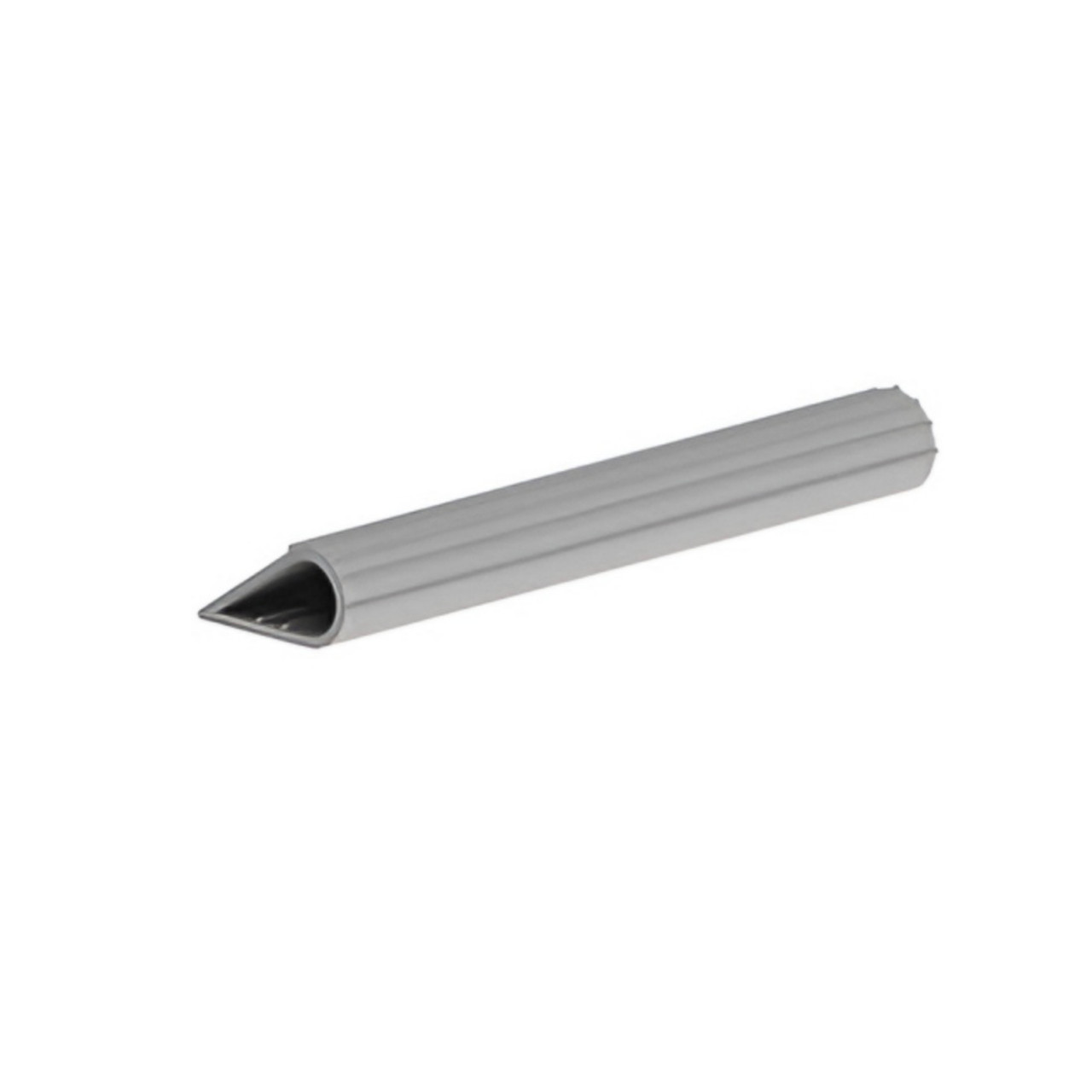
Door sweeps mount to the door face (interior or exterior) with exposed fasteners. The seal element (vinyl, neoprene, or brush) extends below the door bottom to contact the threshold. Sweeps are the easiest to install and adjust—simply reposition mounting screws to raise or lower seal height. They work well for retrofit applications where mortising the door bottom is impractical. Disadvantage: exposed fasteners and seal create visual interruption and potential snag points.
Door shoes mortise into a routed channel in the door bottom, concealing fasteners and creating a cleaner appearance. The shoe's metal housing (aluminum or stainless) provides structural support while the seal element (typically vinyl or neoprene) compresses against the threshold. Shoes require precise routing—typically 1/2" deep × shoe width. They offer superior durability compared to sweeps because the housing protects the seal from impact damage. Installation requires removing the door and routing equipment.
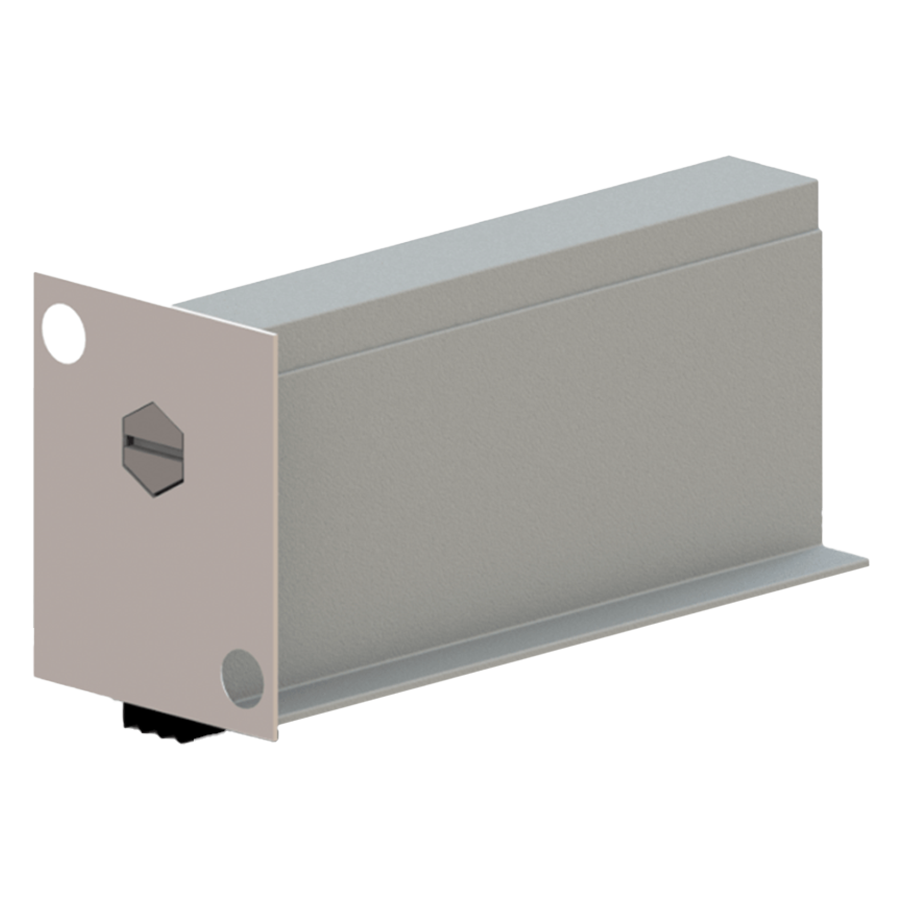
Automatic door bottoms (ADBs) incorporate a spring-loaded mechanism that drops the seal when the door closes and retracts it when the door opens. A plunger on the hinge jamb activates the mechanism. ADBs eliminate floor drag and wear on the seal element, extending service life significantly. They're essential for sound-rated assemblies (STC 45+) and carpet applications where continuous floor contact would impede door operation. Rockwood door accessories include extensive ADB options for commercial applications.
Astragals differ fundamentally—they seal the vertical gap between paired doors, not the bottom gap. T-astragals attach to the inactive leaf and provide a stop surface for the active leaf. Overlapping astragals create weathertight seals by overlapping both door faces. Fire-rated astragals incorporate intumescent material and must carry UL listing for the specific door assembly. Astragals require precise alignment to ensure proper door closure and seal compression.
Selection criteria: use sweeps for retrofit applications and low-budget projects. Specify shoes for new construction and high-traffic openings requiring clean appearance. Deploy ADBs for sound-rated assemblies, carpet installations, and applications where floor drag is problematic. Install astragals on all paired door assemblies requiring weather protection, sound control, or fire/smoke ratings.
How Do Fire-Rated and Smoke-Rated Seals Work?
Fire-rated seals incorporate intumescent material that expands when exposed to heat (typically 350-400°F activation temperature). The expansion creates a char barrier that blocks flame and hot gases from passing through door perimeter gaps. Intumescent seals expand 10-30× original thickness depending on formulation. Graphite-based intumescents provide the most reliable expansion characteristics and are specified for most commercial fire door assemblies.
UL 10C testing evaluates complete door assemblies, not individual components. The test exposes the assembly to standardized time-temperature curve (1700°F at 60 minutes for 90-minute rating). Seals must prevent flame passage through perimeter gaps and maintain door integrity throughout the rating period. NFPA 80 requires specific seal configurations based on door rating: 20-minute doors allow 3/4" bottom gap, 45-minute and higher require 1/2" maximum bottom gap with listed gasketing.
Smoke-rated seals undergo UL 1784 testing, which measures air leakage at 0.10" water column pressure differential. The test simulates smoke pressurization conditions during building fires. Seals must limit air leakage to 3.0 CFM per square foot of door area. Smoke seals typically combine compression gasketing (neoprene or silicone) with intumescent material for dual smoke/fire protection. NFPA 105 requires smoke seals on doors protecting vertical shafts, exit stairways, and horizontal exits.
Installation requirements for rated seals are strict. Seals must be installed per manufacturer's instructions and UL listing. Gaps in seal coverage void the rating—even 1" breaks compromise performance. Field modifications (cutting, splicing, or substituting materials) void UL listing. Fire and life safety door hardware assemblies require complete system approach where all components carry compatible UL listings.
Maintenance of fire-rated and smoke-rated seals is mandatory per NFPA 80. Annual inspections must verify seal integrity, proper compression, and absence of damage. Replace seals showing wear, compression set, or gaps. Document all inspections and maintenance—AHJs require records demonstrating ongoing compliance. Seal replacement intervals vary: intumescent seals typically last 10-15 years, compression gaskets 5-10 years depending on door cycles and environmental exposure.
Choose Pemko When:
- You need UL 1784-listed smoke seals for NFPA 105 compliance—Pemko carries the most extensive smoke seal listings in the industry
- Fire-rated assemblies require intumescent gasketing with proven UL 10C test data for specific door configurations
- Project specifications call out Pemko by name (common in institutional and healthcare specifications)
- You need technical support for complex sealing applications—Pemko provides detailed installation instructions and field support
Choose NGP When:
- Automatic door bottoms are required for sound-rated assemblies (STC 45+) or carpet installations
- Premium perimeter seals with superior compression recovery are specified for high-cycle applications
- You need coordinated sealing systems (threshold, perimeter gaskets, ADB) from a single manufacturer
- Project budget supports premium pricing (NGP products typically cost 15-25% more than commodity alternatives)
Choose Hager When:
- Cost-effective ADA-compliant thresholds are needed for multi-door projects with budget constraints
- You're sourcing complete door hardware packages and want single-source supply (Hager offers hinges, locks, thresholds, and accessories)
- Standard commercial applications don't require specialized fire/smoke ratings or premium performance
- Fast delivery is critical—Hager maintains deep inventory and ships quickly through distribution
| Brand/Series | Primary Application | Material Options | ADA Compliant | Fire/Smoke Rated | List Price Tier |
|---|---|---|---|---|---|
| Pemko Standard Thresholds | Interior/exterior entries | Aluminum, bronze, stainless | Yes (1/2" max height) | UL 1784 smoke seals available | $45-$120 per threshold |
| Pemko Fire-Rated Seals | Fire door assemblies | Intumescent, graphite | N/A (perimeter seals) | UL 10C listed, NFPA 80 compliant | $8-$25 per linear foot |
| NGP Automatic Door Bottoms | Sound-rated, carpet installations | Aluminum housing, neoprene seal | Yes (retractable design) | Some models UL listed | $85-$180 per unit |
| NGP Perimeter Seals | High-cycle commercial doors | Silicone, neoprene, Q-lon | N/A (perimeter seals) | Intumescent options available | $6-$18 per linear foot |
| Hager Thresholds | Standard commercial openings | Aluminum, mill or bronze finish | Yes (1/2" max height) | Limited fire-rated options | $30-$75 per threshold |
| Hager Door Sweeps/Shoes | General weatherstripping | Aluminum, vinyl seal | Yes (adjustable height) | Standard duty only | $15-$45 per unit |
| Rockwood Door Bottoms | Retrofit applications | Aluminum, stainless, brass | Yes (surface-mount sweeps) | Limited fire-rated options | $20-$65 per unit |
| Ives Thresholds | Architectural applications | Aluminum, bronze, stainless | Yes (1/2" max height) | Some UL-listed options | $40-$95 per threshold |
Need commercial door thresholds and weatherstripping now? Browse our door threshold inventory — ADA-compliant options in stock with same-day shipping for facility managers.
How Pemko Compares to NGP and Hager
Pemko (Assa Abloy) dominates fire-rated and smoke-rated applications through extensive UL listings and NFPA compliance documentation. Their intumescent seals and smoke gasketing carry UL 1784 certification for more door configurations than any competitor. Pemko's technical documentation is superior—detailed installation instructions, CAD drawings, and field support make complex sealing projects manageable. List pricing runs 20-30% higher than Hager equivalents, but the premium is justified for rated assemblies where compliance is non-negotiable.
NGP (Assa Abloy) focuses on premium automatic door bottoms and perimeter seals for sound-rated and high-performance applications. Their ADB mechanisms provide the most reliable actuation in the industry—spring-loaded plungers rarely fail even after 1,000,000+ cycles. NGP's silicone and Q-lon seals maintain compression recovery better than commodity vinyl alternatives, extending service life 2-3× in high-cycle applications. Pricing is premium (15-25% above Pemko, 35-45% above Hager), but total cost of ownership favors NGP in demanding environments.
Hager (independent, family-owned since 1849) delivers cost-effective thresholds and basic weatherstripping for standard commercial applications. Their aluminum thresholds meet ADA requirements and handle moderate traffic reliably. Hager's advantage is breadth—they manufacture hinges, locks, closers, and accessories, enabling single-source procurement for complete door packages. Quality is adequate for typical commercial work but lacks the refinement of Pemko or NGP. Expect Hager products to cost 30-40% less than Pemko equivalents with corresponding reduction in performance and longevity.
Material quality differs significantly. Pemko uses heavier-gauge aluminum extrusions (0.080" vs 0.063" for Hager) and higher-grade elastomers. NGP's neoprene and silicone seals resist compression set better than Hager's vinyl. These differences matter in high-traffic applications—Pemko and NGP thresholds maintain seal compression after 5-10 years while Hager products often require seal replacement at 3-5 years. For fire-rated work, Pemko is the clear choice. For sound-rated assemblies, NGP automatic door bottoms are essential. For budget-conscious standard commercial work, Hager delivers acceptable performance at attractive pricing.
Need help selecting the right threshold and weatherstripping system for your project? Shop commercial door thresholds at ZenSupply — we stock Pemko, NGP, and Hager with technical support to ensure proper specification and installation. Request a quote for volume pricing on multi-door projects.