


Commercial Hinge Buying Guide: How to Choose the Right Hinges
Posted by ZenSupply Facility Solutions Team on Jun 11th 2026
TL;DR — Quick Pick

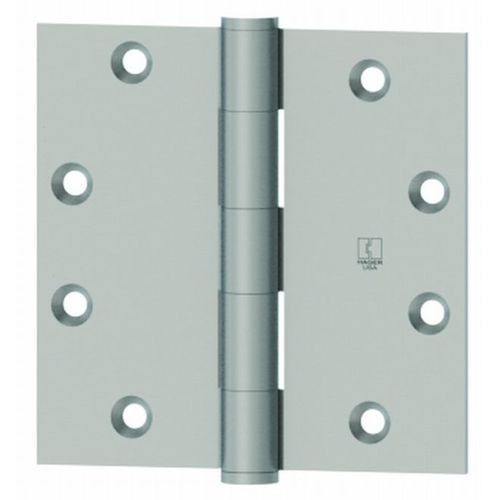
- Hager BB1279 — Ball bearing, heavy weight, Grade 1 per ANSI A156.1. Standard for high-traffic commercial doors.
- Ives 5BB1 — Ball bearing, standard weight. Reliable workhorse for medium-traffic applications.
- McKinney TA2714 — Antifriction bearing, heavy weight. Premium choice for institutional projects requiring extended service life.
- Bommer 1515 — Spring hinge for self-closing doors. Ideal for light commercial applications without closers.
- ABH A240 — Budget-friendly plain bearing option for low-traffic interior doors.
What Are the Different Types of Commercial Hinges?
Commercial hinges fall into five primary categories based on mounting configuration and function. Full mortise hinges recess into both the door and frame, creating a clean installation with no visible gap. Half mortise hinges recess into the door only, with the frame leaf surface-mounted. Half surface hinges reverse this — frame leaf mortised, door leaf surface-mounted. Full surface hinges mount entirely on the surface of both door and frame, common in retrofit applications where mortising isn't feasible.
Continuous hinges (piano hinges) run the full height of the door, distributing load across the entire edge. These excel in high-abuse environments like detention facilities or schools. Spring hinges incorporate a closing mechanism, eliminating the need for a separate closer on light doors. Double action hinges allow doors to swing in both directions, typical in restaurant kitchens and hospital corridors.
Electric hinges (power transfer hinges) route wiring through the hinge barrel to electrified hardware on the door. This eliminates exposed wire runs and meets aesthetic requirements for high-end commercial installations. Specialty hinges include hospital tip (rounded corners for gurney clearance), button tip (decorative ball finial), and flat tip (flush profile).
How Do I Choose Between Ball Bearing and Plain Bearing Hinges?
Ball bearing hinges use steel ball bearings between knuckles to reduce friction and extend service life. ANSI A156.1 Grade 1 ball bearing hinges are tested to 1.5 million cycles minimum — the standard for high-traffic commercial applications. Expect ball bearing hinges on exterior doors, high-traffic corridors, and any opening with a door closer. The bearing assembly handles the lateral thrust from closer arm pressure without binding.
Plain bearing hinges use a simple pin-and-knuckle design with no bearings. They're adequate for low-traffic interior doors under 50 cycles per day — storage rooms, mechanical closets, infrequently used offices. Plain bearing hinges cost 40-60% less than ball bearing equivalents, making them economical for large projects with mixed traffic patterns. Don't spec plain bearing on doors with closers or high cycle counts — premature wear and binding are inevitable.
Antifriction bearing hinges (oil-impregnated or Teflon-coated bushings) split the difference. They outperform plain bearing hinges but cost less than ball bearing. McKinney TA-Series antifriction hinges are common in institutional settings where budget constraints meet moderate traffic demands. Antifriction bearings handle 500,000-800,000 cycles — sufficient for most interior commercial applications.
Fire-rated assemblies require ball bearing hinges per NFPA 80 when equipped with closers. Plain bearing hinges on fire doors without closers are acceptable, but verify with the AHJ. Most specs default to ball bearing across the board to avoid field confusion.
What Hinge Weight Rating Do I Need for My Door?
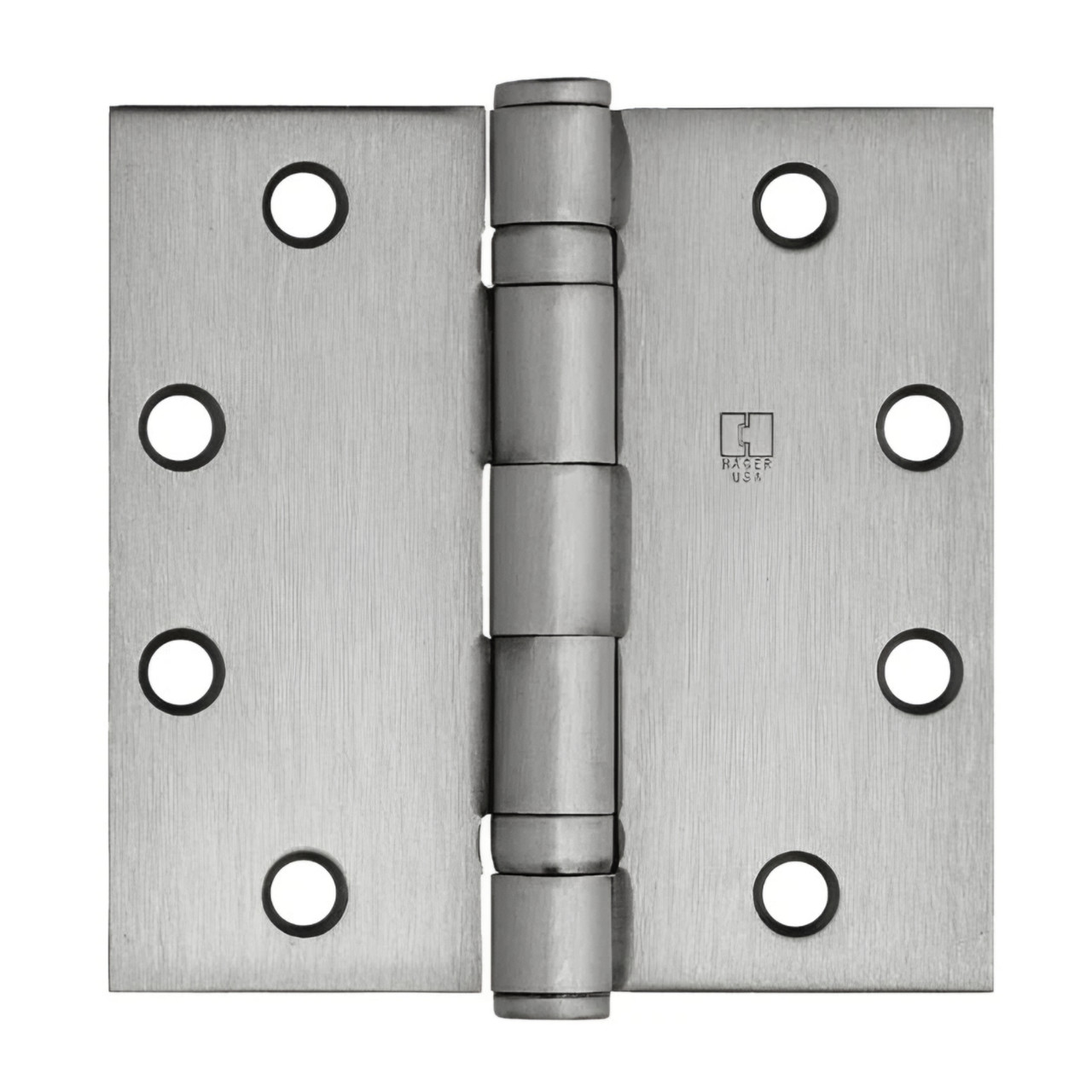
Hinge weight ratings — standard, heavy, and extra heavy — correspond to door size and weight capacity. Standard weight hinges (typically 4.5" × 4.5") handle doors up to 200 lbs and 3'0" × 7'0". Heavy weight hinges (5" × 5" or larger) support doors up to 300 lbs and openings to 4'0" × 8'0". Extra heavy weight hinges (6" × 6" and up) are specified for oversized or exceptionally heavy doors — solid core wood, steel-clad, or lead-lined radiation shielding doors.
The standard commercial door (3'0" × 7'0" hollow metal, 1-3/4" thick) requires three 4.5" × 4.5" heavy weight ball bearing hinges. Doors over 7'6" height require a fourth hinge. Doors over 90" require five hinges. This isn't arbitrary — it's driven by ANSI A156.1 and building code requirements for proper load distribution.
Hinge barrel diameter matters. Standard weight hinges use 0.180" pins. Heavy weight hinges use 0.250" pins. Extra heavy weight hinges use 0.312" pins or larger. Undersized pins shear under load, particularly on doors with closers generating high closing forces. Hager publishes load tables correlating door weight, size, and required hinge count — reference these during takeoff.
Continuous hinges are rated by load per linear foot. A typical 200 lb door requires a continuous hinge rated for 30-40 lbs/ft. Verify the manufacturer's load chart — continuous hinge capacity varies significantly by extrusion thickness and material grade.
What Are the Standard Hinge Sizes for Commercial Doors?
The most common commercial hinge size is 4.5" × 4.5" (height × width when open to 90°). This fits standard 1-3/4" thick doors in 4-9/16" or 4-7/8" frames. The 4.5" height provides adequate screw spacing for structural integrity. The 4.5" width accommodates the door thickness plus frame rabbet depth without binding.
Oversized doors require larger hinges. A 4'0" × 8'0" door typically uses 5" × 5" heavy weight hinges. Pairs of doors in a single frame often use 5" × 4.5" or 5" × 5" hinges to handle the increased load. Template hinges — factory-drilled for specific screw patterns — are standard on commercial projects to ensure consistent installation.
Hinge backset (distance from door edge to hinge center) is typically 1/4" for standard installations. Swing clear hinges use a 1-1/2" to 2" backset, projecting the door fully out of the opening when swung 90° to meet ADA clear width requirements. Verify the required clear opening width before specifying swing clear hinges — they add cost and complexity.
Narrow stile aluminum doors (1-1/2" to 2" stile width) require narrow stile hinges, typically 4.5" × 3.5" or smaller. These are common on storefront applications. Ives and Bommer both manufacture narrow stile hinges compatible with standard aluminum extrusions.
How Do I Select the Right Hinge Finish for My Application?
Hinge finish selection balances aesthetics, corrosion resistance, and budget. US26D (satin chrome plated) is the commercial standard — durable, corrosion-resistant, and competitively priced. It matches most locksets and exit devices in commercial buildings. US32D (satin stainless steel) offers superior corrosion resistance for coastal or high-humidity environments. Expect a 30-50% premium over US26D.
US10B (oil-rubbed bronze) is common in hospitality and upscale commercial interiors. The living finish darkens with age and handling — specify clear coat if consistent appearance is required. US3 (bright brass) and US4 (satin brass) are traditional choices for historic renovations or high-end residential-scale commercial projects. Brass finishes require regular maintenance to prevent tarnish.
Primer-coated hinges (US1P or USP) are field-painted to match doors and frames. This is standard on hollow metal doors where the entire assembly is factory-finished. Verify paint compatibility — some powder coat finishes require specific primer formulations. Black hinges (US10 or flat black) are specified for modern aesthetic projects or to match black anodized aluminum frames.
Exterior hinges require stainless steel (US32 or US32D) to resist corrosion from weather exposure. Don't spec plated finishes on exterior applications — the plating fails within 2-3 years in most climates. Commercial hinges in high-abuse environments (schools, detention, hospitals) benefit from stainless steel regardless of interior/exterior location — the material resists impact damage better than plated steel.
What Is the Difference Between Removable and Non-Removable Pin Hinges?
Removable pin (RP) hinges allow the pin to be extracted from the top, enabling door removal without unscrewing the hinge leaves. This simplifies maintenance and door replacement. Standard commercial practice uses RP hinges on interior doors where security isn't a concern. The pin is held in place by gravity and a small set screw or friction fit — it won't fall out during normal operation.
Non-removable pin (NRP) hinges have pins that cannot be extracted without destroying the hinge. These are mandatory on outswinging exterior doors where hinge knuckles are exposed to the unsecured side. An intruder could remove RP hinge pins and lift the door out of the frame, bypassing the lock entirely. ANSI A156.1 and most building codes require NRP hinges on all outswing exterior doors.
NRP hinges use set screws, crimped pins, or continuous welded pins to prevent removal. Verify the NRP method meets local code — some jurisdictions require specific designs. ABH manufactures NRP hinges with dual set screws accessible only when the door is open, providing tamper resistance without permanent pin installation.
Security studs (also called security tabs or dog points) are an alternative to NRP hinges. These are small projections on one hinge leaf that interlock with holes in the opposite leaf when the door is closed. Even if the pin is removed, the door cannot be lifted out. Security studs are common on high-security applications where field serviceability is required — the door can still be removed by opening it and extracting the RP pins.
Which Commercial Hinge Brands Are Most Reliable?
Hager dominates the commercial hinge market with the broadest product line and consistent availability. Their BB-Series ball bearing hinges are the industry benchmark — specified by name on most commercial projects. Hager is an Allegion brand, ensuring integration with other Allegion hardware (Schlage, Von Duprin, LCN). Expect competitive pricing and 2-3 week lead times on standard items.
Ives (Assa Abloy) offers premium hinges with tighter manufacturing tolerances than most competitors. Their 5BB1 ball bearing hinge is the spec-grade standard for institutional projects. Ives hinges cost 10-20% more than Hager equivalents but deliver smoother operation and longer service life. Ives is the preferred brand for healthcare and higher education projects where maintenance budgets favor quality over initial cost.
McKinney (Assa Abloy) specializes in antifriction and ball bearing hinges for high-cycle applications. Their TA-Series antifriction hinges are common in government and institutional settings. McKinney's electric hinges (power transfer) are among the most reliable in the industry — critical for electrified locksets and exit devices on fire-rated doors where wire routing through the frame isn't feasible.
Bommer manufactures spring hinges and specialty hinges (double-acting, floor-mounted, pivot). Their 1515 spring hinge is the industry standard for self-closing doors without closers. Bommer's floor closers integrate hinge and closer functions in a single unit — common on high-end commercial entrances and all-glass doors.
Select Hinges and ABH provide budget-friendly alternatives for projects where brand-name spec isn't required. Quality is acceptable for low- to medium-traffic applications, but don't expect the same service life as Hager or Ives. These brands are common in multifamily residential and light commercial projects where cost is the primary driver.
How Many Hinges Does a Commercial Door Need?
Standard commercial doors (up to 7'6" height) require three hinges minimum. This is driven by ANSI A156.1 and adopted by the IBC 2024 edition. The three-hinge configuration distributes door weight and closer forces across the frame, preventing sagging and binding. Hinge spacing is typically 7" from the top of the door to the top of the first hinge, 11" from the bottom of the door to the bottom of the third hinge, and the middle hinge centered between them.
Doors over 7'6" and up to 10'0" require four hinges. Doors over 10'0" require five hinges. This isn't negotiable — it's a structural requirement to prevent frame distortion under load. Heavy doors (over 200 lbs) may require additional hinges regardless of height. Consult the hinge manufacturer's load tables during specification.
Fire-rated doors follow the same hinge count requirements, with the additional constraint that all hinges must be steel (not brass or bronze) and ball bearing if equipped with a closer. NFPA 80 (2025 edition) prohibits plastic or nylon bearing materials on fire-rated assemblies — only steel ball bearings or oil-impregnated bronze bushings are acceptable.
Continuous hinges eliminate the hinge count question — the hinge runs the full height of the door. This is common on high-abuse applications (detention, schools, hospitals) where traditional butt hinges are vulnerable to forced removal. Continuous hinges also simplify installation on oversized or custom doors where standard hinge spacing doesn't apply.
Need commercial hinges now? Browse our hinge inventory — Hager, Ives, McKinney, and Bommer in stock for immediate shipment.
How Hager, Ives, McKinney, and Bommer Compare
Hager delivers the broadest product line with the most competitive pricing. Their BB1279 ball bearing hinge (4.5" × 4.5", heavy weight) is the default spec on most commercial projects. Availability is excellent — standard items ship within days. Hager's template program is the most comprehensive in the industry, covering virtually every commercial door and frame configuration. Quality is consistent, though not quite at Ives' level.
Ives hinges cost more but deliver tighter tolerances and smoother operation. The 5BB1 ball bearing hinge is the premium choice for institutional projects where long-term performance justifies higher initial cost. Ives' finish quality is superior — plating is more uniform and durable than most competitors. Lead times are longer (3-4 weeks on non-stock items), so plan accordingly.
McKinney specializes in antifriction and electric hinges. Their TA2714 antifriction hinge (4.5" × 4.5", heavy weight) is the go-to for projects requiring ball bearing performance at antifriction pricing. McKinney's electric hinges route 8-12 conductors through the hinge barrel — sufficient for most electrified locksets and exit devices. Quality is on par with Ives, with slightly better availability.
Bommer owns the spring hinge and specialty hinge market. Their 1515 spring hinge (single-acting, adjustable tension) is specified by name on most projects requiring self-closing doors without closers. Bommer's double-acting hinges (3029 series) are the standard for restaurant kitchen doors and hospital corridors. Floor closers (7812 series) integrate hinge and closer functions for all-glass doors and high-end entrances.
Choose Hager when:
- Budget is the primary driver and you need competitive pricing without sacrificing quality
- Project timeline is tight and you need immediate availability on standard items
- You're specifying across multiple Allegion product lines (Schlage locks, Von Duprin exit devices, LCN closers) and want single-source coordination
- Template requirements are complex and you need comprehensive factory support
Choose Ives when:
- Long-term performance justifies higher initial cost (healthcare, higher education, government)
- Finish quality is critical and you need superior plating durability
- You're specifying other Assa Abloy products (Sargent locks, Corbin Russwin, Yale) and want brand consistency
- Tighter manufacturing tolerances are required for smooth operation on high-cycle doors
Choose McKinney when:
- Antifriction bearing performance meets your cycle requirements and you want to avoid ball bearing pricing
- Electric hinges are required for electrified hardware and you need reliable conductor routing
- You need Ives-level quality with slightly better availability and lead times
- Institutional or government projects specify McKinney by name (common in federal and state facilities)
Choose Bommer when:
- Spring hinges are required for self-closing doors without closers
- Double-acting hinges are needed for kitchen doors or hospital corridors
- Floor closers are specified for all-glass doors or high-end entrances
- Specialty pivot hinges are required for oversized or custom door applications
| Brand/Series | BHMA Grade | Cycle Rating | Best For | List Price Tier |
|---|---|---|---|---|
| Hager BB1279 | Grade 1 | 1,500,000 minimum per A156.1 | High-traffic commercial, broad availability | $35-50 per hinge |
| Ives 5BB1 | Grade 1 | 1,500,000 minimum per A156.1 | Institutional, premium finish quality | $45-65 per hinge |
| McKinney TA2714 | Grade 1 | 1,500,000 minimum per A156.1 | Antifriction performance, electric hinges | $40-60 per hinge |
| Bommer 1515 | N/A (spring hinge) | 500,000 typical | Self-closing doors, light commercial | $50-75 per hinge |
| ABH A240 | Grade 2 | 500,000 minimum per A156.1 | Budget projects, low-traffic interior | $20-30 per hinge |
| Hager ECBB1279 | Grade 1 | 1,500,000 minimum per A156.1 | Electric hinge, 8-wire capacity | $120-160 per hinge |
Selecting commercial hinges requires balancing traffic patterns, door weight, security requirements, and budget constraints. Ball bearing hinges are the default for high-traffic and closer-equipped doors. Plain bearing hinges work for low-traffic interiors where cost savings matter. Hinge count follows door height — three minimum for standard doors, four for doors over 7'6", five for doors over 10'0". NRP hinges are mandatory on outswing exterior doors. Finish selection balances aesthetics and corrosion resistance — US26D for most commercial interiors, US32D for exterior or high-humidity environments.
Hager dominates the market with competitive pricing and broad availability. Ives delivers premium quality for institutional projects. McKinney specializes in antifriction and electric hinges. Bommer owns the spring hinge and specialty hinge segments. Verify hinge specifications against ANSI A156.1 and NFPA 80 requirements during takeoff. Template hinges simplify installation and ensure consistent screw patterns across the project.
Need help selecting the right hinges for your project? Browse our commercial hinge inventory or contact our team for technical support. We stock Hager, Ives, McKinney, and Bommer hinges for immediate shipment — no waiting on factory lead times.