


Eaton 3/4 in. Conduit Hub for BR Panel: Sizing, CH vs Square D Compatibility
Posted by ZenSupply Electrical Team on Jun 18th 2026
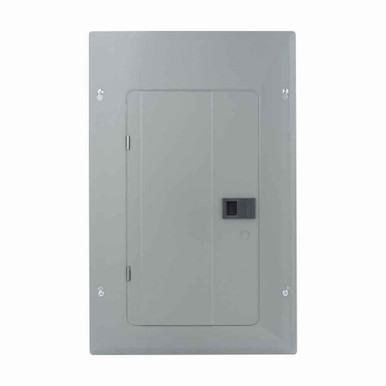
At a Glance
- Eaton DS Series rainproof hubs (e.g., the 200A NEMA 3R hub) fit BR and Cutler-Hammer CH loadcenter top knockouts — specify by trade size, not just brand.
- 3/4 in. trade size hub requires a 1.109 in. (standard 3/4 in. conduit) knockout — the typical concentric KO on Eaton BR top-feed enclosures.
- BR and Cutler-Hammer CH hubs are NOT cross-compatible with Square D QO or Homeline — Square D uses its own hub line (e.g., HUB-style); fitment is dimensional, not universal.
- Raintight ("Myers-style") hubs are required for NEMA 3R outdoor service — a standard locknut-and-bushing pair does not maintain the wet-location rating on a top feed.
- Always bond per NEC Article 250 when using concentric or eccentric knockouts on service-entrance equipment — a bonding bushing or bonding-type hub is mandatory.
What does an Eaton BR panel conduit hub actually do?

A conduit hub seals the entry point where conduit lands on a loadcenter. On a top-fed Eaton BR main breaker panel in a wet location, the hub does two jobs: it provides a threaded, raintight connection to rigid or IMC conduit, and it maintains the NEMA 3R rating of the enclosure.
Without a proper hub, a top knockout penetration on an outdoor panel violates the listing. Locknut-and-bushing fittings are not raintight on a top feed.
Eaton's BR and Cutler-Hammer CH platforms (the Cutler-Hammer commercial residential line) use proprietary hubs that bolt to the enclosure top via the integral hub provision. They're not generic — and they're not interchangeable across brands.
Which Eaton hub fits a BR load center?
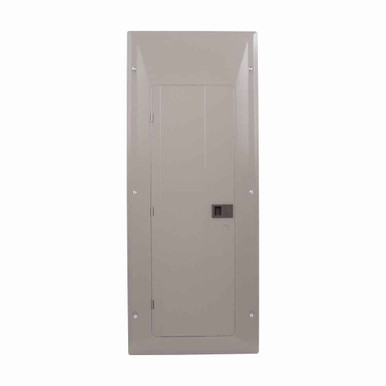
Eaton publishes specific hub part numbers indexed to enclosure size and amperage. For BR-series loadcenters with rainproof top-feed provisions, the Eaton DS Rainproof Conduit Hub 200A NEMA 3R covers the larger main-breaker enclosures up to 200A service.
For smaller 70–125A BR and Cutler-Hammer CH MLO/MCB enclosures, Eaton supplies a dedicated 3/4 in. hub — see the Eaton Cutler-Hammer CH Conduit Hub 3/4 Inch NEMA 3R for 70-125A Loadcenters. For 150–225A frames, the Eaton Cutler-Hammer CH Conduit Hub 3/4 in NEMA 3R Up to 200A is the correct callout.
Verify the enclosure's catalog sheet before ordering. The same 3/4 in. trade size doesn't mean the same bolt pattern — Eaton groups hubs by enclosure family. If you're feeding a load center sub panel, the hub group still applies based on the can, not the function.
Are Eaton BR, CH, and Square D conduit hubs interchangeable?
No. Conduit hubs are listed to the specific enclosure they ship with under UL 50 / UL 50E and the manufacturer's own engineering. Cross-brand mounting is not approved.
Eaton BR and Cutler-Hammer CH hubs share some part numbers within the Eaton family (the Cutler-Hammer CH hub for 150–225A enclosures is documented for both MLO and MCB loadcenters). Square D QO and Homeline use a separate hub line with different bolt geometry and gasket profile. Siemens uses its own as well.
If you're swapping a panel and inheriting a hub, the safe assumption is: it doesn't fit. Order the hub that matches the enclosure brand and amperage. Same principle as breakers — you don't put a Square D QO into a BR can, and you don't put a Square D hub on a Cutler-Hammer CH loadcenter. For breaker selection, see our miniature circuit breakers inventory.
What knockout size does a 3/4 in. conduit hub require?
A 3/4 in. trade size hub seats into a 3/4 in. concentric knockout — nominally 1.109 in. (28.2 mm) ID. Eaton BR and Cutler-Hammer CH top-fed enclosures are punched with concentric KOs that step from 1/2 in. through 1 in. or larger, depending on the frame size.
For sizing the conduit run, match the hub to the conduit. A 3/4 in. hub takes 3/4 in. rigid, IMC, or threaded EMT (via a threaded EMT coupling). Shop conduit at EMT conduit or rigid fittings depending on the install.
If the panel ships with a larger concentric ring already open and you need to step down, that's a reducing washer conversation — see the final section. The wrong path is forcing a smaller hub into an oversized opening with no seal.
Need the right panel and hub for an outdoor service? Browse our main breaker panels and load centers — filter by NEMA 3R for rainproof enclosures that accept Eaton DS and Cutler-Hammer CH hubs out of the box.
Is the Eaton 3/4 in. BR conduit hub raintight or NEMA 3R rated?
Yes — Eaton's DS and Cutler-Hammer CH rainproof hubs are labeled for use with NEMA 3R loadcenters and are listed under UL 514B as raintight fittings. The hub maintains the wet-location integrity of the top feed when properly torqued onto the threaded entry and used with the supplied gasket.
This is the functional equivalent of a Myers-style hub: a malleable iron or steel body with an integral O-ring/gasket and a threaded hub that engages rigid or IMC conduit threads. The term "Myers hub" is generic — Eaton's branded hubs do the same job and are listed for the specific enclosure.
For the outdoor enclosure itself, see NEMA 3R enclosures.
How do you install a 3/4 in. hub on an Eaton BR top knockout?
Sequence:
- Open the knockout cleanly. Use a knockout punch rather than a screwdriver. Ragged edges destroy the gasket seat.
- Confirm the KO diameter matches 3/4 in. trade size (~1.109 in.). If you popped the wrong concentric ring, you're now reducing-washer territory.
- Seat the hub body through the KO from outside with the gasket against the enclosure surface.
- Install the locknut/retainer from inside per Eaton's instructions and torque to spec.
- Thread the conduit into the hub. Rigid and IMC have NPT threads — engage at least five full threads.
- Verify the gasket is compressed evenly. A cocked hub leaks.
Do you need a bonding bushing with an Eaton conduit hub?
Per NEC Article 250.92(B) and 250.97, service-entrance raceways and circuits over 250V to ground require bonding around concentric or eccentric knockouts — a standard locknut is not sufficient. The bonding path must be electrically continuous to the grounded service conductor.
Eaton's listed raintight hubs that mount in a clean, fully-removed knockout (not a concentric/eccentric ring) generally satisfy the bonding requirement through the hub-to-enclosure mechanical connection, but the AHJ has the call. When in doubt, add a bonding bushing or bonding jumper.
For the bonding hardware, see bonding jumpers and grounding screws. On feeder (non-service) panels at less than 250V to ground, a listed hub on a clean KO is typically acceptable.
How does the Eaton BR/Cutler-Hammer CH hub compare to other options?
Choose the Eaton DS / Cutler-Hammer CH rainproof hub when:
- You're feeding an Eaton BR or Cutler-Hammer CH NEMA 3R loadcenter top-down with rigid or IMC.
- Service entrance application requires UL 514B raintight listing matched to the enclosure.
- You need a factory-engineered gasket and bolt pattern — no field-improvised seals.
- The panel will be inspected against the original manufacturer's listing.
Choose a Square D HUB-style hub when:
- The enclosure is a Square D QO or Homeline NEMA 3R loadcenter.
- Brand-listed compatibility is required by the spec or AHJ.
- The original install used Square D throughout and you're matching warranty terms.
Choose a generic Myers-style raintight hub when:
- You're landing conduit on a generic junction box or pull box, not a listed loadcenter.
- The enclosure manufacturer permits third-party UL 514B raintight hubs.
- You need a standalone fitting for a meter socket or disconnect with a flat top.
| Brand / Series | Listing | NEMA Rating | Best For | List Price Tier |
|---|---|---|---|---|
| Eaton DS Hub (200A) | UL 514B raintight | NEMA 3R | 200A BR/Cutler-Hammer CH outdoor service entrance | Mid |
| Eaton Cutler-Hammer CH Hub 3/4 in (70–125A) | UL 514B raintight | NEMA 3R | 70–125A BR/Cutler-Hammer CH MLO and MCB cans | Value |
| Eaton Cutler-Hammer CH Hub 3/4 in (150–225A) | UL 514B raintight | NEMA 3R | 150–225A BR/Cutler-Hammer CH MLO and MCB cans | Mid |
| Square D HUB-series | UL 514B raintight | NEMA 3R | QO / Homeline outdoor loadcenters | Mid |
| Generic Myers-style raintight hub | UL 514B raintight | NEMA 3R (fitting) | Junction boxes, meter sockets, generic enclosures | Value |
What are the common mistakes — reducing washers, cross-brand fitment, and service entrance use?
Reducing washers are not a substitute for the correct hub on a wet location. A reducing washer set adapts an oversized KO down to a smaller fitting in dry applications. On a NEMA 3R top feed, they don't maintain the raintight seal and they don't satisfy the listing.
If you opened a 1 in. concentric and need to land a 3/4 in. conduit, the right answer is usually a 3/4 in. raintight hub designed for the larger KO ring, or a properly listed reducing arrangement that the panel manufacturer approves. When the panel sheet doesn't list it, don't field-engineer it.
Cross-brand fitment is a recurring inspection failure. An Eaton Cutler-Hammer CH hub on a Square D QO panel is not listed. It may bolt up. It still fails inspection.
Service entrance use requires bonding. NEC 250.92(B) is non-negotiable on service raceways — verify your hub-to-enclosure path is bonded, or add the bushing.
For the full inventory of compatible Eaton enclosures and hubs, shop main breaker panels and load centers — match the hub to the can, not the other way around.