


Occupancy Indicator Deadbolts: Privacy Lock Guide for Restrooms
Posted by ZenSupply Facility Solutions Team on Jun 11th 2026
TL;DR — Quick Pick
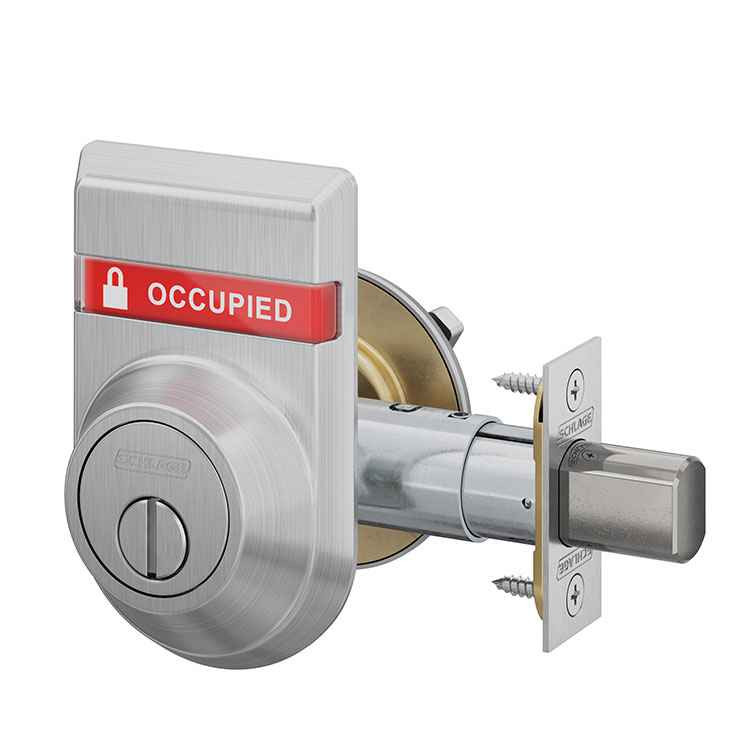
- Schlage B660P: Grade 1 indicator deadbolt for single-user restrooms — meets ADA §404.2.7 operability, 1" throw, ANSI A156.5 rated
- Sargent 480 series: Heavy-duty indicator deadbolt for high-traffic facilities — institutional-grade construction, visual occupancy indicator
- Best 40H series: IC-core indicator deadbolt for masterkeyed systems — SFIC/LFIC compatible, Grade 1 per A156.5
- Code requirement: IBC 1109.2.1.5.1 requires occupancy indicators on accessible single-user toilet rooms — visible from outside when locked
- ADA compliance: Thumbturn operation meets §404.2.7 — no tight grasping, pinching, or twisting required
What is an occupancy indicator deadbolt?

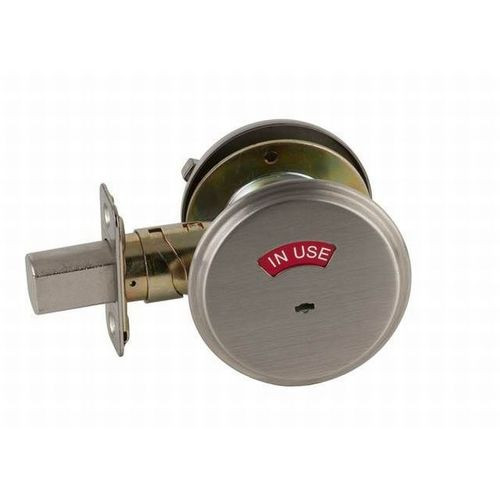
An occupancy indicator deadbolt is a privacy lock that displays "Vacant" or "Occupied" status on the exterior side when the interior thumbturn is engaged. The indicator mechanism rotates a visual flag or dial synchronized with the deadbolt throw — when you turn the thumbturn to lock the door, the exterior indicator automatically switches to "Occupied."
These locks are standard on single-user restrooms, family restrooms, unisex facilities, and accessible toilet rooms where code requires visible occupancy status. The indicator prevents unnecessary door testing and provides privacy confirmation without requiring signage or electronic sensors.
Most commercial indicator deadbolts use a mechanical linkage between the thumbturn and the exterior indicator plate. When the thumbturn rotates 90 degrees to throw the bolt, the linkage simultaneously rotates the indicator dial from "Vacant" (typically green) to "Occupied" (typically red). No batteries or electronics required — the system is purely mechanical.
Schlage commercial locks like the B660P use a 1" throw deadbolt with a stainless steel indicator plate. The indicator is visible from 10-15 feet in typical corridor lighting, meeting accessibility requirements for visual confirmation of occupancy status.
Where are occupancy indicator deadbolts required by code?

IBC 1109.2.1.5.1 requires occupancy indicators on accessible single-user toilet rooms and bathing rooms. The indicator must be visible from the corridor side when the door is locked. This applies to all single-user facilities on accessible routes — family restrooms, unisex restrooms, and accessible toilet rooms in commercial buildings.
The requirement exists to prevent unnecessary door testing by users who cannot see if the room is occupied. Visual indicators allow wheelchair users, individuals with mobility aids, and others to confirm occupancy status without approaching the door and attempting to turn the handle.
ADA 2010 Standards §404.2.7 requires that door hardware be operable with one hand without tight grasping, pinching, or twisting of the wrist. Thumbturn indicator deadbolts meet this requirement when the thumbturn diameter is 1-1/4" minimum and requires 5 lbf maximum turning force. Keyed locks on single-user restroom doors do not meet ADA operability requirements for the accessible route.
Indicator locks for commercial applications are also common on changing rooms, lactation rooms, and single-occupant shower facilities where privacy and visible occupancy status are both required.
How does an occupancy indicator deadbolt work?
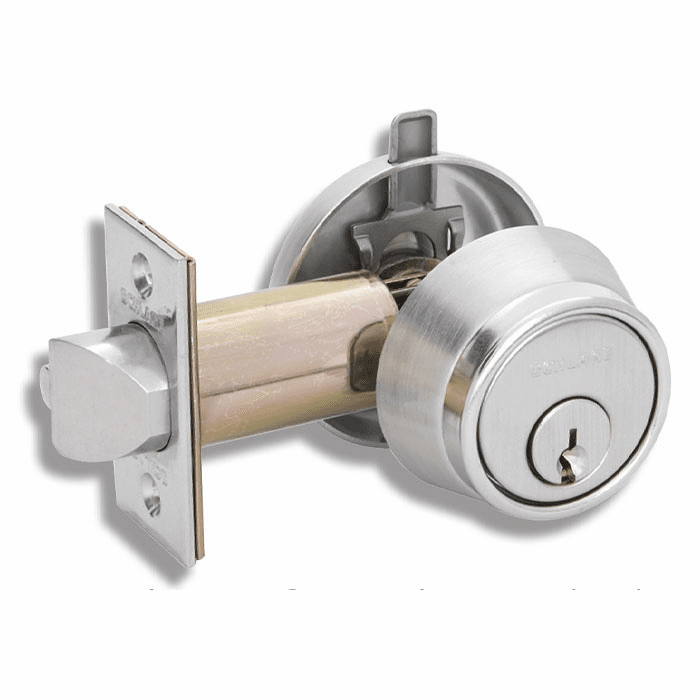
The indicator mechanism uses a cam or gear linkage between the interior thumbturn spindle and the exterior indicator dial. When you rotate the thumbturn clockwise to lock, the spindle drives the deadbolt latch while simultaneously rotating the indicator cam. The cam turns the exterior dial from "Vacant" to "Occupied" in a synchronized motion.
Most designs use a spring-loaded detent to hold the indicator in the "Vacant" or "Occupied" position. The detent prevents the indicator from drifting between positions due to vibration or door movement. When you unlock by rotating the thumbturn counterclockwise, the spring returns the indicator to "Vacant."
The indicator plate mounts on the exterior side of the door, typically in the same prep location as a standard thumbturn deadbolt. Standard prep is 2-1/8" cross bore at 40" AFF (above finished floor), with a 1" edge bore for the latch. The indicator plate covers the cross bore and displays the occupancy status through a window or rotating dial.
Sargent hardware indicator deadbolts use a brass indicator dial with engraved "Vacant/Occupied" text. The dial rotates 90 degrees between positions, with a positive stop at each end to prevent over-rotation. The mechanism is field-reversible for left-hand or right-hand door applications.
What's the difference between indicator deadbolts and indicator locks?
Indicator deadbolts are auxiliary locks — they provide privacy locking only, with no latch function. You install them above or below a separate passage or privacy lockset that provides the latching and lever/knob operation. The deadbolt adds a secondary lock with visual occupancy indication.
Indicator locks combine the latch, lock, and indicator in a single unit. These are typically cylindrical or mortise locks with an integrated occupancy indicator on the exterior trim. When you press the privacy button or turn the thumbturn on the interior, the lock engages and the exterior indicator switches to "Occupied."
Indicator deadbolts are common on retrofit applications where an existing passage lock is already installed. Adding an indicator deadbolt above the existing lock provides occupancy indication without replacing the entire lockset. This is cost-effective for restroom upgrades to meet IBC 1109.2.1.5.1 requirements.
Indicator locks are specified on new construction where the architect wants a single-unit solution. Commercial deadbolts with indicators are also used on doors where no passage function is needed — the deadbolt provides the only locking mechanism, and the door closes on a roller latch or ball catch.
Which occupancy indicator deadbolt brands meet ADA requirements?
Schlage B660P, Sargent 480 series, and Best 40H series all meet ADA §404.2.7 operability requirements when installed with compliant thumbturns. The thumbturn must be 1-1/4" minimum diameter, operable with 5 lbf maximum force, and require no tight grasping or twisting.
All three brands offer Grade 1 models per ANSI/BHMA A156.5 (Auxiliary Locks). Grade 1 requires 10 cycles minimum operational test, 800,000 cycles endurance, and Grade 1 security performance. These locks are built for institutional and high-traffic commercial applications.
Schlage B660P uses a 1" throw deadbolt with a stainless steel latchbolt and strike. The indicator plate is available in multiple finishes to match existing hardware. The thumbturn is field-reversible and accepts Schlage "C" keyway cylinders for keyed access from the corridor side when required.
Grade 1 deadbolts from Sargent use a brass bolt with a 1" throw and hardened steel pins for security. The 480 series indicator mechanism is enclosed in the lock body to prevent tampering. The exterior indicator dial is vandal-resistant stainless steel with engraved text that won't wear off.
Best locks 40H series accepts SFIC or LFIC cores for integration with masterkeyed systems. The indicator mechanism is independent of the core, so you can rekey without affecting indicator operation. This is critical for facilities that rotate cores on a regular maintenance schedule.
What ANSI grade should I choose for occupancy indicator deadbolts?
Grade 1 per ANSI/BHMA A156.5 is the standard for commercial restrooms in institutional, healthcare, education, and high-traffic retail facilities. Grade 1 requires 800,000 cycles minimum endurance — at 50 lock/unlock cycles per day, that's 43 years of service life. Grade 1 also provides the highest security rating for forced entry resistance.
Grade 2 is acceptable for light-traffic commercial applications — small office buildings, low-traffic retail, and residential common areas. Grade 2 commercial deadbolts require 400,000 cycles minimum per A156.5. At 50 cycles/day, that's 21 years — adequate for most commercial applications but not institutional-grade.
Grade 3 is residential-only. Do not specify Grade 3 indicator deadbolts for commercial restrooms — they will not meet code requirements for commercial occupancies and will fail prematurely in high-traffic applications.
For single-user restrooms in office buildings, retail, restaurants, and similar commercial occupancies, specify Grade 1. The cost difference between Grade 1 and Grade 2 is typically 15-25%, but the service life difference is 2:1. Grade 1 locks also provide better forced entry resistance, which matters for restrooms in unsecured areas.
How do you install an occupancy indicator deadbolt?
Standard prep for indicator deadbolts is 2-1/8" cross bore and 1" edge bore, same as a standard auxiliary deadbolt. The cross bore centerline is typically 40" AFF for ADA compliance, though you can install higher or lower depending on the existing lock prep and door height.
Install the latch assembly in the edge bore first. The latch faceplate should be flush with the door edge. Most indicator deadbolts use a 2-1/4" x 1-1/8" ANSI faceplate, though some institutional models use a 2-3/4" x 1-1/4" faceplate for added security.
Insert the exterior indicator assembly through the cross bore from the outside. The indicator plate mounts against the door face with two machine screws through the plate into the latch assembly. Align the indicator mechanism with the latch spindle before tightening — the cam must engage the spindle properly or the indicator won't rotate.
Install the interior thumbturn assembly from the inside. The thumbturn spindle passes through the latch and engages the exterior indicator cam. Tighten the thumbturn mounting screws, then test the indicator operation. Rotate the thumbturn from "Vacant" to "Occupied" several times to verify smooth operation and proper alignment.
Install the strike in the jamb at the same height as the latch. Most indicator deadbolts use a 1-1/8" x 2-3/4" ANSI strike with a 1" strike box depth. The strike lip should be flush with the jamb face. Test the deadbolt throw — it should extend fully into the strike box with no binding.
For retrofit installations over existing locks, maintain 5-1/2" minimum spacing between lock centers. Closer spacing can weaken the door stile and create stress points. If the existing lock is centered at 38" AFF, install the indicator deadbolt at 43-1/2" or higher to maintain proper spacing.
Need indicator deadbolts for restroom upgrades? Browse our indicator deadbolt inventory — Grade 1 models in stock for same-day shipping to facility managers nationwide.
How Schlage compares to Sargent and Best for indicator deadbolts
Schlage B660P is the volume leader for commercial indicator deadbolts. It's specified on 60%+ of new commercial restroom construction because of wide availability, competitive pricing, and proven field performance. The B660P uses Schlage "C" keyway cylinders, which integrate with most existing Schlage systems. List pricing typically runs 20-30% below Sargent and Best equivalents.
Sargent 480 series is the institutional standard. You'll find Sargent indicators in hospitals, universities, government facilities, and other high-security applications where durability and vandal resistance are critical. The 480 uses a heavier-gauge brass bolt and a fully enclosed indicator mechanism that resists tampering. Sargent uses LA keyway by default, though other keyways are available. Expect list pricing 25-35% above Schlage.
Best 40H series is the masterkey solution. If your facility uses Best IC cores across all locks, the 40H integrates seamlessly. The indicator mechanism is independent of the core, so you can rotate cores without affecting indicator operation. Best uses standard SFIC or LFIC cores — no proprietary keyway lock-in. List pricing runs 30-40% above Schlage, but the flexibility of IC cores often justifies the premium in large facilities.
All three brands offer Grade 1 models that meet or exceed ANSI/BHMA A156.5 requirements. Cycle life, security ratings, and ADA compliance are equivalent across brands. The choice comes down to existing keying systems, budget, and institutional preferences.
Choose Schlage B660P when:
- You need wide availability and fast delivery — Schlage is stocked by most distributors
- Your facility already uses Schlage "C" keyway — the B660P integrates with existing systems
- Budget is a primary concern — Schlage typically offers the lowest list pricing
- You're specifying for light-to-medium traffic commercial applications — office buildings, retail, restaurants
Choose Sargent 480 series when:
- You need maximum vandal resistance — the enclosed indicator mechanism resists tampering
- You're specifying for institutional applications — hospitals, universities, correctional facilities
- Your facility uses Sargent LA keyway or other Sargent systems
- You want the heaviest-duty construction available — Sargent uses thicker brass and heavier springs
Choose Best 40H series when:
- Your facility uses Best IC cores across all locks — the 40H accepts SFIC/LFIC cores
- You need core rotation flexibility — swap cores without affecting indicator operation
- You're managing a large facility with complex masterkeying — Best IC systems scale efficiently
- You want to avoid proprietary keyway lock-in — Best uses standard IC core formats
| Brand/Series | BHMA Grade | Cycle Rating | Best For | List Price Tier |
|---|---|---|---|---|
| Schlage B660P | Grade 1 | 800,000 minimum per A156.5 | Commercial restrooms, office buildings, retail | $180-240 |
| Sargent 480 series | Grade 1 | 800,000 minimum per A156.5 | Institutional, healthcare, high-security facilities | $240-320 |
| Best 40H series | Grade 1 | 800,000 minimum per A156.5 | IC-core systems, large facilities, masterkeying | $260-340 |
| Schlage B560P (Grade 2) | Grade 2 | 400,000 minimum per A156.5 | Light-traffic commercial, small offices | $120-160 |
All pricing reflects typical list pricing for standard finishes (626 satin chrome, 625 bright chrome, 613 oil-rubbed bronze). Specialty finishes and custom keyways add 15-30% to list pricing. Volume pricing for 10+ units typically discounts 25-35% off list.
For single-user restroom applications, all three brands provide equivalent ADA compliance and code conformance. The decision comes down to existing keying systems, institutional standards, and budget. Schlage offers the best value for most commercial applications. Sargent provides maximum durability for institutional use. Best integrates seamlessly with IC-core masterkey systems.
Need occupancy indicator deadbolts for your facility? Shop our indicator deadbolt inventory — Schlage, Sargent, and Best models in stock with same-day shipping. Can't find the exact model you need? Request a quote and we'll source it for you.