


You may also like


Intermatic 7-Day Programmable Timer Switch 125V 15A with Battery Backup and Random Mode
Model: INT-EI500C
Intermatic 7-Day Programmable Timer Switch 125V 15A with Battery Backup and Random ModeAdvanced 7-Day Programming with 14 ON/OFF Events for Versatile Lighting ControlThe Intermatic 7-Day Programmable...
Intermatic
$152.93
$111.30


Intermatic EI500WC 7-Day Programmable Timer Switch 125 VAC 15A with LCD Display
Model: INT-EI500WC
Intermatic EI500WC 7-Day Programmable Timer Switch 125 VAC 15A with LCD DisplayProfessional lighting and ventilation control with advanced scheduling capabilitiesThe Intermatic EI500WC delivers...
Intermatic
$152.93
$91.76

Locknetics CSW-100 / CSW-200 Flush Mount Concealed Desk Release; SPDT Switch
Model: LOCKNETICS-CSW
CSW-100 - Flush mount concealed desk release; S.P.D.T. switchCSW-200 - Surface mount concealed desk release; S.P.D.T. switch; Narrow stile
The CSW Series of switches were designed for a concealed...
Locknetics
$47.00
$31.33
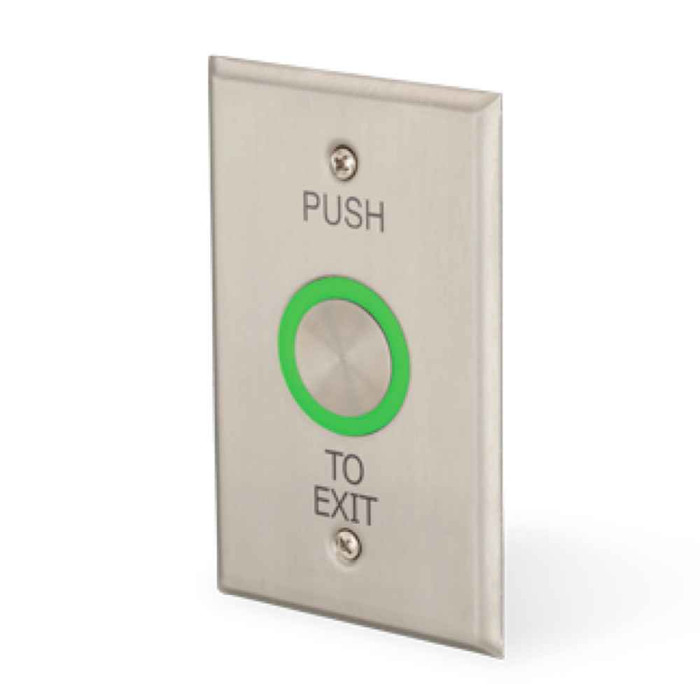
TS-100 - Dual LED status indicator with programmable timer; S.P.D.T. switch
TS-100-N - Dual LED status indicator with programmable timer; S.P.D.T. switch; Narrow plate
The touch switch is a cap sense style switch. There is no movable action in the switch, but instead only a touch is required to operate it. The illuminated bi-color LED provides easy status indication. Touch Sense Switch, Touch To Exit, Single Gang Plate, Satin Stainless Steel. Including pushbuttons, specialty switches, digital keypads and more. Locknetics offers access control accessories for a variety of access control-related needs and situations.
FEATURES
- Dual LED Indicates Inactive / Active Status
- 12/24 VDC, SPDT Switch Contacts Rated at 2A/30VAC
- Programmable Timer Output 1-40 Second Adjustable
RESOURCES & DOWNLOADS
Manufacturer Resources
Product Specs
- Subcategory:
- Sensors, Switches, Relays and Timers
- Series:
- TS Series
- Product Group:
- Electronic Access Controls
- Product Subgroup:
- Sensors, Switches, Relays and Timers
- Product Type:
- Switches
- Commercial/Residential:
- Commercial
- Product Model:
- TS-100
- Product Category:
- Electronic Access Controls
- Department:
- Door Hardware
Locknetics TS-100 – Frequently Asked Questions
1) How does the Locknetics TS-100 touch switch work if there's no button to press?
The TS-100 is a cap sense switch, so nothing moves. A touch on the plate operates it, and the bi-color LED tells you whether the output is inactive or active. With no mechanical action there's no plunger or spring to wear out from repeated exit traffic, which is why touch plates get specified on high-use openings.
2) Can I set how long the door stays unlocked with the TS-100 touch switch?
Yes, the TS-100 has a programmable timer output adjustable from 1 to 40 seconds. That's the window the output holds after a touch, so you set it to how long you want a mag lock released. Short settings suit a single person exiting; the longer end of the range is what you use where someone is pushing a cart or a wheelchair through the opening.
3) What's the difference between the TS-100 and the TS-100-N?
Function is identical, the plate is not. Both are dual LED status indicator switches with the programmable timer and an SPDT switch; the TS-100-N comes on a narrow plate. Standard TS-100 mounts to a single gang plate. Pick the narrow version where you're mounting on a mullion or a jamb face too tight for a single gang box.
4) I need hands-free exit with no contact at all, is the TS-100 the right switch?
No. The TS-100 still requires a touch on the plate to operate. For a no-contact release, the RCI 910TC Series touchless actuator runs on the same 12/24 VDC and adds a 433 MHz remote control, and the RCI 913 microwave motion switch uses doppler radar and is called out for sterile environments. Those are the ones for a clean room, a kitchen, or a patient corridor where nobody should be putting a hand on a plate.
5) Will the TS-100 handle the current for the automatic door operator on my vestibule?
Probably not directly. The TS-100 contacts are rated 2A at 30VAC, which suits low-voltage release and signaling. A vestibule or operator circuit that draws more should be switched through a relay, or use a switch built for the load, such as the Norton Rixson 503 vestibule switch, an SPDT momentary push switch with a 15 amp rating. Check the operator's actuator input rating against those numbers before you wire the plate straight to it.
6) The TS-100 has a stainless plate for interior use. What should I use at an exterior door or a wash-down area instead?
The Dortronics 5277-PZL is a weather proof heavy duty piezo switch with a dual-color illuminated ring, and the Dortronics WR5276-HD22 is a heavy duty water proof switch with a 5/8 inch round stainless entry button. Both are built for exposure. The Locknetics TS-100 is a single gang satin stainless steel plate cap sense switch intended for commercial interior use. The 5277-PZL is the closer match in behavior if you want to keep the solid-state, no-moving-parts actuation and the two-color illuminated feedback outside, since the TS-100 pairs those same two traits on the interior side.
7) Is a Schlage Electronics 7764 or 7766 door position switch a substitute for the Locknetics TS-100?
No, those do two different jobs. The Schlage Electronics 7764 is a concealed flush mount magnetic door position switch and the 7766 is the surface mount version, both single pole double throw. A door position switch reports whether the door is open or closed; nobody operates it. The Locknetics TS-100 is a touch switch a person actuates to request release, with a dual LED for inactive and active status and a 1 to 40 second programmable timer output. Its contacts are also SPDT, which is why the two get confused in a parts list, but a position switch will never release a door and a touch switch will never tell your panel the door is standing open. A monitored opening typically needs both.
8) What is a comparable touchless exit switch to the Locknetics TS-100 if I do not want a surface a person has to physically contact?
The RCI 910TC touchless actuator runs on 12/24 VDC and includes a 433 MHz remote control, so the door releases without anyone touching the plate. The TS-100 is a cap sense touch switch: no moving parts, but a finger has to land on the plate to operate it. Both run on 12/24 VDC, so a low-voltage supply sized for one generally suits the other. In a clinic corridor or a food prep area where hands are gloved or occupied, the 910TC removes the contact step; where you want a deliberate, aimed actuation rather than a proximity read, the TS-100 keeps the action intentional.
9) I need a no-touch release for a sterile room. Is a microwave motion switch a better fit than a touch sense switch?
The RCI 913 microwave motion switch uses Doppler radar and is built for sterile environments, detecting a hand wave with no contact at all. The Cal-Royal 8633-SW microwave cell switch is a second radar option and ships with both single and double gang black faceplates. The Locknetics TS-100 is a cap sense touch switch, which means no mechanical action to wear out, but the user still contacts the plate. For an operating suite or a lab anteroom where contact is the thing being designed out, the radar switches answer that directly; the TS-100 answers a different need, which is a solid-state replacement for a mechanical push button.
10) What is a simpler mechanical push to exit button if I do not need the LED status indication or the timer?
The Dortronics 5286 push plate exit release carries Push to Exit text on the plate, and the 5287 series is a heavy duty push button with a 1-1/2 inch wide push plate on a 3 inch wide back plate, also marked Push to Exit. The RCI 916 is a tamper-resistant push button with a blue handicap logo on a 1-3/4 inch button. All three are mechanical actuation with printed instruction on the face. The Locknetics TS-100 adds two things those do not have: a dual LED that indicates inactive versus active status, and a programmable timer output adjustable from 1 to 40 seconds. If the release time is set elsewhere in the panel and staff do not need visual feedback at the door, the mechanical plates cover the function.
11) What is the difference between the Locknetics TS-100 and a Norton Rixson vestibule switch for a two-door entry?
The Norton Rixson 503 is an SPDT momentary push switch rated at 15 amps, and the 504 is a dual SPDT momentary switch with a stainless steel face plate; both are vestibule function devices. Those handle a mechanically actuated, higher current momentary contact, and the 504's dual SPDT arrangement suits switching two circuits from one plate, which is common where an inner and outer door are involved. The Locknetics TS-100 is a single SPDT device with contacts rated 2A at 30VAC, actuated by cap sense touch rather than a plunger, and it carries the dual LED status indication and 1 to 40 second timer. Check the current your load draws before swapping either direction, since the two ratings are far apart.
12) I want a switch with a key rather than a touch plate so only staff can release the door. What should I look at?
The Detex CS-400 series electronic keyswitches include LED indicators and are built for access control systems, so you keep the visual status feedback while requiring a key to actuate. The Locknetics TS-100 also gives status feedback through a bi-color illuminated LED that shows inactive versus active, but its cap sense plate operates for anyone who touches it. On a stairwell or a back-of-house door where release should be restricted to keyholders, the keyswitch enforces that at the device; on a public egress side where anyone must be able to request exit, the touch plate is the appropriate control.
13) My wall box will not take a single gang plate at the frame. What are my narrow options?
The Locknetics TS-100 comes in a standard single gang plate and a narrow plate version, so the narrow plate model handles a tight jamb or a mullion where a full single gang faceplate will not sit. Among comparable switches, the Dortronics WR5276-HD22 uses a 5/8 inch round stainless entry button and the RCI 916 uses a 1-3/4 inch button, both small footprint actuators for constrained mounting. If you want to stay with the cap sense touch operation and the dual LED, the narrow plate TS-100 keeps that function in the smaller opening rather than changing the device type.
14) Should I use a touch sense switch or a mechanical push plate for request to exit?
Touch sense, like the TS-100, has no moving parts and only needs a finger on the plate, plus a bi-color LED for status. A mechanical push plate such as the Dortronics 5286 Series push plate exit release or the 5287 Series heavy duty push button gives you a physical action and printed "Push to Exit" text, which some inspectors and some facility standards want on an egress device. Go mechanical where you need the marked plate and the tactile feedback; go touch where you want a sealed face with nothing to break.
15) I want the request to exit signal to come off the lock itself instead of a wall switch. What are my options?
A wall-mounted touch plate like the TS-100 is one approach; the other is taking the signal out of the lockset. The Command Access REXKIT-CL is a field installable request to exit switch kit for CL180 Series cylindrical locks, also SPDT. That route avoids running a plate and a box next to the opening, but it only signals when someone turns the lever. The TS-100 is what you need when the release has to be initiated from the wall, such as at a reception desk or on a mag lock opening with no mechanical egress hardware.
16) Do I need a key-operated switch instead of the TS-100 touch plate?
It depends on who should be able to release the door. The TS-100 releases on any touch, which is what you want for free egress. If the release has to be restricted to staff carrying a key, look at the Detex CS-400 Series electronic keyswitches, which also carry LED indicators for access control systems. Same job, but authorization is at the cylinder rather than open to anyone standing at the door.
17) Can the TS-100 switch both lock and unlock at once, or drive two circuits?
One set of contacts. The TS-100 is a single SPDT switch, so you get one common with a normally open and a normally closed leg off a single touch, which is enough to release a lock and shunt an alarm point through a panel. If you genuinely need two independent switch outputs from one plate, the Norton Rixson 504 is a dual SPDT momentary vestibule switch on a stainless steel face plate.
18) Can I use a request to exit kit in the lock instead of mounting a touch switch on the wall?
The Command Access REXKIT-CL is a field installable request to exit switch kit for CL180 series cylindrical locks, with an SPDT configuration matching the SPDT contacts on the Locknetics TS-100. The difference is where the signal originates. The REXKIT-CL puts the request inside the lock body, so turning the lever generates the signal and nothing is added to the wall; it depends on having a CL180 series cylindrical lock in the door. The TS-100 is an independent wall device, so it works regardless of what lock is hung, and it adds the dual LED status indication and a 1 to 40 second programmable timer output that a lock-mounted switch does not provide.
19) Does an RCI 903 audible alert replace the TS-100's LED status indication?
No. The RCI 903 is an audible alert with a tamper-resistant design, rated 80 to 96 dB. It announces a condition with sound; it is not an actuator and does not release anything. The Locknetics TS-100 indicates status visually through a dual LED showing inactive versus active, and it is the device the user operates to make the request. On a door that needs both a quiet visual cue at the plate and an audible annunciation when the door is held or forced, the two are installed together rather than one in place of the other.
20) What finish does the Locknetics TS-100 exit switch plate come in?
Satin stainless steel. That matches the standard finish on most commercial push plates and switch plates, so it blends with the rest of an opening's hardware in a lobby or corridor without a special order.
21) Is the Locknetics TS-100 touch switch meant for commercial buildings or homes?
Commercial. The TS-100 is a commercial access control accessory, built for the touch-to-exit side of an electrified opening rather than residential use.
22) Can I see from across the lobby whether the door is currently released?
Yes, that's what the dual LED on the TS-100 is for. The illuminated bi-color LED changes to show inactive versus active status, so a guard or a front desk can read the state of the opening at a glance without watching the door or checking a panel. Paired with the 1 to 40 second timer, you can also see the release window run out.
How fast can I get the Locknetics TS-100 delivered?
Most orders ship the same day from our distribution partners, with quick delivery throughout the
continental
U.S.
Need it urgently? Contact Us for expedited shipping options.
Can I return it if it doesn’t work for me?
Yes—ZenSupply offers a hassle-free return policy. If the product isn’t the right fit,
reach out to our support team for a return authorization or setup a return by following our return instructions.
Does the Locknetics TS-100 come with a warranty?
Absolutely. The Locknetics TS-100 is backed by a manufacturer’s warranty.
For full warranty terms, check the product documentation or Contact Us.
How do I get technical support or installation help for the Locknetics TS-100?
You can call, text, or email our expert support team for fast answers. We’re here to help with
product
selection,
installation tips, and troubleshooting. Contact Us
Why buy the Locknetics TS-100 from ZenSupply?
ZenSupply makes it easy to get the commercial door hardware you need—fast shipping, expert support,
and
rewards on
every order.
Our team is always ready to help you choose the right product for your project.