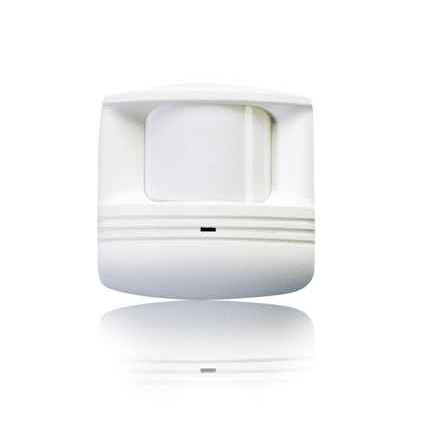
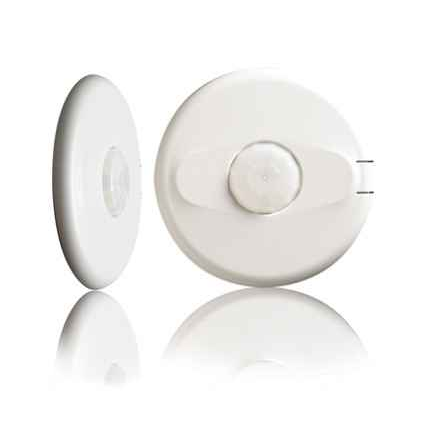
Pass & Seymour CX100 Wattstopp...
IN STOCK (leaves warehouse same day if ordered before 3pm ET)
$290.17
$219.73

Pass & Seymour CX100 Wattstopper PIR Ceiling/Wall Occupancy Sensor, 24VDC

(No reviews yet) Write a Review

Model: PAS-CX-100

In Stock (leaves warehouse same day if ordered before 3pm ET)

$290.17
$219.73
Adding to cart… The item has been added
Free Shipping on orders over $199
We price match and offer bulk discounts! Click Add to Quote. It's quick and easy.
✨
Earn points with this purchase! You can redeem points for giftcards, iPads, XBox's and more. View Rewards
Free Keying on all locks

Pass & Seymour CX100 Wattstopper PIR Ceiling/Wall Occupancy Sensor, 24VDC

The Pass & Seymour CX100 is a Wattstopper passive infrared (PIR) ceiling/wall occupancy sensor engineered to automatically turn lighting on and off based on occupancy. Operating at 24VDC, this 2K sensor combines a built-in light level sensor with a choice of four coverage patterns, giving installers flexibility to match detection zones to the room layout. Designed for commercial and light-industrial control applications, the CX100 pairs occupancy-based lighting control with an isolated relay output that can be tied into HVAC or other building control systems for expanded energy management.

Key Features

  • 24VDC Operation: Runs on 24VDC for compatibility with low-voltage occupancy sensing and control circuits.
  • Built-In Light Level Sensor: Integrated photocell allows the sensor to factor ambient light conditions into occupancy-based switching decisions.
  • Four Coverage Patterns: Choice of four coverage patterns lets installers tailor the detection field to ceiling or wall mounting locations and room geometry.
  • ASIC Technology: Application-specific integrated circuit design reduces the component count for greater long-term reliability.
  • Isolated Relay Output: Dedicated isolated relay allows integration with HVAC systems or other building control equipment beyond simple lighting.
  • Occupancy-Based Switching: Automatically turns connected lighting on and off based on detected occupancy in the space.
  • User-Adjustable Time Delay and Sensitivity: Field-adjustable settings let installers fine-tune how long lights stay on after occupancy is no longer detected and how sensitive the PIR detection is.
  • Automatic or Manual-On Operation: When paired with a BZ-150 Power Pack, the CX100 can be configured for either automatic-on or manual-on operation to suit facility preferences.

Technical Specifications

  • Country Of Origin: China
  • Product Line: Pass & Seymour

Typical Applications

  • Commercial Ceiling and Wall-Mounted Occupancy Sensing
  • Energy-Saving Automatic Lighting Control
  • HVAC and Building Control System Integration
  • Office, Retail, and Commercial Interior Spaces
  • Renovation and New Construction Lighting Control Retrofits

Why Pass & Seymour?

Pass & Seymour brings Wattstopper occupancy sensing technology together with ASIC-based design to deliver a reliable, low-component-count sensor built for demanding commercial control applications. With an isolated relay for HVAC and control-system integration, adjustable time delay and sensitivity, and flexible coverage pattern selection, the CX100 gives electrical professionals a dependable tool for code-compliant, energy-conscious lighting control.

Manufacturer Resources

Product Specs

Product Type:
Occupancy Sensor
Voltage Rating:
24VDC
Configuration:
Ceiling/Wall Mount
Country of Origin:
China
Department:
Electrical
Product Group:
Wiring Devices

Pass & Seymour PAS-CX-100 – Frequently Asked Questions

1) Can I wire the Pass & Seymour CX100 occupancy sensor directly to a 120V lighting circuit?
No. The CX100 is a low-voltage sensor that runs on 24VDC, so it cannot switch a line voltage circuit on its own. It needs a power pack to supply the 24VDC and do the line voltage switching; Pass & Seymour pairs it with the BZ-150 power pack, which is also what lets you set the sensor for automatic-on or manual-on operation. If you want a sensor that wires straight to line voltage, look at a line voltage unit like the Leviton ODC Series commercial grade occupancy sensor instead.
2) Can the CX100 sensor be mounted on a wall, or is it ceiling only?
Both. The CX100 is configured for ceiling or wall mount, and it offers a choice of four coverage patterns so you can match the detection field to where the sensor lands and how the room is shaped. That matters most in irregular rooms or corridors where a single fixed pattern from a ceiling position would miss occupants.
3) What else do I need to order with the CX100 to make a complete lighting control?
Plan on a power pack. On its own the CX100 is a 24VDC sensor head; the BZ-150 power pack supplies its 24VDC and switches the lighting load, and it is the component that determines whether the room operates automatic-on or manual-on. Manual-on is the setting most energy codes ask for in private offices, so decide that before the walkthrough.
4) Are the Leviton commercial PIR sensors a drop-in replacement for a Pass & Seymour CX100?
No. The CX100 is a 24VDC low-voltage sensor that reports to a power pack, while the Leviton ODC0S-I1W is a line voltage PIR and the ODS10-ID is rated 120/277V AC. Swapping one for the other changes the wiring at the device, and the Leviton units do not provide the CX100's isolated relay output for HVAC or building control integration. Treat them as alternative approaches to the same room, not as a like-for-like device swap.
5) Can an occupancy sensor also shut down HVAC in an unoccupied room?
With the CX100 it can. The sensor carries a dedicated isolated relay output separate from the lighting function, so a building control or HVAC system can read occupancy from the same device rather than needing a second sensor in the space. That is the main reason facility and MRO buyers pick this one over a lighting-only sensor.
6) Will the CX100 keep the lights on when there is already plenty of daylight in the room?
It doesn't have to. The CX100 has a built-in light level sensor, so ambient light is factored into the switching decision alongside occupancy. In a daylit perimeter office that means the lights need not come on just because someone walked in. Time delay and PIR sensitivity are both field-adjustable on the unit, so you can tune hold time and how easily it triggers after install.
7) Does PIR occupancy sensing work in a room where people sit still at desks?
PIR detects motion by heat, so it needs line of sight and some movement. The CX100 is a passive infrared sensor with user-adjustable sensitivity, which helps it pick up smaller motions like typing when it is aimed correctly, and four selectable coverage patterns let you concentrate the field on the occupied zone. Partitions, tall furniture, or a room broken up by walls will still block it; in those spaces use multiple sensors so every area is covered.
8) What is the difference between the Pass & Seymour CX100 and the Leviton ODS10-ID occupancy sensor?
Different wiring architectures. The CX100 is a 24VDC low-voltage PIR sensor that needs a power pack to switch the load, which is what makes it suitable for multi-sensor rooms and HVAC tie-ins. The Leviton ODS10-ID is a 120/277V AC commercial grade PIR sensor that handles the line voltage itself. Leviton also offers the ODS15-IDW, a self-adaptive commercial grade PIR unit, if you want the sensor to adjust its own settings instead of setting delay and sensitivity by hand.
9) Can I run more than one sensor to cover a large open office?
That is the strength of the low-voltage design. Because the CX100 operates at 24VDC off a power pack rather than switching line voltage itself, multiple sensor heads can feed a common switching point to cover an open plan or an L-shaped room. Choose the coverage pattern per head, since four patterns are available, and place them so the detection fields overlap at the edges.
10) I need a PIR occupancy sensor covering roughly 2000 square feet in an open office - is the CX100 the right pick?
The CX100 is a ceiling/wall mount PIR with a choice of four coverage patterns, so the detection field is set by which pattern you select rather than by a single published area figure. If you want a sensor whose coverage is stated up front, the Leviton ODS10-ID-E is a PIR commercial grade sensor rated for 2100 square feet at 120/277V in black. Note that the Leviton runs on line voltage while the CX100 runs on 24VDC and switches through a power pack.
11) Which occupancy sensor should I use if the space has unpredictable occupancy and I do not want to keep adjusting the settings?
The CX100 gives you user-adjustable time delay and sensitivity plus a built-in light level sensor, so it is tuned in the field by the installer. If you would rather the sensor tune itself, the Leviton ODS15-IDW is a PIR self-adaptive commercial grade occupancy sensor. The trade-off is that the CX100 also carries an isolated relay output for tying occupancy into HVAC or other building controls, which is a separate capability from self-adaptive timing.
12) For a multi-sensor room where several sensors control one lighting zone, is the CX100 or a Leviton sensor the better fit?
The CX100 is built for that arrangement: it runs on 24VDC and switches through a power pack, so multiple sensors can feed a common pack controlling one zone. The Leviton ODS10-ID and ODC0S-I1W are line voltage devices that each switch their own load, which suits single-sensor rooms. If the zone also needs an occupancy signal sent to HVAC, the CX100's isolated relay output handles that directly.
13) Is the CX100 suitable for a retrofit, or only new construction?
Both. Pass & Seymour lists the CX100 for renovation and new construction lighting control retrofits as well as offices, retail, and general commercial interiors. On a retrofit the practical question is the low-voltage run: because the sensor is 24VDC, you need Class 2 wiring back to the power pack near the fixtures rather than reusing a line voltage switch leg.
14) What is the exact part number for the CX100 sensor?
Order it as Pass & Seymour CX-100, the Wattstopper PIR ceiling/wall occupancy sensor. It ships as a single model with no finish or coverage variants to specify, and the coverage pattern is selected at the sensor rather than at time of order. Country of origin is China.
How fast can I get the Pass & Seymour PAS-CX-100 delivered?
Most orders ship the same day from our distribution partners, with quick delivery throughout the continental U.S. Need it urgently? Contact Us for expedited shipping options.
Can I return it if it doesn’t work for me?
Yes—ZenSupply offers a hassle-free return policy. If the product isn’t the right fit, reach out to our support team for a return authorization or setup a return by following our return instructions.
Does the Pass & Seymour PAS-CX-100 come with a warranty?
Absolutely. The Pass & Seymour PAS-CX-100 is backed by a manufacturer’s warranty. For full warranty terms, check the product documentation or Contact Us.
How do I get technical support or installation help for the Pass & Seymour PAS-CX-100?
You can call, text, or email our expert support team for fast answers. We’re here to help with product selection, installation tips, and troubleshooting. Contact Us
Why buy the Pass & Seymour PAS-CX-100 from ZenSupply?
ZenSupply makes it easy to get the commercial door hardware you need—fast shipping, expert support, and rewards on every order. Our team is always ready to help you choose the right product for your project.