


Commercial Mortise Lock vs Cylindrical Lock: Which to Spec & Why
Posted by ZenSupply Locksmith Desk on Jun 11th 2026
At a Glance
- Mortise (Schlage L9000, SARGENT 8200, BEST 45H, Yale 8800): spec for schools, healthcare, multifamily corridors, and any opening you expect to outlive the door. A156.13 Grade 1 = 1,000,000 operational cycles minimum.
- Cylindrical (Schlage ND-Series, SARGENT 10 Line, BEST 9K, Yale 5400LN, Falcon T): spec for offices, retail, and retrofits where prep is already cut. A156.2 Grade 1 = 800,000 cycles minimum.
- Mortise is mechanically stronger — through-bolted case, separate deadbolt, anti-friction latch — but a Grade 1 cylindrical with a reinforced strike covers most commercial openings.
- Mortise costs more in both hardware and labor; cylindrical wins on speed and price. Plan for a meaningful premium when going mortise.
- Both are ADA-compliant when specified with levers and proper opening force per the 2010 ADA Standards §404.2.7 and §404.2.9.
What is the difference between a mortise lock and a cylindrical lock?
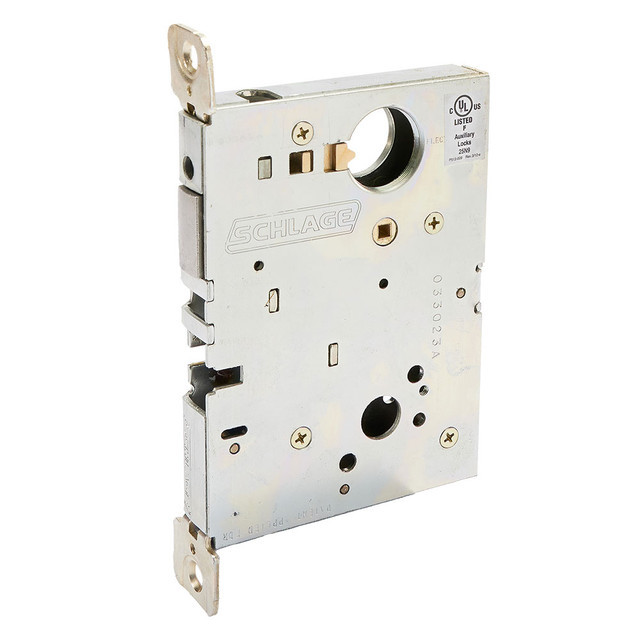
A mortise lock is a rectangular lock case that drops into a pocket machined into the edge of the door — typically 6" H × 4" D × 1" W on a Schlage L9000 prep. Trim, cylinder, and thumbturn attach through the door to the case. A cylindrical lock (sometimes called a bored lock) installs through two round holes: a 2-1/8" cross-bore on the face and a 1" edge bore for the latch.
That single geometric difference drives every other tradeoff — strength, cost, prep time, function flexibility, and serviceability. Mortise gives you a steel case with deadbolt, auxiliary latch, and primary latch in one body. Cylindrical gives you fast installation and easy field service from a stocked SKU shelf.
For a full lineup of both formats, see our commercial mechanical locks catalog.
How does each lock work — body, prep, and door cutout?

Mortise lock bodies are through-bolted into a milled pocket. The lock case itself carries the latch, deadbolt, and function logic (office, classroom, storeroom, dormitory, hotel, hospital privacy). Trim and cylinder are independent components, which is why a single mortise lock body can be configured into dozens of functions without changing the case — see the Schlage L9000 Series Mortise Lock Body for a reference platform.
Cylindrical locks use a chassis that clamps to the door through the cross-bore. The latch is a separate part driven by spindle rotation. Backsets are 2-3/4" standard commercial, 2-3/8" residential. ND-Series, 9K, 10 Line, and 5400LN all share this architecture.
Retrofitting between formats requires either re-machining the door or installing lock adapters and wrap-arounds to cover the prep mismatch.
Is a mortise lock more secure than a cylindrical lock?

Mechanically, yes — but the gap is narrower than spec sheets suggest. A mortise case is steel-bodied, through-bolted, and includes an independent deadbolt with a typical 1" throw plus an anti-friction auxiliary latch. Attack vectors that defeat a cylindrical chassis (spreading the door, prying the latch) are harder against a mortise case engaging both latch and deadbolt into a reinforced strike.
That said, a Grade 1 cylindrical lever like the Schlage ND80PD storeroom lock or BEST 9K storeroom lock with a deadlocking latch, paired with proper door armor and protection plates, defends most commercial threat models. If the opening is also getting a separate deadbolt, the security delta narrows further.
Where mortise pulls away: tall doors, narrow stiles with cross-bore conflicts, and openings where the deadbolt and latch need to be unified into a single secured assembly.
What ANSI/BHMA grades apply to mortise vs cylindrical locks?
Different standards, different thresholds. Cite the standard, not marketing.
- A156.2 (Cylindrical Locks): Grade 1 = 800,000 cycles | Grade 2 = 400,000 | Grade 3 = 200,000
- A156.13 (Mortise Locks): Grade 1 Operational = 1,000,000 cycles | Grade 2 = 500,000
- A156.5 (Auxiliary Locks/Deadbolts): Grade 1 = 250,000 cycles | Grade 2 = 100,000 | Grade 3 = 25,000
A Grade 1 mortise rates 25% more operational cycles than a Grade 1 cylindrical at the standard threshold — and that's before manufacturer-tested life claims, which we don't credit here. For comparison shopping among Grade 1 cylindrical lever locks, verify the BHMA listing on the cut sheet, not the brochure.
Need mortise or cylindrical now? Browse our commercial mechanical locks inventory — Grade 1 platforms from Schlage, SARGENT, BEST, and Yale ready to ship.
Which lock type lasts longer in high-traffic commercial openings?
Mortise wins on raw cycle count and case durability. A156.13 Grade 1 mortise is built to 1,000,000 cycles minimum; A156.2 Grade 1 cylindrical is 800,000. On a corridor door cycling 500 times a day, that's roughly the difference between 5.5 years and 4.4 years before the spec floor is reached — and field life typically far exceeds the floor on both.
The other durability advantage of mortise: serviceability. Strip a spindle or wear out a return spring on a mortise case and you swap parts inside the existing pocket. On a worn cylindrical, you typically replace the chassis. Stock the right replacement lock parts for whichever platform is in your spec book.
For lower-traffic cylindrical knob locks or office storerooms, Grade 2 cylindrical (400,000 cycles per A156.2) is usually sufficient and saves real money.
How much does a commercial mortise lock cost vs a cylindrical lock?
Mortise carries a meaningful hardware premium over cylindrical at the same brand and grade. Labor adds to it: pocketing a door for mortise takes a mortiser or a router jig and 20–40 minutes per opening; cylindrical prep is a hole saw and a few minutes. Retrofit from cylindrical to mortise on existing doors is the worst case — you're milling a pocket into a door that's already drilled, and you may need filler plates for retrofits to cover the cross-bore.
Cylindrical is the value-grade pricing tier. If the opening's threat profile and cycle demand don't justify mortise, you're overspending. If they do, mortise pays back in service life and serviceability.
When should I spec a mortise lock — schools, healthcare, multifamily?
Spec mortise when:
- The opening sees institutional traffic — corridor doors, classroom doors, dorm entries, patient room doors.
- You need a function the cylindrical platform doesn't support cleanly: hotel, dormitory with deadbolt indication, hospital privacy with emergency release, or anti-ligature behavioral health applications.
- The door is a 1-3/4" or thicker hollow metal or wood door already prepped for mortise (or is being newly machined).
- Indicator visibility matters — indicator mortise locks are the cleanest implementation.
- Hospital push/pull functions are required — see hospital push/pull latches.
Schlage L9000, SARGENT 8200, BEST 45H, Yale 8800, and Corbin Russwin ML2000 all serve this market. Pick by what's already in the building's spec standard.
When does cylindrical win — offices, retail, quick retrofits?
Spec cylindrical when:
- The door is already cross-bored or being newly prepped at standard 2-3/4" backset.
- Traffic is moderate — tenant office suites, retail back-of-house, light commercial.
- You need a fast service swap from a stocked SKU. Schlage ND80PD storeroom, BEST 9K, SARGENT 10 Line, Yale 5400LN, and Falcon T cover most field needs.
- Budget is constrained and the opening doesn't justify a mortise pocket.
- A separate commercial deadbolt handles the security requirement.
For new construction without a strong mortise standard, a Grade 1 cylindrical lever is the default workhorse — see the BEST 9K Grade 1 cylindrical for the SFIC-ready spec.
Can you replace a cylindrical lock with a mortise lock on the same door?
Technically yes, but it's invasive. The existing 2-1/8" cross-bore and 1" edge bore are now inside the area you need to mortise out for the lock pocket. You'll mill a 6" × 4" × 1" pocket that swallows the old cross-bore. The face of the door needs a mortise lock front to cover the prep, and trim escutcheons need to be large enough to hide any cross-bore daylight. Field-retrofitting cylindrical openings to mortise across a building is rarely worth it economically.
Going the other way — mortise to cylindrical — requires filler plates and adapter trim. Easier, but the door face will tell the story.
Are mortise locks ADA compliant?
Both formats are ADA-compliant when specified correctly. Per the 2010 ADA Standards §404.2.7, hardware must be operable without tight grasping, pinching, or twisting — which means levers, not knobs. §404.2.9 caps opening force at 5 lbf for interior doors only (fire doors exempt; exterior doors have no ADA opening-force maximum).
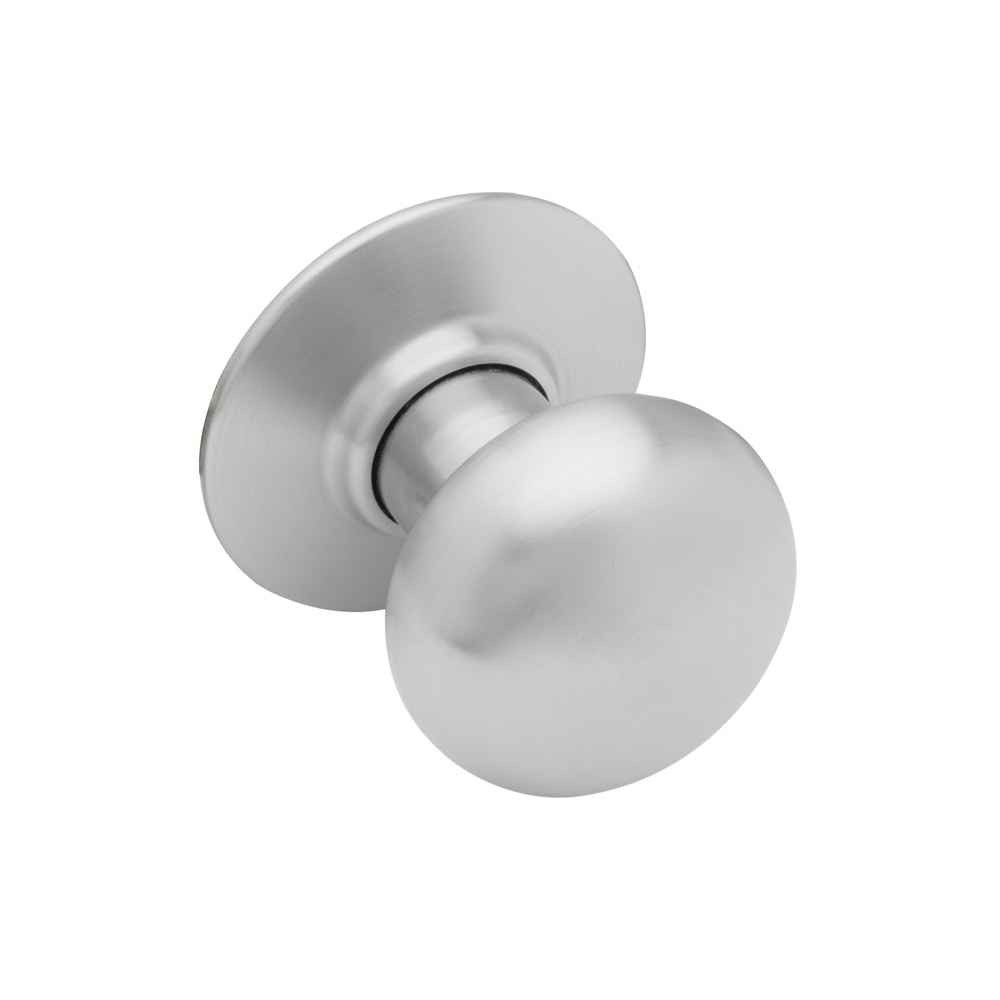
Mortise lever returns, lever shape, and operational force all meet ADA when spec'd to the manufacturer's ADA-compliant trim. Same for cylindrical lever locks. Knob-style cylindrical (cylindrical knob locks) does NOT meet §404.2.7 on accessible routes — that's a knob problem, not a cylindrical problem.
What about electrified, keyless, and access control versions?
Both platforms electrify cleanly. Schlage offers the L9000 in electrified versions and the ND-Series in NDE wireless cylindrical (NDE80LD, NDE80PD with function suffix). For wired electric strikes paired with mechanical mortise or cylindrical, you have electrified mortise locks as a separate spec category.
For standalone keypad solutions on cylindrical doors, see electronic keypad locks. BEST also offers integrated reader platforms on both 9KW cylindrical and 45HW mortise — see the BEST 45HW wired electromechanical mortise for reference.
How Schlage, SARGENT, BEST, and Yale compare head-to-head
Schlage holds the spec crown in many institutional projects. The L9000 mortise and ND-Series cylindrical are the most commonly specified platforms in U.S. commercial work, and the parts ecosystem is the deepest. Strong choice when the architect already has Schlage on the door schedule. Schlage also gives you the smoothest path to electrified and AD-Series networked access control.
SARGENT (Assa Abloy) is the institutional alternative — the 8200 mortise and 10 Line cylindrical compete head-to-head with Schlage on durability, function range, and Assa Abloy keying systems. Often spec'd in healthcare and higher education.
BEST (dormakaba) dominates SFIC-driven facilities. If the building runs a small-format interchangeable core keying program, the BEST 45H mortise and 9K cylindrical are usually the path of least resistance. SFIC-ready out of the box.
Yale Commercial (Assa Abloy) covers the same ground with 8800 mortise and 5400LN cylindrical. Strong value tier within the Assa Abloy ecosystem. Falcon T-Series (Allegion) fills the same value role under the Schlage parent group.
Choose Schlage when:
- The project spec already calls out Schlage L9000 or ND-Series.
- You want the broadest aftermarket parts and trim catalog.
- You're integrating with Schlage Primus or Everest restricted keyways.
- Future migration to AD-Series or NDE-Series electronic locks is on the roadmap.
Choose SARGENT or Yale when:
- The facility is on an Assa Abloy keying system (Medeco, Corbin Russwin, SARGENT).
- Healthcare or higher-ed standards specify the 8200 or 8800.
- You need integration with Assa Abloy networked access control.
- You're matching existing institutional standards.
Choose BEST when:
- The building runs SFIC keying — BEST is the native platform.
- You want field-rekeyable cores without pulling locks.
- The owner self-manages keying through facilities staff.
- School district or government standard specifies BEST.
Mortise vs Cylindrical: spec comparison table
| Brand/Series | BHMA Grade | Cycle Rating | Best For | List Price Tier |
|---|---|---|---|---|
| Schlage L9000 mortise | A156.13 Grade 1 | 1,000,000 minimum per A156.13 | Institutional, schools, healthcare | High |
| SARGENT 8200 mortise | A156.13 Grade 1 | 1,000,000 minimum per A156.13 | Healthcare, higher ed, Assa Abloy keying | High |
| BEST 45H mortise | A156.13 Grade 1 | 1,000,000 minimum per A156.13 | SFIC-keyed facilities, K-12, government | High |
| Yale 8800 mortise | A156.13 Grade 1 | 1,000,000 minimum per A156.13 | Assa Abloy value tier, multifamily | Mid–High |
| Schlage ND80PD cylindrical | A156.2 Grade 1 | 800,000 minimum per A156.2 | General commercial, offices, retrofits | Mid |
| BEST 9K cylindrical | A156.2 Grade 1 | 800,000 minimum per A156.2 | SFIC retrofits, schools, government | Mid |
| Falcon T-Series cylindrical | A156.2 Grade 1 | 800,000 minimum per A156.2 | Value-tier commercial, light institutional | Value |
| Schlage ALX80 cylindrical | A156.2 Grade 2 | 400,000 minimum per A156.2 | Light commercial, tenant offices | Value |
Need to spec the right lock for a specific opening? Shop commercial mechanical locks at ZenSupply — Schlage, SARGENT, BEST, Yale, Falcon, and Corbin Russwin platforms with Grade 1 and Grade 2 options, plus full parts and accessory support.