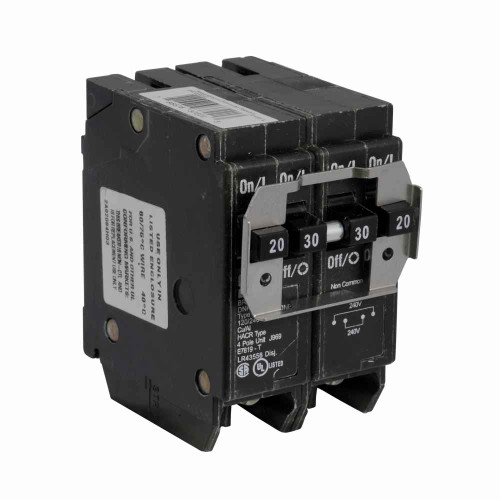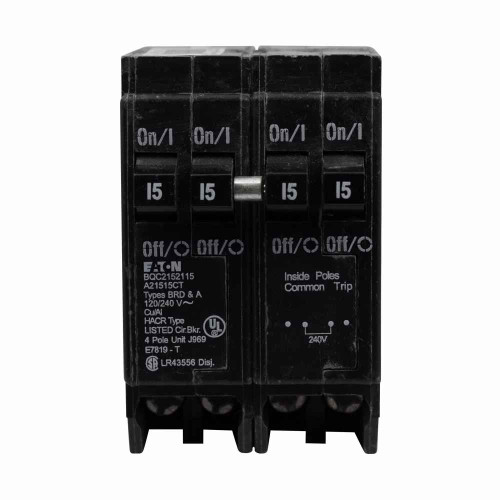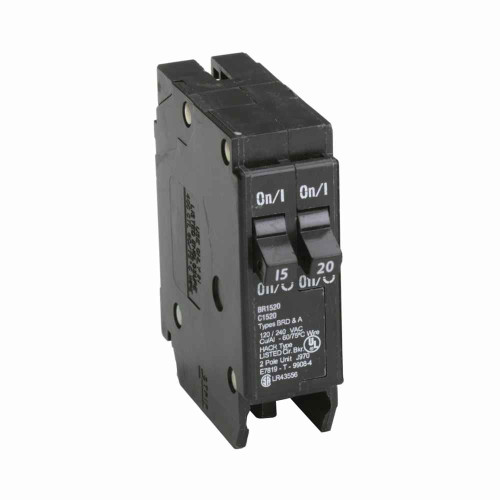
Eaton QBHW Thermal Magnetic Ci...
IN STOCK (leaves warehouse same day if ordered before 3pm ET)
$1,295.29

Eaton QBHW Thermal Magnetic Circuit Breaker 22kAIC with 120-240V Shunt Trip

(No reviews yet) Write a Review

Model: QBHW3030HTM
$1,295.29

In Stock (leaves warehouse same day if ordered before 3pm ET)

$1,295.29
Adding to cart… The item has been added
Free Shipping on orders over $199
We price match and offer bulk discounts! Click Add to Quote. It's quick and easy.
Earn points with this purchase! You can redeem points for giftcards, iPads, XBox's and more. View Rewards
Free Keying on all locks

Eaton QBHW Thermal Magnetic Circuit Breaker 22kAIC with 120-240V Shunt Trip

Professional Circuit Protection with Remote Trip Capability

The Eaton QBHW Thermal Magnetic Circuit Breaker delivers reliable electrical protection with a 22kAIC interrupt rating and integrated 120-240V shunt trip functionality. This bolt-on mounting circuit breaker provides professional-grade overcurrent protection with remote trip capability for enhanced safety and control in electrical distribution systems.

Professional Features & Benefits

  • 22kAIC Interrupt Rating: Provides robust fault current interruption capability for demanding electrical applications and enhanced system protection.
  • Thermal Magnetic Operation: Combines thermal overload protection with magnetic short-circuit protection for comprehensive overcurrent detection and response.
  • 120-240V Shunt Trip: Enables remote circuit breaker tripping for emergency shutdown, safety interlocks, and automated control system integration.
  • Bolt-On Mounting: Ensures secure mechanical and electrical connection to the panel with reliable contact pressure and vibration resistance.
  • QBHW Design: Engineered for compatibility with Eaton electrical panels and distribution equipment for seamless system integration.
  • Professional Grade Construction: Built to withstand demanding electrical environments with reliable long-term performance and durability.

Technical Specifications

  • Circuit Breaker Type: QBHW
  • Interrupt Rating: 22 kAIC
  • Mounting Method: Bolt-on
  • Shunt Trip: 120-240V

Professional Applications

  • Commercial Electrical Distribution Panels
  • Industrial Control Systems
  • Emergency Shutdown Systems
  • Automated Safety Interlocks
  • Remote Circuit Control Applications
  • Professional Electrical Installations
  • Critical Infrastructure Protection

Why Choose Eaton Quality?

Eaton circuit breakers deliver proven reliability and performance in demanding electrical applications. The QBHW series combines robust thermal magnetic protection with versatile shunt trip capability, providing professional-grade circuit protection with enhanced control flexibility for modern electrical systems.

Manufacturer Resources

Product Specs

Circuit Breaker Type:
QBHW
Interrupt Rating:
22 kAIC
Mounting Method:
Bolt-on
Shunt Trip:
120-240V
Department:
Electrical
Product Group:
Circuit Breakers
Product Type:
Circuit Breaker

Eaton QBHW3030HTM – Frequently Asked Questions

1) Will an Eaton QBHW breaker fit my existing panel, or do I need a specific type of panelboard?
The QBHW is a bolt-on breaker, not a plug-in. It fastens to the bus with screws rather than clipping onto a stab, so it needs a panelboard with bolt-on bus provisions. If the panel you are working in takes plug-on breakers that snap over a stab, a QBHW will not seat in it. Bolt-on is standard on commercial and industrial panelboards, which is where this breaker belongs.
2) What amperages and pole configurations does the Eaton QBHW breaker come in?
QBHW breakers run from 15A up to 125A: 15, 20, 25, 30, 35, 40, 45, 50, 60, 70, 80, 90, 100, 110 and 125 amps. Each is available in one, two, or three pole. Single pole handles a 120V branch circuit, two pole covers 240V single phase loads and 208V line-to-line, and three pole is for three phase equipment. Voltage ratings offered are 120/240V, 240V, and 240 Vac.
3) What does the shunt trip on a QBHW breaker actually do, and do I need one?
A shunt trip lets you open the breaker remotely by energizing a coil inside it, instead of walking to the panel and throwing the handle. On the QBHW that coil is rated 120-240V, so you feed it from a control circuit in that range. You want it where something outside the panel has to kill power: an emergency stop button, a fire alarm relay dropping an elevator or kitchen hood circuit, a door interlock on a control panel, or a building management system shutting a load down. If nothing needs to trip the breaker from a distance, order the standard version and skip the extra wiring.
4) I ordered a shunt trip breaker. Do I have to run a separate control wire to it?
Yes. The shunt trip coil is a separate circuit from the load the breaker feeds, so it needs its own control conductors landed on the coil terminals and a 120-240V source plus whatever contact is going to initiate the trip, such as an E-stop, alarm relay, or interlock switch. Budget the raceway space and the control power for it when you lay the job out. Once the coil trips the breaker, someone has to reset the handle by hand at the panel.
5) What is the difference between the standard, shunt trip, and ring/lug terminal QBHW options?
Three build options on the QBHW. Standard is straight overcurrent protection with nothing added. Shunt trip adds the 120-240V remote trip coil for emergency shutdown and interlock schemes. Ring/lug terminal changes the line and load terminations, which is what you specify when the panel or the equipment spec calls for that connection style rather than the default. Pick the terminal style off the drawing and the trip option off the control scheme, since they are different decisions.
6) Is a thermal magnetic breaker like the QBHW right for motor and equipment loads, or should I use something else?
Thermal magnetic is the general purpose choice and it is what the QBHW is. The thermal element responds to sustained overload, heating up and tripping after a delay, which lets a motor ride through its inrush on start. The magnetic element trips instantly on a short circuit. That combination suits feeders, branch circuits, and equipment in commercial panels. Where you need adjustable pickup and time bands to coordinate selectively with breakers upstream and downstream, an electronic trip unit is the tool for that job, not a fixed thermal magnetic breaker.
7) I need to standardize breakers across several buildings. Can I use the QBHW across 120V, 208V and 240V panels?
The QBHW is offered in 120/240V, 240V and 240 Vac ratings, so it covers single phase 120/240 systems and 240V applications, and the three pole versions serve three phase panels at those voltages. That range plus 15A through 125A in one, two and three pole means one breaker type covers most of the branch and small feeder positions in a low voltage commercial panel. What it will not do is cover 480V equipment, since nothing here is rated above 240V. Those panels need a different breaker family.
8) Can I swap a standard QBHW for a shunt trip QBHW in the same panel space later?
Both builds are the same QBHW bolt-on breaker in the same amperages and pole counts, so the shunt trip version lands in the same bolt-on bus position as the standard. What changes is what you have to bring to it: the shunt trip needs 120-240V control power and an initiating contact wired into the panel. If there is any chance a circuit will later need remote tripping, pulling a pair of control conductors to that pole during the original install is cheaper than opening the panel twice.
9) Does a three pole QBHW give me a 125A three phase breaker with shunt trip?
QBHW breakers go to 125A, come in three pole, and are offered with a 120-240V shunt trip, so that combination is within the range the type covers. Confirm the specific amperage, pole count and trip option together when you place the order, because not every option pairs with every amperage. The 22 kAIC rating applies to the type, so check it against the fault current at your panel before you commit either way.
10) Will a bolt-on QBHW hold up in a panel that vibrates, like a rooftop or machine room?
Bolt-on is the better mounting where vibration is a factor. The breaker is mechanically fastened to the bus rather than relying on a spring clip over a stab, so it maintains contact pressure and does not work loose the way a plug-on connection can under sustained vibration. That is part of why bolt-on is standard in industrial and commercial panelboards rather than residential load centers.
How fast can I get the Eaton QBHW3030HTM delivered?
Most orders ship the same day from our distribution partners, with quick delivery throughout the continental U.S. Need it urgently? Contact Us for expedited shipping options.
Can I return it if it doesn’t work for me?
Yes—ZenSupply offers a hassle-free return policy. If the product isn’t the right fit, reach out to our support team for a return authorization or setup a return by following our return instructions.
Does the Eaton QBHW3030HTM come with a warranty?
Absolutely. The Eaton QBHW3030HTM is backed by a manufacturer’s warranty. For full warranty terms, check the product documentation or Contact Us.
How do I get technical support or installation help for the Eaton QBHW3030HTM?
You can call, text, or email our expert support team for fast answers. We’re here to help with product selection, installation tips, and troubleshooting. Contact Us
Why buy the Eaton QBHW3030HTM from ZenSupply?
ZenSupply makes it easy to get the commercial door hardware you need—fast shipping, expert support, and rewards on every order. Our team is always ready to help you choose the right product for your project.