


You may also like

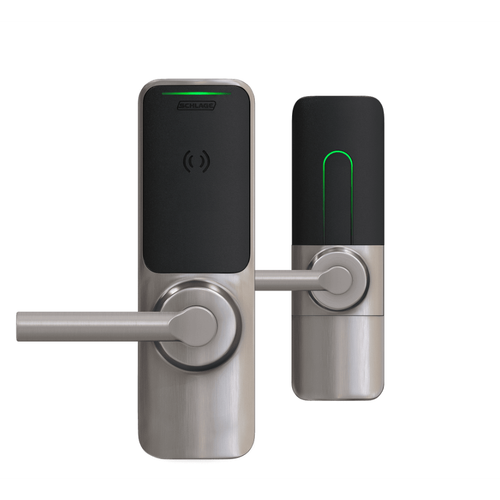
Schlage XE360T Wireless Cylindrical Lock, Office/Storeroom (OFISM), Grade 2, Bluetooth & NFC Mobile Reader, LED Indicator
Model: SCH-XE360T-OFISM
Schlage XE360 Lock Overview:
Building upon the innovation and reliability of Schlage electronic locks, the XE360 Series is the next generation of wireless locks from this trusted brand. The sleek...
Schlage Electronics
Starting at
$883.00
$647.90


Dexter C1000 Series Grade 1 Cylindrical Lock - Asylum (F87)
Model: DEX-C1000-ASYL
Grade 1, UL listed 3 hour 1 3/8" to 2" door range standard All functions include 1 1/8" x 2 1/4" square-corner beveled latch with 2 3/4" backset and ANSI 1 1/4" x 4 7/8" curved lip strike...
Dexter
Starting at
$325.00
$128.96

CENTRIOS CEB100 Series - Grade 1 Smart Bluetooth Cylindrical Lock
The Cylindrical Lock is designed specifically with business owners in mind. Engineered for speed of installation, ease of use, and mixed functionality, the Cylindrical Lock is perfect for front doors, back doors, storeroom doors, offices, or anywhere that has a 2 ⅛” hole in the door
Features & Benefits
- ANSI/BHMA A156.2 Grade 1
- UL10C 3-hour fire rating
- IP57 weather resistance to allow full exposure to both sides of the door
- FCC/IC Certified
- ADA compliant
- Deadlocking latch
- -40º F to 140º F
- Unique LED for lock events and alarms. Key in lever design for fixed core. Configurable auto relock. Wireless door position sensing (DPS).
- Designed to be quick and easy to install—with in-field handing and patent pending automatic adjustability from 1-3/8” to 2-1/4” thick door without tools.
- Mechanical key or bluetooth mobile access. Privacy mode with included door position sensor installation. Full-time passage egress.
- Operates one year on four AA batteries. Exterior emergency 9VDC power backup.
CEB100 Installation Instruction
Manufacturer Resources
Product Specs
- Product Group:
- Mechanical Locks
- Series:
- CEB100
- Product Type:
- Cylindrical Locks
- Warranty:
- 3 Year
- Product Subgroup:
- Bored Locksets
- Default Backset:
- 2-3/4" Square Corner Latch
- Commercial/Residential:
- Commercial
- Electronic:
- Yes
- Product Attribute:
- Electronic Locks
- Product Function:
- Privacy
- Product Category:
- Electronic Locks
- Department:
- Door Hardware
CENTRIOS CEB100-TB-626-1803-54L – Frequently Asked Questions
1) Will the Centrios CEB100 Bluetooth lock fit a 2 inch thick door?
Yes. The CEB100 cylindrical lock adjusts automatically from 1-3/8 inch to 2-1/4 inch door thickness, without tools, so a 2 inch door is inside its range. That range is unusually wide for an electronic cylindrical lock. For comparison, the Alarm Lock Trilogy T2 DL2700 covers 1-5/8 to 1-7/8 inches and the Schlage CO-100 is listed at 1-3/4 inches only, so on a thick or non-standard leaf the CEB100 saves you a spacer kit or a different lock. Handing is also set in the field, so you do not order left or right hand.
2) Can I put the Centrios CEB100 on my existing key system, or do I have to rekey?
Four cylinder builds are available, so it goes onto whatever keying you already run. Fixed core (1803-54L) is the key-in-lever version. SFIC prep with core and LFIC prep with core take small format and large format interchangeable cores, so a facility already standardized on IC keying keeps its master system and just drops its own core in. Less cylinder ships without a cylinder for a locksmith supplying their own. The mechanical key works alongside Bluetooth mobile access, so the key override is always there.
3) Is the Centrios CEB100 fire rated, and can I use it on a labeled door?
UL10C 3-hour fire rated, and Grade 1 to ANSI/BHMA A156.2. It is also ADA compliant and uses a deadlocking latch. That combination is what a labeled opening in a school, hospital or multi-family corridor needs from the lock itself.
4) Can a Bluetooth lock like the CEB100 go on an exterior door that gets weather on both sides?
Yes, and that is the point of difference here. The CEB100 carries an IP57 weather rating covering full exposure on both sides of the door, and it operates from -40F to 140F. Most electronic cylindrical locks are only rated for the interior side. That makes it workable on a back door, a gate-side entry, or a stairwell exit with no vestibule.
5) How does privacy mode work on the Centrios CEB100, and what does it need to function?
Privacy is the function of this lock, and it depends on the included door position sensor being installed. The sensor is wireless and reports door position, which is what lets the lock know the door is closed before it goes to privacy. Auto relock is configurable, and egress from the inside is full-time passage, so someone inside always gets out on the lever regardless of privacy state. An LED on the lock signals lock events and alarms.
6) What happens to the CEB100 lock when the batteries die?
Four AA batteries run it for about a year. If they do go flat, there are two ways in: the mechanical key on the cylinder versions, and an exterior 9VDC emergency power jack that lets you jump the lock from outside to open it. On a less-cylinder or non-keyed build the 9VDC backup is what gets you in, so plan for that when you spec the cylinder option.
7) What can I use instead of the CEB100 if the opening is hardwired to an access control panel rather than standalone?
The SDC Electra 7200 series is the one to look at. It is a solenoid-controlled cylindrical lock running on dual voltage 12/24VDC for 1-3/4 inch to 2 inch doors, so it is driven by the panel rather than by credentials at the lock. The SDC E75 series is the standalone alternative in the same family, battery powered with keypad access control, on 1-3/4 inch to 2-1/8 inch doors. The CEB100 runs one year on four AA batteries with an exterior emergency 9VDC backup and no wiring to the frame.
8) What is the closest Grade 1 electronic cylindrical lock to the CENTRIOS CEB100 if a mobile credential is required rather than a keypad?
The Schlage NDEB is the nearest peer on that requirement. It is a Grade 1 heavy duty cylindrical lock in the ENGAGE series with a 2.4 GHz Bluetooth Low Energy reader and mobile-enabled multi-function operation, so like the CEB100 it opens from a phone rather than a pushbutton pad. The difference that decides most openings is door thickness: the NDEB covers 1-5/8 inch to 2 inch doors, while the CEB100 adjusts automatically from 1-3/8 inch to 2-1/4 inch without tools. On a 1-3/8 inch wood door or a 2-1/4 inch thick leaf, the CEB100 is the one that fits.
9) I need a privacy-function electronic lock but the users carry no smartphones. What takes the place of a Bluetooth lock like the CEB100?
Two keypad-credentialed privacy locks cover that. The Schlage CO-100-CY-40-KP is a Grade 1 heavy duty standalone electronic cylindrical lock with a privacy/bed/bath function, keypad entry and cylinder options, built for a 1-3/4 inch door. The Alarm Lock Trilogy 4100 is also a Grade 1 electronic cylindrical lock with a privacy function and keypad, covering 1-5/8 inch to 1-7/8 inch doors. Both credential at the door instead of from a phone. The CEB100 keeps the same privacy function and offers mechanical key or Bluetooth mobile access, with privacy mode set by the included door position sensor.
10) Is the TownSteel XCE-2000 a substitute for a CENTRIOS CEB100 on a classroom door?
They are not the same function. The TownSteel XCE-2000 is a Grade 1 heavy duty electronic cylindrical lockset with a keypad and a classroom function, on 1-3/4 inch to 2 inch doors; the XCE-9000 is the classroom intruder version of that lockset. The CEB100 is a privacy-function lock with full-time passage egress. For a classroom opening where staff must lock down from a code at the door, the XCE-2000 or XCE-9000 is the function that matches; the CEB100 suits an office, storeroom or restroom-type opening where privacy and mobile access are what is wanted.
11) Which electronic cylindrical locks accept an interchangeable core the way the CEB100 does?
The CEB100 is ordered with fixed core, less cylinder, LFIC prep with core, or SFIC prep with core, so it drops into either large or small format IC keying. Among electronic peers, the Alarm Lock Trilogy T2 DL2700/DL2775 is a Grade 1 standalone electronic cylindrical lock that is IC/SFIC compatible, on 1-5/8 inch to 1-7/8 inch doors. The BEST 9KZ EZ series is an electronic keypad cylindrical lock with a key override function. The Schlage CO-100 keypad lock is also offered with cylinder options. Where the CEB100 differs is the LFIC prep, which lets it join a large format IC system as well.
12) Is the Kwikset SmartCode 912TNL an alternative to the CENTRIOS CEB100 for a commercial building?
They are built for different service. The Kwikset 912TNL ZW500 is a SmartCode electronic Tustin lever using Z-Wave technology, keyed one side, for 1-3/8 inch to 2 inch doors - Z-Wave means it reports to a home or building automation hub rather than pairing directly by Bluetooth. The CEB100 is a commercial lock carrying ANSI/BHMA A156.2 Grade 1, a UL10C 3-hour fire rating and IP57 weather resistance rated for full exposure on both sides of the door, from -40 F to 140 F. On a fire-rated commercial opening or an exterior door, those ratings are the deciding facts.
13) Is the Schlage XE360M a like-for-like swap for a CENTRIOS CEB100 in a 2-1/8 inch door?
No, and thickness is the reason. The Schlage XE360M is a Grade 1 wireless tubular lock with an offline push button function and a smart mobile reader, in classroom/storeroom function, specified for a 1-3/4 inch door. It is also a tubular lock rather than a bored cylindrical lockset. The CEB100 is a cylindrical lock that adjusts from 1-3/8 inch to 2-1/4 inch and drops into a 2-1/8 inch bore, so on a thick leaf or an existing cylindrical prep the CEB100 is the one that fits without re-prepping the door.
14) Should I use a Bluetooth mobile lock or a keypad lock for my building?
It comes down to who is coming through the door and how you want to hand out access. The CEB100 opens by Bluetooth from a phone or by mechanical key, which fits tenants, staff and vendors you can credential to an app and revoke remotely. If you need people who will never carry your app, contractors, visitors, students, to punch a code in, a keypad unit is the better fit: the Alarm Lock Trilogy T2 DL2700 is a Grade 1 standalone with a digital keypad and 100 user codes, and the TownSteel XCE-2000 is a Grade 1 keypad classroom lockset. Schlage's NDEB is the closest Bluetooth peer, a Grade 1 ENGAGE cylindrical lock with a 2.4 GHz Bluetooth Low Energy reader, but it is rated 1-5/8 to 2 inch door thickness against the CEB100's 1-3/8 to 2-1/4.
15) Can I get the Centrios CEB100 to match the lever style and finish on the rest of my doors?
Four lever styles are offered, Augusta, Monroe, Pacific Beach and Taylor Bay, in five finishes: 605 bright brass, 613E bronze, 619 satin nickel, 626 satin chrome and BSP black suede. 626 satin chrome and 619 satin nickel are the two that will sit alongside most existing commercial hardware in a building. Ordering the same lever and finish across the electronic and mechanical openings is how a property manager keeps a floor looking consistent when only some doors get the smart lock.
16) Is the Centrios CEB100 heavy duty enough for a commercial entrance that gets constant traffic?
It is built for commercial use and certified ANSI/BHMA A156.2 Grade 1, the top cycle and strength tier for bored locksets, with a deadlocking latch. The description places it on front doors, back doors, storerooms and offices. Peers at the same Grade 1 tier include the Schlage CO-100 and the TownSteel XCE-2000 and XCE-9000.
17) We only need mechanical privacy on these doors, not electronic. What is the simpler equivalent to the CEB100?
The Cal-Royal CAL20 is the straightforward mechanical answer: a Grade 1 extra heavy duty privacy lock in the Calypso series covering 1-3/8 inch to 2 inch doors, with no batteries, credentials or app. It holds the same privacy/bed/bath function and the same Grade 1 rating the CEB100 carries under ANSI/BHMA A156.2. For a lighter-duty privacy opening, the Orca OCL240 is a Grade 2 medium duty privacy cylindrical lockset. What is given up in each case is the audit-free electronic side: Bluetooth mobile access, LED lock event indication and wireless door position sensing.
18) What is the difference between a Lockey E995 keypad lever and the CENTRIOS CEB100 for a gate or exterior door?
The Lockey E995 is an electronic keypad lever lock with remote control and battery power, and the E985 is the companion model with keypad, remote control and key override; both are built for 1 3/8 inch to 1 3/4 inch doors. The CEB100 covers 1-3/8 inch to 2-1/4 inch and carries IP57 weather resistance allowing full exposure on both sides of the door, with an operating range of -40 F to 140 F. Where the outside face of the lock takes weather directly, that IP57 rating and the wider thickness range are the practical separators.
19) We are standardizing a building on one lever look. Can mechanical locksets be mixed with CENTRIOS CEB100 openings?
Yes, and this is the normal pattern - electronic locks on the doors that need credentialed access, mechanical locksets everywhere else. On the mechanical side, the Dorma C150 is a Grade 1 heavy-duty cylindrical lock in entry/office function covering 1-3/8 inch to 2-1/4 inch doors, and the Dorma C853 is the Grade 1 keyed entry single cylinder lever over the same range. For passage and dummy openings, the Marks USA 195N is a Grade 1 Survivor series passage lever that is ADA compliant, and the Dorma C501 is a Grade 2 single dummy trim lever. The CEB100 is likewise ADA compliant and is offered in Augusta, Monroe, Pacific Beach and Taylor Bay lever styles across Bright Brass 605, Bronze 613E, Satin Nickel 619, Satin Chrome 626 and Black Suede finishes, so the finish can be matched across the mixed set.
20) Which electronic cylindrical lock should be specified when the same door needs credentialed entry on both faces instead of the CEB100?
The Alarm Lock DL5200 is the double-sided electronic cylindrical lock in the set, with 100 user capacity and battery operation, for 1-5/8 inch to 1-7/8 inch doors - it credentials from both sides rather than reading in one direction. The CEB100 is a privacy-function lock with full-time passage egress, meaning the inside lever always releases the latch without a credential. Where an interior vestibule or secured corridor must be controlled in both directions, the DL5200 is the correct function.
21) If RFID cards are the credential rather than phones, what replaces the CEB100?
The TownSteel FCE-2000 is the closest fit: a Grade 1 heavy duty standalone motorized cylindrical lockset with RFID technology in classroom function, for 1-3/4 inch doors. The FCE-4000 is the RFID electronic intruder classroom cylindrical lockset in the same family. Both read a card at the lock; the CEB100 uses mechanical key or Bluetooth mobile access instead, and covers 1-3/8 inch to 2-1/4 inch doors. Where badges are already issued across a facility, the FCE series stays on the existing credential.
22) Does the CENTRIOS CEB100 record who opened the door, or is an audit trail lock needed?
For a documented audit trail, the Alarm Lock T3 DL3075 is the lock built around it - an electronic cylindrical lock with audit trail and keypad access, Grade 1, in the DL3200 series. The CEB100 signals events at the door instead: a unique LED for lock events and alarms, configurable auto relock, and wireless door position sensing. Where a compliance file requires a downloadable record of openings, the DL3075 is the one specified.
23) Can a mechanical pushbutton lock like the Lockey 2830 stand in for the CEB100 on a low-traffic door?
It changes both the trim and the rating. The Lockey 2830 is a mechanical pushbutton keyless knob lock with an auto-locking passage function for 1-1/8 inch to 2 inch doors, and the Lockey 1600 is the heavy duty mechanical keyless knob lock with adjustable backset over the same thickness range. Both are knob trim, not lever trim, and are code-entry only with no key or mobile credential. The CEB100 is a lever lock, ADA compliant, carrying ANSI/BHMA A156.2 Grade 1 and a UL10C 3-hour fire rating - on an ADA-governed or fire-rated opening, those are requirements the knob locks do not address.
24) How does the Accentra nexTouch NTB613 differ from the CENTRIOS CEB100?
The Accentra nexTouch NTB613-NR is a Grade 1 cylindrical keypad lock in the nexTouch series with pushbutton entry - the credential is a code punched at the door. The CEB100 is a Bluetooth lock with mechanical key or mobile access and no keypad, ordered in fixed core, less cylinder, LFIC prep or SFIC prep. Where codes must be handed to cleaning crews or trades with no app to install, the nexTouch matches that workflow; where credentials are issued and revoked from a phone, the CEB100 does.
25) Is the Centrios CEB100 legal to use wirelessly in the US and Canada?
The lock is FCC and IC certified, which covers the radio side for both the US and Canada. That matters on any multi-site rollout crossing the border, since an uncertified wireless device is a problem for a facility inspection.
26) How long does it take to install a Centrios CEB100 compared to a standard lockset?
About as long as a mechanical cylindrical lock, because the prep is the same 2-1/8 inch bore and the two adjustments that normally slow you down are gone: handing is set in the field, and door thickness adjusts automatically from 1-3/8 to 2-1/4 inches with no tools. There is no wiring to run. Budget the extra time only for mounting the door position sensor, which privacy mode requires.
How fast can I get the CENTRIOS CEB100-TB-626-1803-54L delivered?
Most orders ship the same day from our distribution partners, with quick delivery throughout the
continental
U.S.
Need it urgently? Contact Us for expedited shipping options.
Can I return it if it doesn’t work for me?
Yes—ZenSupply offers a hassle-free return policy. If the product isn’t the right fit,
reach out to our support team for a return authorization or setup a return by following our return instructions.
Does the CENTRIOS CEB100-TB-626-1803-54L come with a warranty?
Absolutely. The CENTRIOS CEB100-TB-626-1803-54L is backed by a manufacturer’s warranty.
For full warranty terms, check the product documentation or Contact Us.
How do I get technical support or installation help for the CENTRIOS CEB100-TB-626-1803-54L?
You can call, text, or email our expert support team for fast answers. We’re here to help with
product
selection,
installation tips, and troubleshooting. Contact Us
Why buy the CENTRIOS CEB100-TB-626-1803-54L from ZenSupply?
ZenSupply makes it easy to get the commercial door hardware you need—fast shipping, expert support,
and
rewards on
every order.
Our team is always ready to help you choose the right product for your project.