


LCN 4041 vs Norton 7500 Commercial Door Closer Comparison Guide
Products in this guide
At a Glance
- LCN 4041 — cast-iron Grade 1 Super Smoothee, the industry benchmark for high-abuse and high-traffic openings. Spec it where the door will be beaten on.
- Norton 7500 — Grade 1 cast-iron surface closer aimed at institutional and mid-market openings where budget matters but Grade 1 is non-negotiable.
- Both meet ANSI/BHMA A156.4 Grade 1 (2,000,000 cycles minimum) and both support ADA-compliant spring sizing on interior openings.
- LCN 4041 is the safer spec on schools, hospitals, and Class A retail. Norton 7500 is the sharper value on offices, admin corridors, and back-of-house.
- Arm choice (regular, parallel, or track) drives more field performance than brand choice — get it right before you buy.
How does the LCN 4041 compare to the Norton 7500 at a spec-sheet level?
Both closers are ANSI/BHMA A156.4 Grade 1 surface-mounted, cast-iron-body, hydraulic units with adjustable spring sizes 1–6. Both are UL-listed for use in fire door assemblies tested to UL 10C. On paper they cover the same duty class. The differences show up in body machining, valve tuning, and how they hold up after the first million cycles.
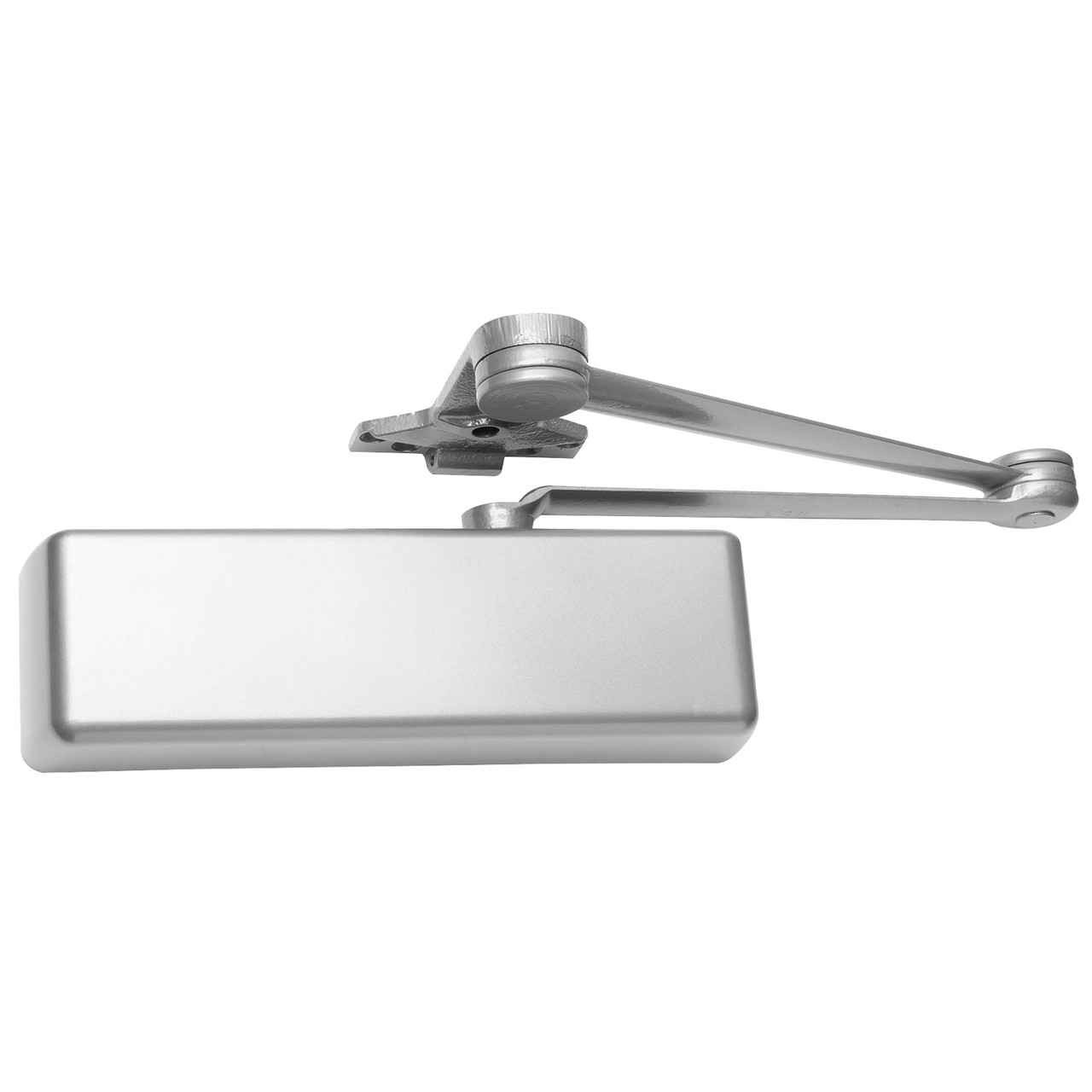
The LCN 4041 is the Super Smoothee — an oversized cast-iron cylinder with separate valves for backcheck, sweep, and latch, and the deepest field-service history in the category. The Norton 7500 is a lighter-cast, tri-packed unit (regular/parallel/top-jamb templating in one box) built to hit a lower list price while keeping Grade 1 certification. Both are the workhorse platforms for their respective heavy-duty surface-mounted closers lines.
Where does the LCN 4041 Super Smoothee win on high-abuse openings?
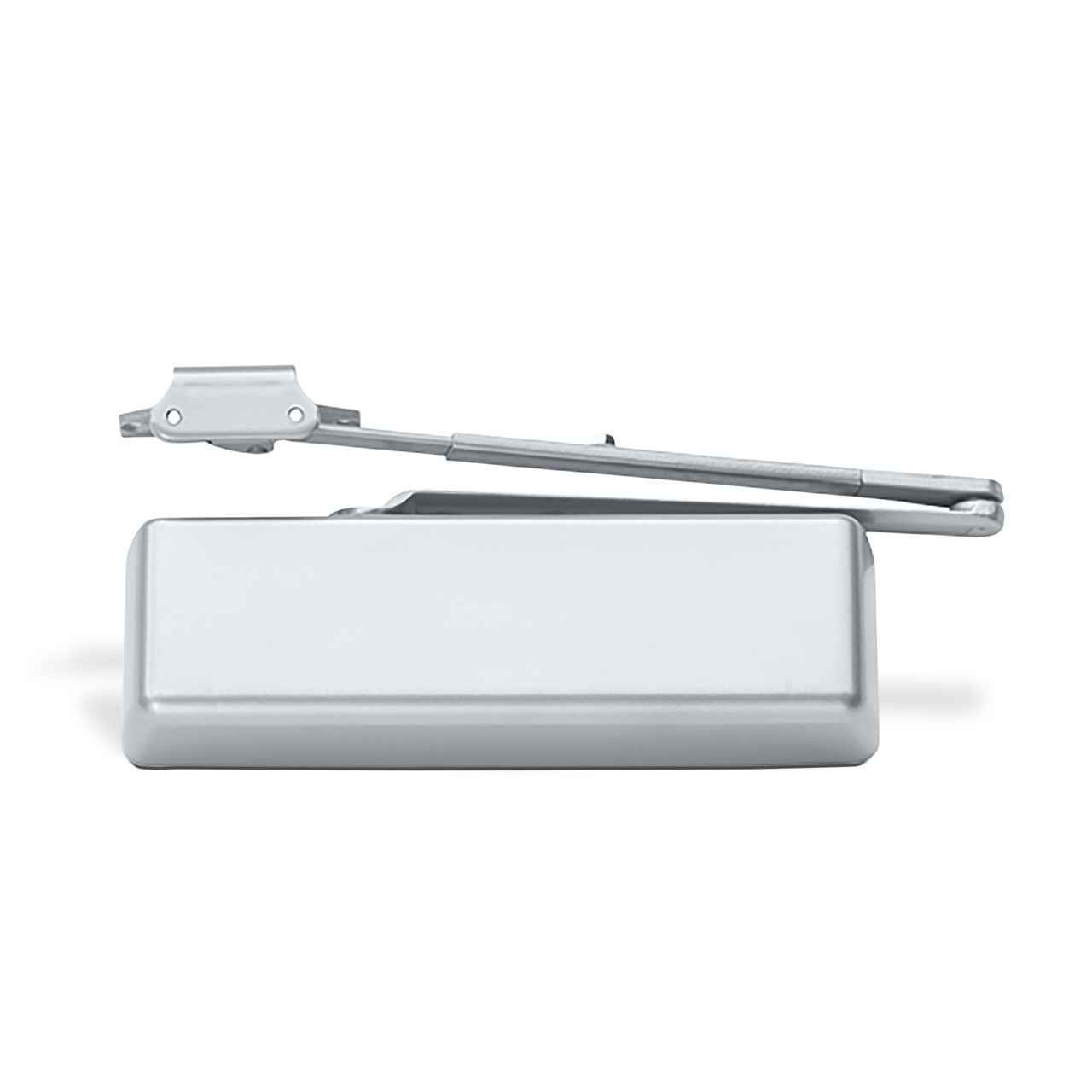
The 4041's advantage is body mass and valve isolation. The cylinder is larger, the piston bore is larger, and each hydraulic function has an independent, non-critical valve — meaning a tech can tune backcheck without affecting latch speed. On openings where the door gets kicked, pushed with carts, or held open against the closer, that isolation is what keeps the closer from drifting out of adjustment.
Spec the 4041 on K-12 corridor doors, hospital cross-corridor pairs, university residence halls, transit entrances, and any Class A retail vestibule. It is the default choice when the general contractor is going to walk away and you need the closer to still be in adjustment five years later. If you want the 10-million-cycle tested version at a small step up, the LCN 4040XP is the same body with an upgraded seal package — Allegion's manufacturer-tested life claim, above the Grade 1 threshold. Browse the full surface-mounted closer lineup for finish and arm variants.
Where does the Norton 7500 fit best for institutional and value Grade 1 work?
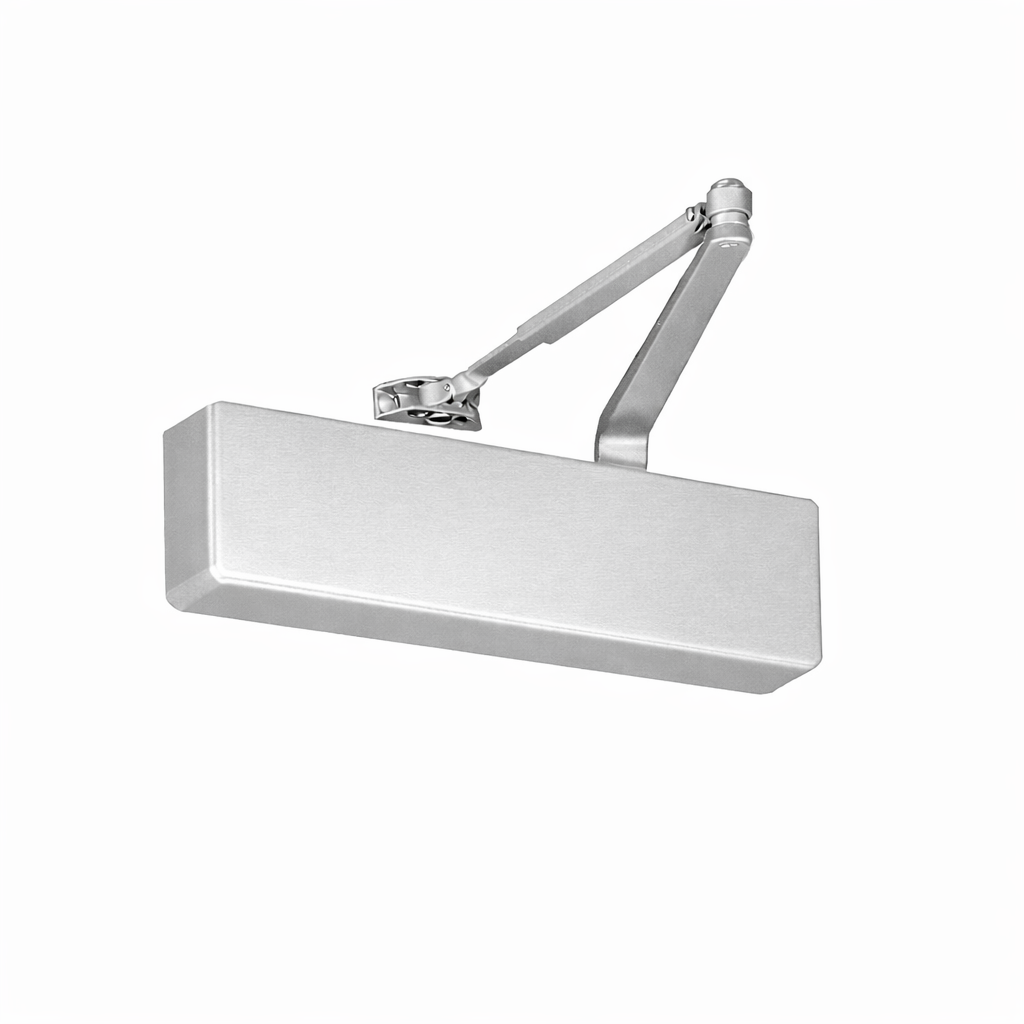
The 7500's pitch is straightforward: Grade 1 certification and tri-pack templating at a lower list price than the 4041. On openings that see moderate traffic and low abuse — office corridors, admin suites, meeting-room doors, back-of-house — the 7500 delivers the required cycle life without paying for the 4041's extra body mass.
It is a fair spec on tenant improvements, mid-market offices, light-commercial retail, and any opening where the closer is unlikely to be abused. Not the right call for schools or emergency-department openings. For lighter-duty applications outside Grade 1, consider our medium-duty door closers.
Choose LCN when:
- Opening is a school, hospital, transit hub, or high-abuse retail vestibule
- Long-term serviceability and parts availability matter more than first cost
- You need independent valve tuning for backcheck, sweep, and latch
- The spec calls for 10-million-cycle manufacturer-tested life (step up to the 4040XP)
Choose Norton Rixson when:
- Opening is a moderate-traffic office, admin corridor, or tenant improvement
- Grade 1 is required but budget is tight
- Tri-pack templating (regular/parallel/top-jamb in one box) simplifies GC ordering
- The closer will be maintained on a normal PM cycle, not neglected
Which arm configuration should you spec — regular, parallel, or slide track?
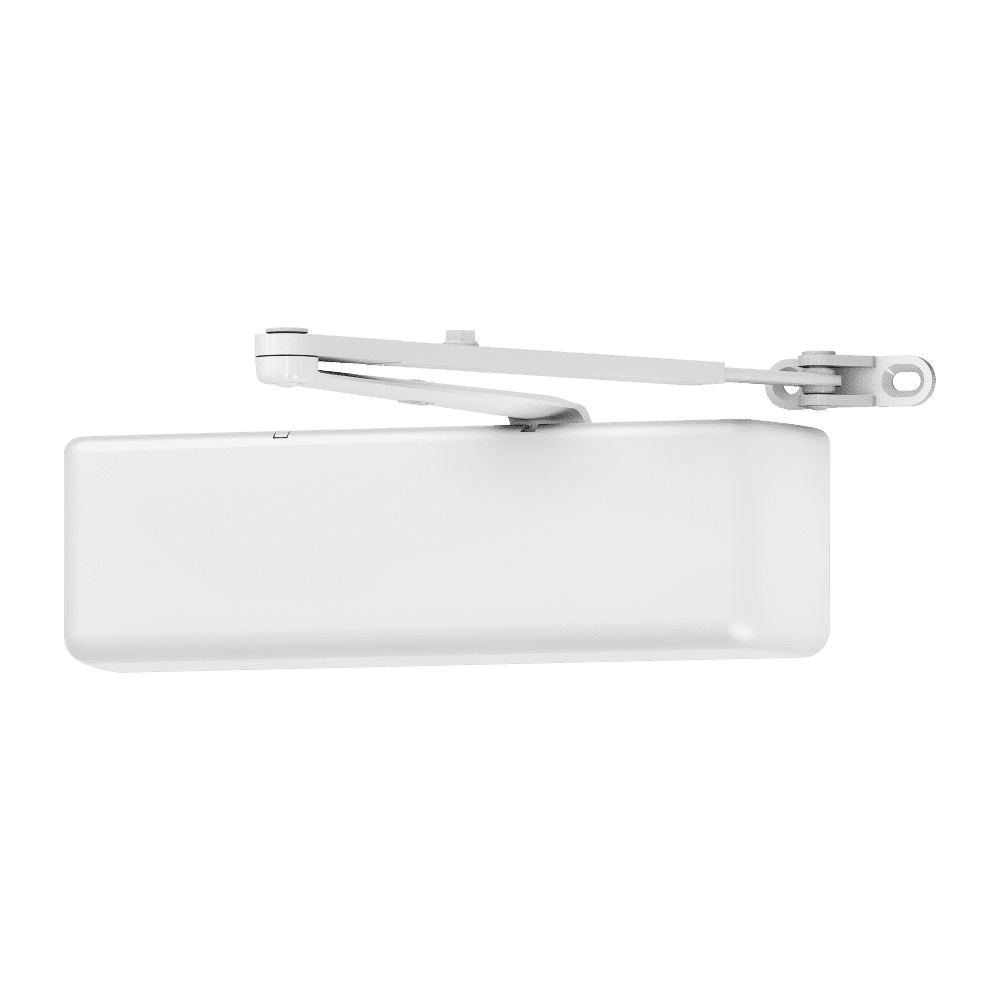
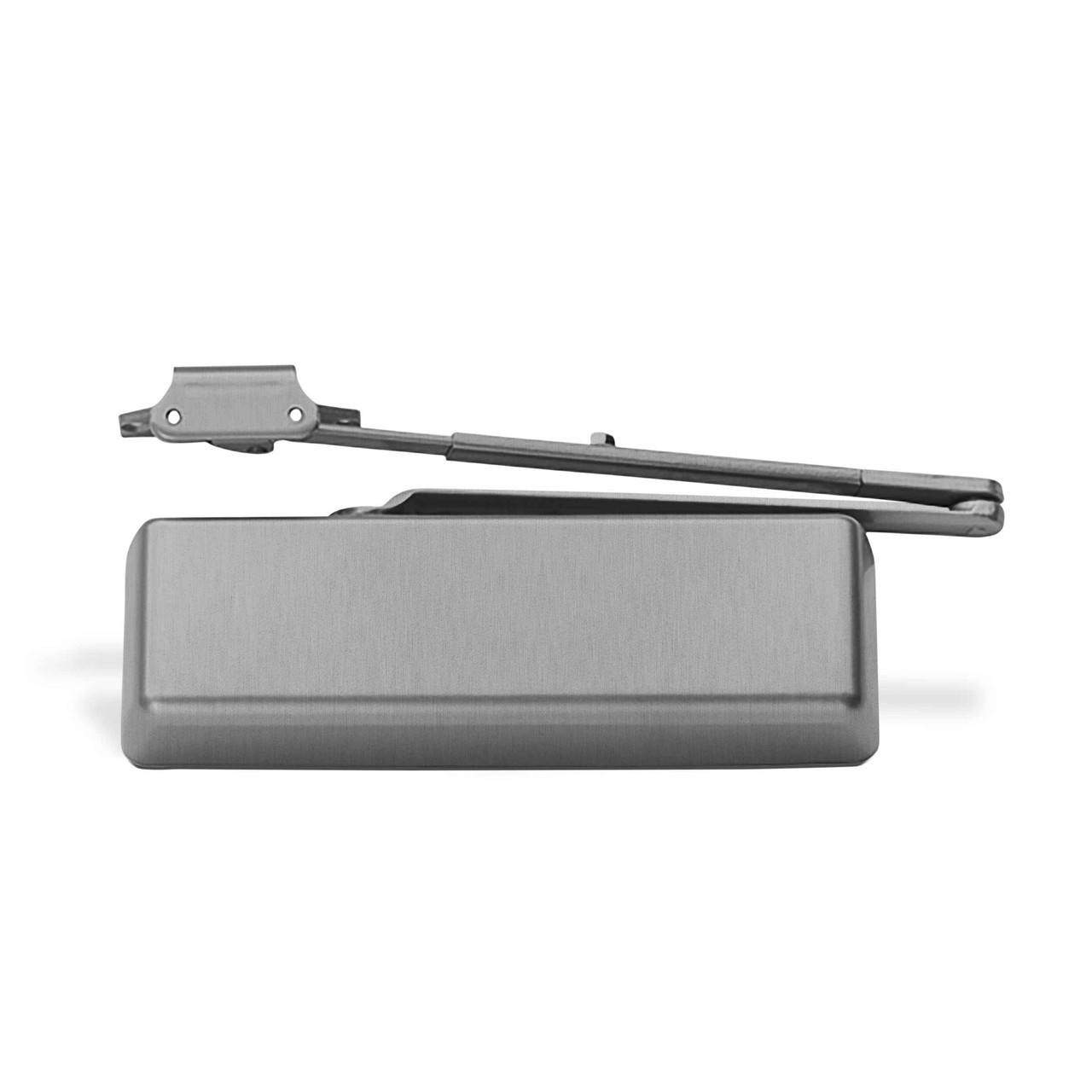
Arm choice drives more field behavior than brand. Regular arm mounts on the pull side of the door and delivers the strongest closing power per spring size — spec it where you can, especially on exterior out-swinging doors. Parallel arm mounts on the push side under a soffit bracket, gives a cleaner elevation, and is standard on interior push-side installs; expect a modest reduction in closing efficiency versus regular arm. The LCN 4111 is the parallel-arm variant of the 4040-family body.
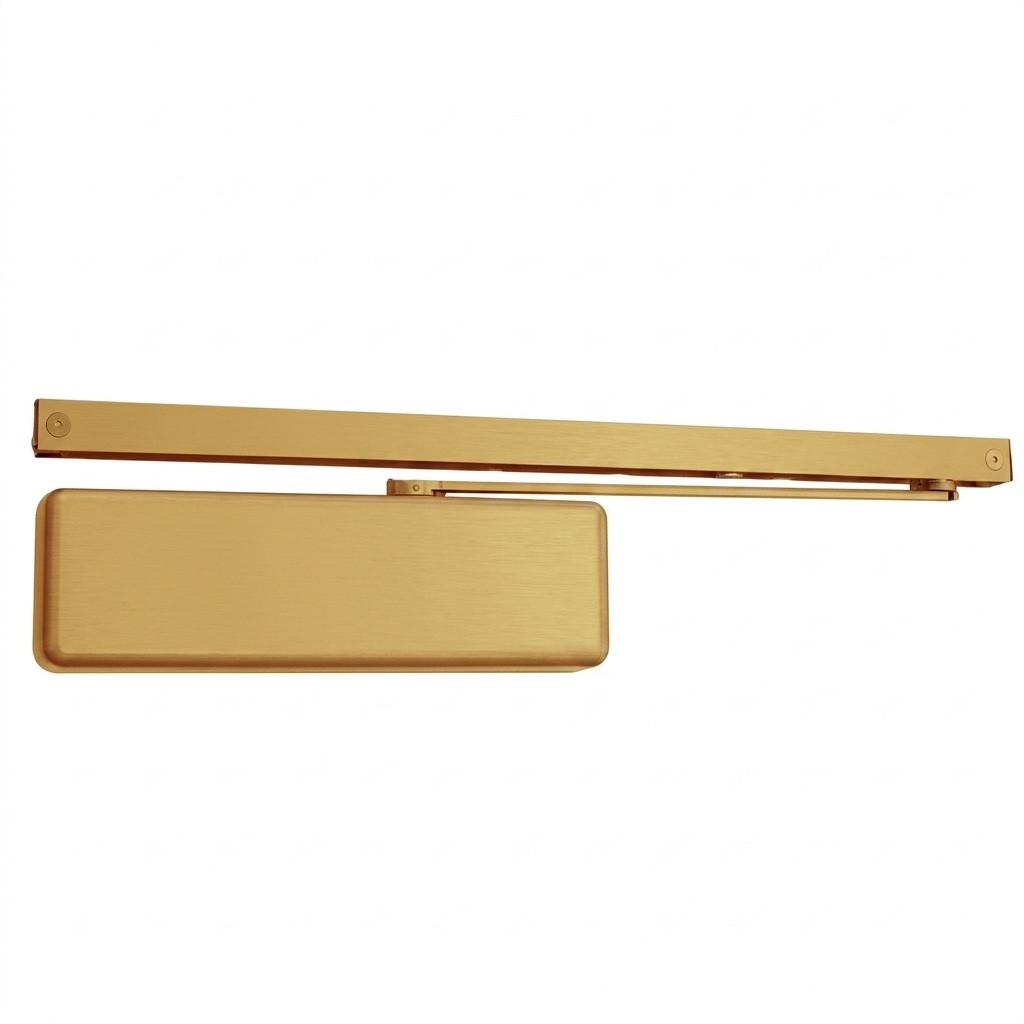
Slide track (also called cam-action track) hides the arm in a low-profile track and is the go-to on architectural openings where the parallel arm bracket is visually unacceptable. Track configurations reduce mechanical advantage further and require careful spring sizing. See our parallel arm closers and slide-track arm closers for full options on both platforms.
Specifying closers for a submittal? Browse our heavy-duty commercial door closers — Grade 1 stock in the finishes architects actually specify.
Is the LCN 4041 (or Norton 7500) ADA compliant?
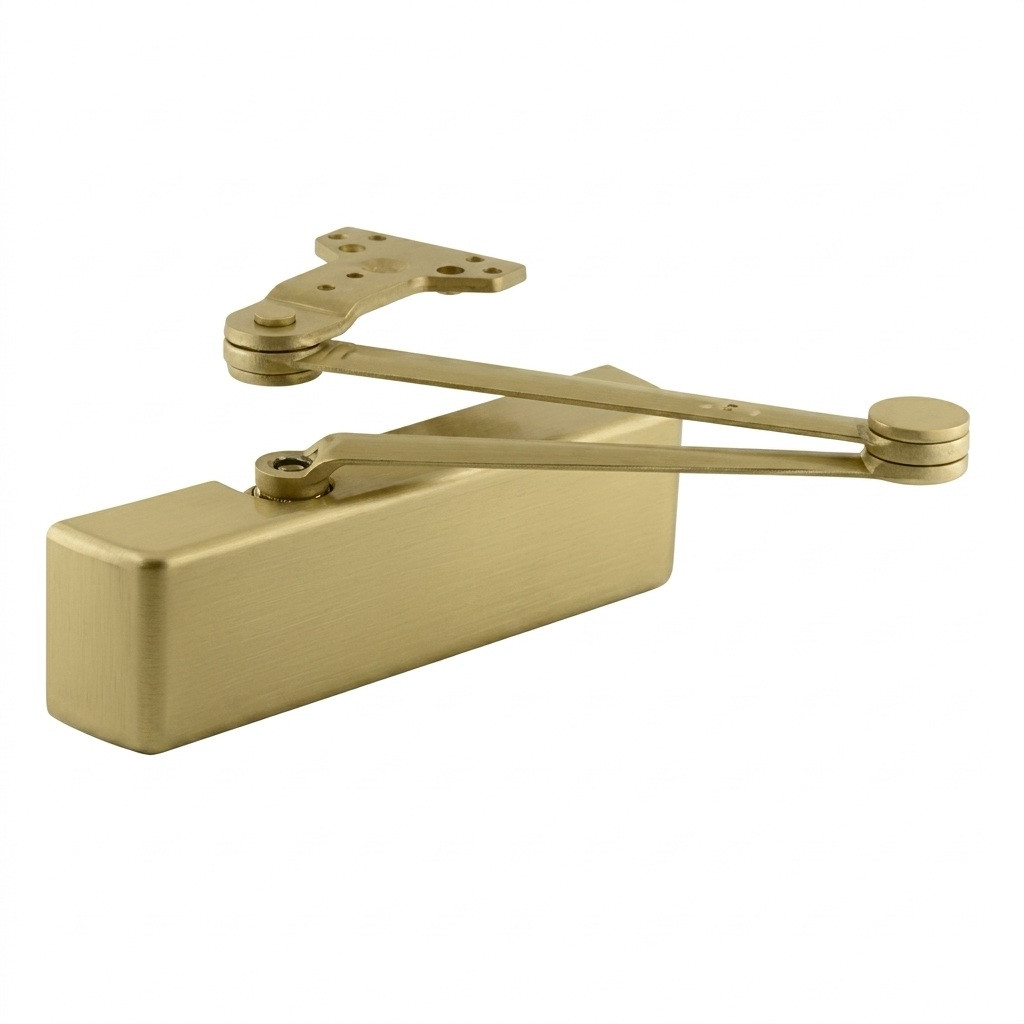
Both closers are ADA-compliant when properly sized and adjusted. ADA 2010 §404.2.9 caps interior door opening force at 5 lbf. Fire doors are exempt (they must close and latch), and there is no ADA maximum opening force for exterior doors. Compliance is a function of spring size selection and sweep-valve tuning, not brand — a 4041 sized to spring 3 on a light interior door meets the 5 lbf limit; a 4041 sized to spring 6 on the same door will not.
For openings where the closer must be delayed to give a wheelchair user time to clear the swing, spec a delayed-action cylinder. The delayed action ADA closers category has the LCN 4041-DEL and equivalent Norton variants.
What about hold-open, fire rating, and life-safety configurations?
NFPA 80 prohibits mechanical hold-open on fire-rated door assemblies — a mechanical hold-open arm defeats the closer's purpose in a fire event. On non-rated openings, mechanical hold-open arms are fine. On rated openings that need to stand open under normal conditions and close on alarm, use an electromagnetic hold-open closer released by the fire alarm system. The LCN 4040SE Sentronic integrates the closer and the electromagnetic hold-open in a single body — cleaner install than a closer plus a separate electromagnetic door holder.
Both the 4041 and 7500 are labeled for use in fire door assemblies tested to UL 10C, with assembly ratings up to 3 hours depending on door and frame construction. See fire and life safety closers for the electrified variants.
What about price, warranty, and 10-year serviceability?
Expect the LCN 4041 to carry a meaningful list-price premium over the Norton 7500 — the tradeoff is body mass and parts availability. LCN's aftermarket parts (arms, brackets, covers, cylinders) are the deepest in the category; a locksmith can rebuild a 4041 in the field in fifteen minutes. Norton 7500 parts are available but the ecosystem is thinner.
Manufacturer warranty terms apply on both.
Which closer should you spec for a high-traffic commercial door?
| Series | BHMA Grade | Cycle Rating | Best For | List Price Tier |
|---|---|---|---|---|
| LCN 4041 Super Smoothee | Grade 1 per A156.4 | Meets A156.4 Grade 1 cycle life | Schools, hospitals, transit, high-abuse retail | High |
| LCN 4040XP | Grade 1 per A156.4 | Meets A156.4 Grade 1 cycle life (manufacturer-tested to 10M) | Highest-abuse openings; spec-grade upgrade | High |
| Norton 7500 | Grade 1 per A156.4 | Meets A156.4 Grade 1 cycle life | Offices, admin corridors, moderate-traffic institutional | Mid |
| LCN 4111 (parallel arm) | Grade 1 per A156.4 | Meets A156.4 Grade 1 cycle life | Interior push-side installs, clean elevations | High |
| LCN 4040SE Sentronic | Grade 1 per A156.4 | Meets A156.4 Grade 1 cycle life | Fire-rated openings with electromagnetic hold-open | High |
Final verdict — which closer to spec for your opening?
Default to the LCN 4041 on any opening where abuse is expected, maintenance is uncertain, or the building will outlast the first tenant. Move to the Norton 7500 where budget pressure is real and traffic is moderate. On architectural openings that can't tolerate a parallel-arm bracket, spec a track-arm variant on either platform and size the spring accordingly.
Get the arm configuration right first, the spring size right second, and the brand third — in that order. A correctly-sized Norton 7500 with the right arm will outperform an oversized 4041 mounted the wrong way every time.
Shop heavy-duty commercial door closers — Grade 1 LCN and Norton Rixson stock in the finishes and arm configurations architects actually spec.