


You may also like

HID Single Gang, iClass SE Keypad Reader, 13.56 MHz, High Security, OSDP, Pigtail, Revision E, 5-16VDC, IP55, UL, FCC, Black Body
Model: HID921NNPNEK2038A
The iCLASS SE RK40 is part of HID Global's iCLASS SE platform for adaptable, interoperable access control. Designed for multi-factor authentication door applications requiring standard wall switch...
HID
$845.10
$481.05
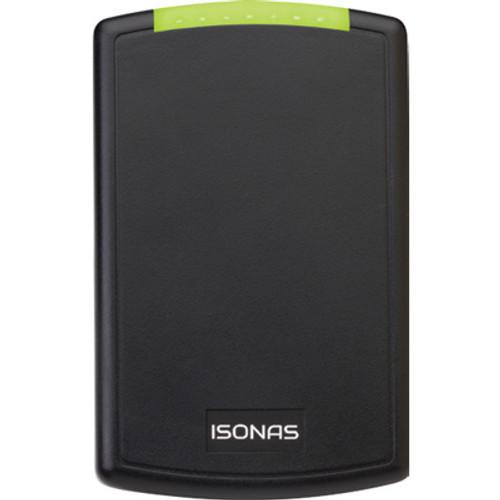
Isonas Pure IP, Wiegand MCT Reader, Wall Mount, Single Gang, 125khz, 13.56 MHz, 8 Wire Pigtail, Indicating LED's, Tamper Detection, 5-16VDC, IP55, FCC, IC, CE
Model: ISOR-1-MCT-W
Isonas Pure IP, Wiegand MCT Reader, Wall Mount, Single Gang, 125khz, 13.56 MHz, 8 Wire Pigtail, Indicating LED's, Tamper Detection, 5-16VDC, IP55, FCC, IC, CE
The Pure IP hardware family from Isonas...
Isonas
$650.59
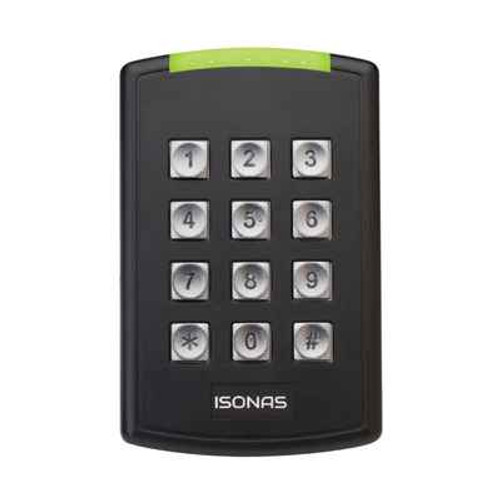
Isonas Pure IP, Wiegand MCT Reader with Keypad, Wall Mount, Single Gang, 12 Key, 125khz, 13.56 MHz, 8 Wire Pigtail, Indicating LED's, Tamper Detection, Backlit Keypad, 5-16VDC, IP55, FCC, IC, CE
Model: ISOR-1-MCT-WK
Isonas Pure IP, Wiegand MCT Reader with Keypad, Wall Mount, Single Gang, 12 Key, 125khz, 13.56 MHz, 8 Wire Pigtail, Indicating LED's, Tamper Detection, Backlit Keypad, 5-16VDC, IP55, FCC, IC, CE
The...
Isonas
$824.86
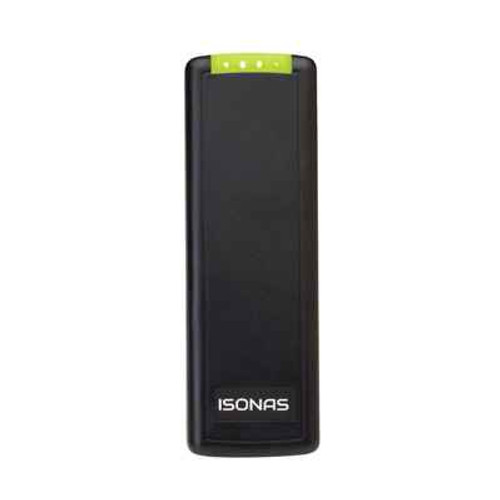
Isonas Pure IP, Wiegand MCT Reader, Mullion Mount, 125khz, 13.56 MHz, 8 Wire Pigtail, Indicating LED's, Tamper Detection, 5-16VDC, IP55, FCC, IC, CE
Model: ISOR-1-MCT-M
Isonas Pure IP, Wiegand MCT Reader, Mullion Mount, 125khz, 13.56 MHz, 8 Wire Pigtail, Indicating LED's, Tamper Detection, 5-16VDC, IP55, FCC, IC, CE
The Pure IP hardware family from Isonas also...
Isonas
$650.59
iCLASS SE R40 is part of HID Global's iCLASS SE platform for adaptable, interoperable access control. Designed for door applications requiring standard wall switch mounting, iCLASS SE R40 supports a broad array of credential technologies and a variety of form factors, including cards, fobs and mobile devices. Configurable to support HID Mobile Access.
Features:
- Adaptable – Interoperable with a growing range of technologies (iCLASS SEOS, iCLASS SE, iCLASS, MiFare Classic, MiFare DESFire EV1) and form factors including mobile devices.
- Powerfully Secure – The iCLASS SE platform’s secure identity object (SIO) data model provides an extra layer of encryption for additional protection of identity data
- Standardized Communications (OSDP) – Uses open supervised device protocol (OSDP) for secure communications between reader and controller.
Specifications:
- Dimensions: 3.3" x 4.8" x 1.0" (8.4 cm x 12.2 cm x 2.4 cm)
- Weight: 7.7 oz (220g)
- 13.56 MHz contactless smart cards supported: iCLASS Seos, iCLASS SE, iCLASS, MiFare Classic, and MiFare DESFire EV1
Manufacturer Resources
Product Specs
- Product Group:
- Electronic Access Controls
- Product Subgroup:
- Readers, Keypads and Credentials
- Product Type:
- Access Control Readers
- Subcategory:
- Credential Readers
- Commercial/Residential:
- Commercial
- Electronic:
- Yes
- Product Category:
- Electronic Access Controls
- Department:
- Door Hardware
HID 920PBNNEK2S077 – Frequently Asked Questions
1) Will the HID multiCLASS SE R40 reader fit on a standard single gang wall switch box?
Yes. The R40 is built for door openings that mount to a standard wall switch box, and the reader body measures 3.3 x 4.8 x 1.0 inches (8.4 x 12.2 x 2.4 cm). That footprint covers a single gang plate with room for the mounting screws, which is why it is the common pick for interior openings where the box is already in the wall.
2) Which card technologies does the HID multiCLASS SE R40 read?
It reads both frequencies: 125 kHz Prox and 13.56 MHz smart cards. On the 13.56 MHz side that means iCLASS Seos, iCLASS SE, iCLASS, MiFare Classic and MiFare DESFire EV1, plus fobs and mobile devices. That dual-frequency read is what lets a building run legacy Prox badges and new Seos credentials on the same door while the credential base is being changed over.
3) Does the HID multiCLASS SE R40 work with a Wiegand panel or does it need OSDP?
Both are covered. The 920PBNNEK2S077 is a Wiegand pigtail reader, so it wires straight into an existing Wiegand panel input, and the iCLASS SE platform also uses OSDP for supervised, secure communication back to the controller. If your panel is older Wiegand you can install it as-is; if you are moving to OSDP you are not buying a new reader to get there.
4) Do I need to replace the reader later to add phone credentials, or is this one mobile ready?
Mobile is built in. The R40 includes Bluetooth Smart and is configurable to support HID Mobile Access, so phones can be issued as credentials on the same reader that is already reading your Prox and iCLASS badges. No head-end swap and no second reader at the door when you roll mobile out.
5) Will the HID R40 work with the iCLASS and MIFARE badges already issued in my building?
If your existing badges are iCLASS, iCLASS SE, iCLASS Seos, MiFare Classic or MiFare DESFire EV1, the R40 reads them. It also reads 125 kHz HID Prox, so a site part way through a credential change does not have to finish the changeover before the readers go up. What it will not do is read a proprietary 13.56 MHz format outside that list.
6) What is the difference between the HID 920PBNNEK2S077 multiCLASS SE reader and the SDC IPRW proximity reader?
Both read 125 kHz proximity credentials and output Wiegand, so either one will talk to a Wiegand access control panel on a single-gang mount. The difference is credential range. The HID 920PBNNEK2S077 also reads 13.56 MHz smart cards - iCLASS Seos, iCLASS SE, iCLASS, MiFare Classic and MiFare DESFire EV1 - and Bluetooth Smart for mobile credentials, and it speaks OSDP for supervised, encrypted communication back to the controller. The SDC IPRW Series is a Wiegand proximity reader with 125 kHz HID compatibility. Choose the HID unit when the site is issuing smart cards or phone credentials, or migrating to them; the SDC unit covers an opening that stays on 125 kHz prox cards.
7) We only use 125 kHz HID prox cards and have no plans to change - is there a simpler reader than the multiCLASS SE?
Yes. The SDC IPRW Series is a Wiegand proximity reader with 125 kHz HID compatibility, which is the whole of what a prox-card-only site needs: it reads the cards already in the wallet and wires to the same Wiegand input on the panel. The HID 920PBNNEK2S077 adds 13.56 MHz smart card support, Bluetooth Smart for mobile credentials and OSDP output on top of 125 kHz prox - capability a site that stays on prox never turns on. If there is any chance of moving to smart cards or phone credentials within the life of the hardware, the HID reader covers both eras without a second trip to the door.
8) What is the difference between the HID multiCLASS SE R40 and a plain 125 kHz Wiegand prox reader like the SDC IPRW?
The SDC IPRW Series is a Wiegand proximity reader with 125 kHz HID compatibility, so it reads legacy Prox badges and reports over Wiegand. The HID R40 does that too, and adds 13.56 MHz smart card reading (iCLASS Seos, iCLASS SE, iCLASS, MiFare Classic, MiFare DESFire EV1), Bluetooth Smart for phone credentials, and OSDP. If the site is staying on 125 kHz Prox and nothing more, the single technology reader is the simpler part. If you intend to migrate credentials or issue mobile, the multi technology reader is the one that survives the migration.
9) Is the HID R40 a pigtail reader or does it have a terminal block?
Pigtail. The 920PBNNEK2S077 ships with a flying lead pigtail, so you are splicing to your home run inside the gang box rather than landing wires on screw terminals at the reader. Plan for wire nuts or crimps and enough box depth behind the reader for the splice.
10) What does the SIO secure identity object on the iCLASS SE platform actually do for me?
SIO is an added layer of encryption wrapped around the identity data on the credential itself, on top of the card technology's own security. Practically, cloning a badge is harder because copying the card's raw ID does not reproduce the encrypted identity object the reader expects. For a security integrator specifying against a card cloning concern, that is the reason to run SE platform readers rather than plain Prox.
How fast can I get the HID 920PBNNEK2S077 delivered?
Most orders ship the same day from our distribution partners, with quick delivery throughout the
continental
U.S.
Need it urgently? Contact Us for expedited shipping options.
Can I return it if it doesn’t work for me?
Yes—ZenSupply offers a hassle-free return policy. If the product isn’t the right fit,
reach out to our support team for a return authorization or setup a return by following our return instructions.
Does the HID 920PBNNEK2S077 come with a warranty?
Absolutely. The HID 920PBNNEK2S077 is backed by a manufacturer’s warranty.
For full warranty terms, check the product documentation or Contact Us.
How do I get technical support or installation help for the HID 920PBNNEK2S077?
You can call, text, or email our expert support team for fast answers. We’re here to help with
product
selection,
installation tips, and troubleshooting. Contact Us
Why buy the HID 920PBNNEK2S077 from ZenSupply?
ZenSupply makes it easy to get the commercial door hardware you need—fast shipping, expert support,
and
rewards on
every order.
Our team is always ready to help you choose the right product for your project.