


Electric Door Strike Buying Guide: Specs, Voltage & Top Picks
Products in this guide
At a Glance
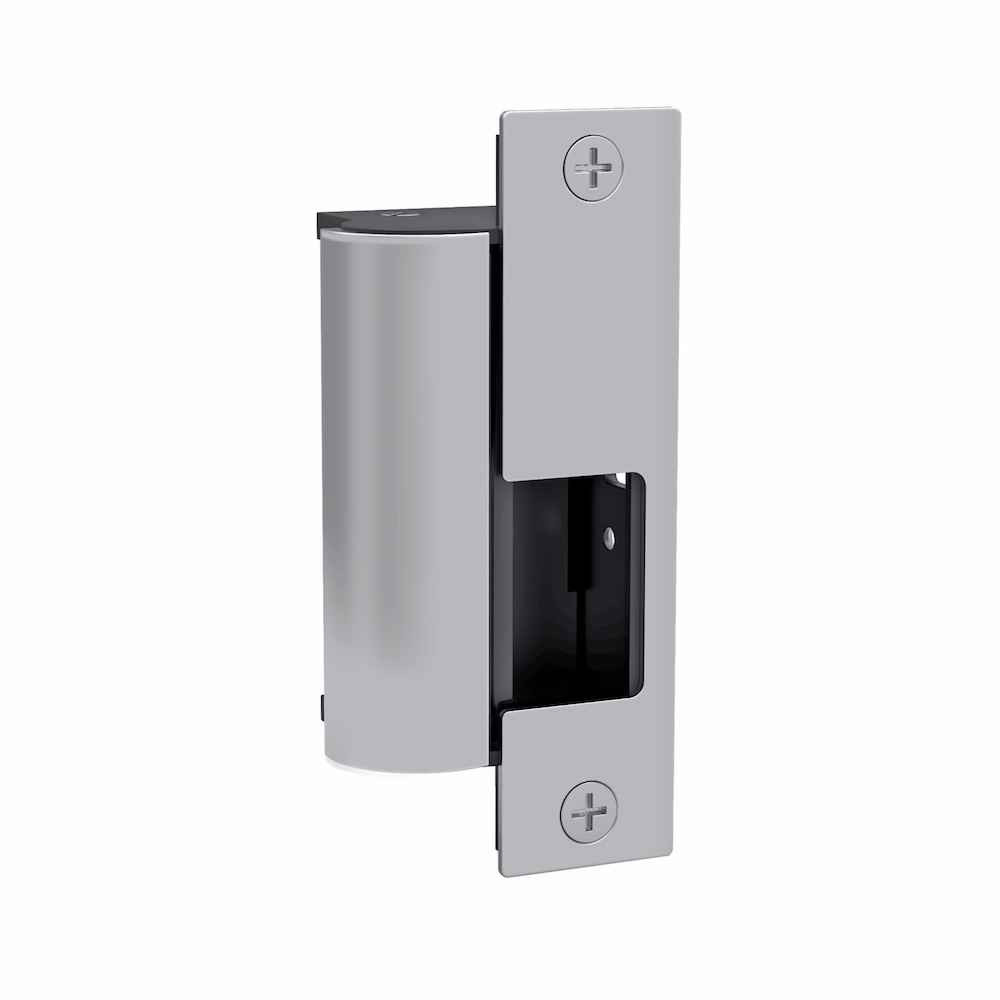
- HES 1006 — the universal cylindrical/mortise workhorse; 12/24V field-selectable, fail-secure or fail-safe by mode, fits most ANSI strike preps.
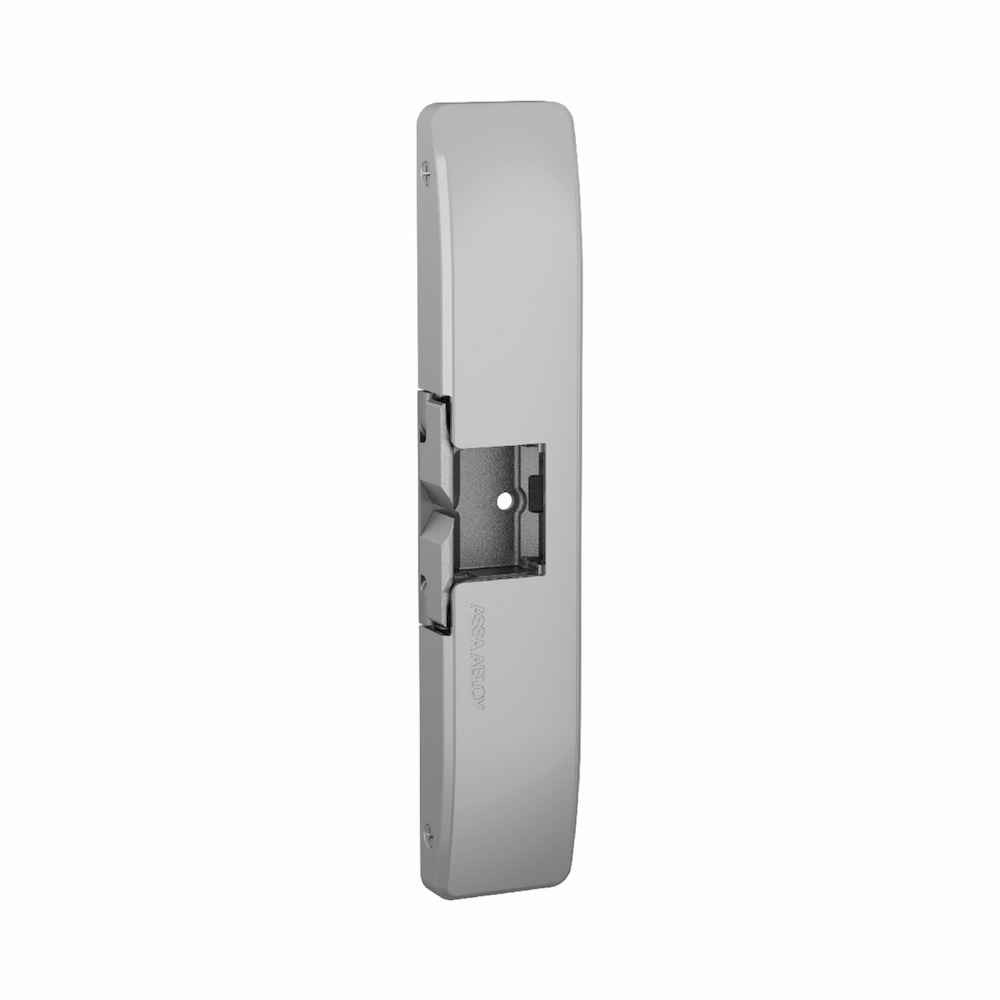
- HES 9600 / 9500 — surface-mounted strikes purpose-built for rim exit devices where you can't cut the frame.
- Adams Rite 7430/7431 — the default for narrow aluminum stile-and-rail entrances with Adams Rite deadlatches.
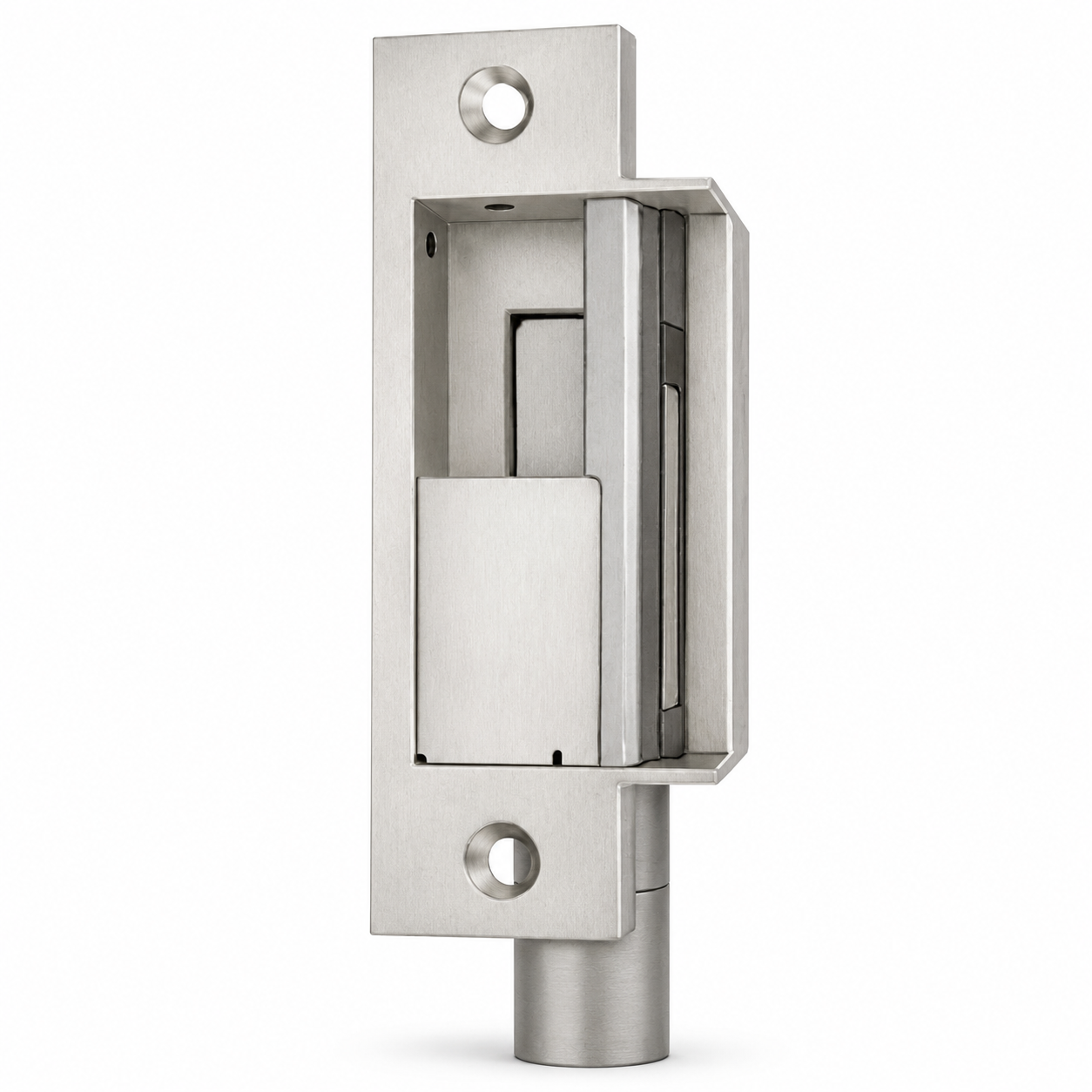
- SDC 45 / 55 Uniflex — field-reversible fail-safe/fail-secure, deep faceplate library for retrofits into non-standard preps.
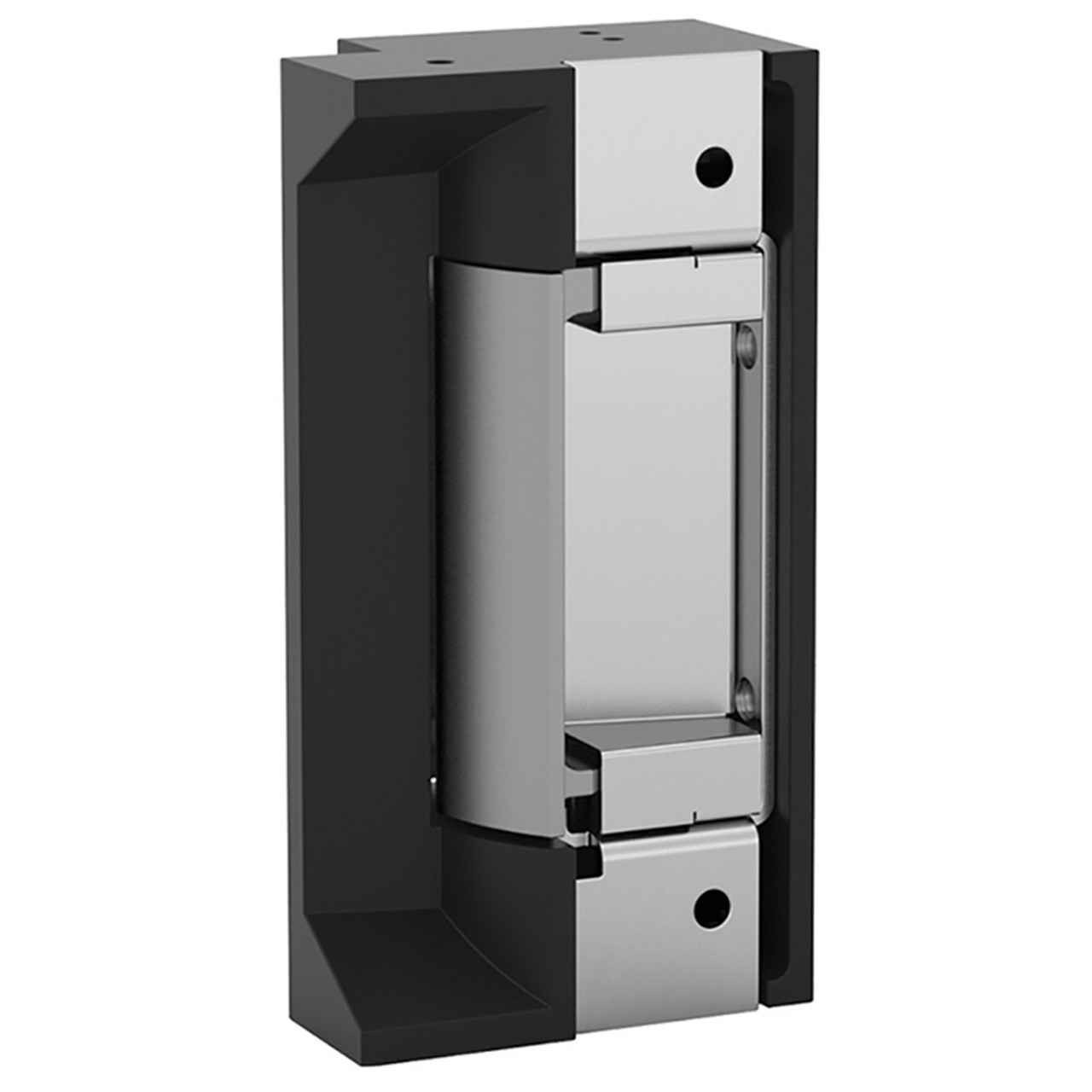
- Securitron MUNL / UNL — no-cut mortise/cylindrical retrofit strikes for openings you can't take out of service.
What is an electric door strike and how does it work?
An electric strike replaces the fixed strike plate on the door frame with an electrified keeper that pivots to release the lock's latchbolt on command. The lockset stays mechanical — the strike is what the access control system, keypad, or intercom actuates.
Egress is always mechanical: turning the lever or pushing the exit device retracts the latch and the door opens regardless of strike power state.
Because the strike lives in the frame, it's the most common way to add access control to an existing opening without changing the lockset. Browse the full range of commercial electric strikes by lock type and faceplate.
Fail-safe vs fail-secure electric strikes: which do you need?

Fail-secure (also called "fail-locked"): power applied = strike unlocks. Loss of power = strike stays locked. The lever/exit device still retracts the latch mechanically for egress. This is the default for perimeter and tenant doors — you want the door secured when power drops.
Fail-safe (also called "fail-open"): power applied = strike locked. Loss of power = strike releases. Required for stair re-entry doors under NFPA 101 and on doors tied to fire-alarm release. Never use fail-safe on a fire-rated opening unless the strike is specifically listed for fire door service — most fail-safe modes are not.
Field-selectable strikes (HES 1006, SDC 55 Uniflex, Adams Rite 7430) let you pick the mode at install with a jumper or reversible solenoid — worth the modest premium to avoid re-ordering. Review fail-safe and fail-secure electric strike options to compare.
How to match an electric strike to your lock (cylindrical, mortise, rim exit)
Match by three things: lock type, latchbolt projection, and frame material. Get any of them wrong and the strike won't seat, won't release, or won't hold under a preload.
- Cylindrical lockset (½"–⅝" latch): HES 1500, HES 5000, or SDC 45. Standard ANSI 4-7/8" faceplate cutout.
- Mortise lockset (¾" latch, often with deadbolt): HES 1006, HES 8500, or SDC 55 Uniflex. If the mortise has an active deadbolt, spec a strike that keeps the deadbolt captured (HES 1006CS/CAS, SDC 55-D/E/F). See our commercial mortise locks for compatibility.
- Rim exit device: use a surface-mount strike — HES 9600, HES 9500, HES 9400, or HES 9100. These sit on the frame face and clear the rim device's Pullman latch. Standard mortise strikes do not work here. Match to the specific rim panic exit device in the opening.
- Aluminum narrow-stile with Adams Rite deadlatch: Adams Rite 7100, 7130, or the field-selectable Adams Rite 7430 / 7431 Ultraline.
- No-cut retrofit (existing frame you can't machine): Securitron MUNL for mortise or Securitron UNL for cylindrical.
Do electric strikes need 12V or 24V power?
Most modern commercial strikes are dual-voltage 12/24 VDC auto-sensing (HES 1006, HES 1500, HES 5000, HES 8000, HES 9600, Adams Rite 7430). That flexibility means you spec once and match whatever power supply is on-site.
Rules of thumb: pick 24 VDC for long wire runs (over ~100 ft) to keep voltage drop from starving the solenoid, and for panel-fed installs where a shared 24V supply feeds multiple openings. 12 VDC is fine for short runs and single-door installs tied to a local reader or intercom.
Avoid AC on continuous-duty strikes — the buzz is audible and hard on the coil. If your existing transformer is AC, add a bridge rectifier (HES 2001-1 or 2001M) or step up to a proper DC supply like the SDC 631 or SDC 632. Size the supply for inrush (typically 3–5x holding current for the first few milliseconds) plus the sum of holding currents. For multi-door jobs, browse access control power supplies.
Need an electric strike now? Browse our electric strike inventory — HES, Adams Rite, SDC, and Securitron in stock with same-day quoting on faceplate options.
Are electric strikes fire-rated and code compliant?
Fire-rated openings require a strike listed for use in a UL 10C fire door assembly. HES publishes fire-listed variants across the 1006, 8000, 9600, and 9500 lines; Adams Rite fire-lists specific 7400 series configurations. The strike itself is listed for use in an assembly — assembly rating durations (up to 3 hours depending on door and frame construction) attach to the door and frame, not the strike.
Fire-door strikes must be fail-secure. A fail-safe strike on a fire opening would release under alarm-triggered power loss and defeat the door's latching requirement per NFPA 80 (2025 edition). The only exception is a strike with a UL fire label that specifically covers fail-safe operation — read the label, don't assume.
Other standards to know: ANSI/BHMA A156.31 covers electric strike grading, UL 1034 covers burglary-resistant electric locking mechanisms, and UL 294 covers the access control system the strike ties into.
How do the best electric door strike brands compare?
HES (Assa Abloy) owns the middle of the market — the 1006, 1500, 5000, 8000, and 9600 lines cover essentially every commercial lock/frame combination, and the SMART Pac III bridge rectifier plus field-selectable voltage makes them the low-friction spec. If you're standardizing across a portfolio, HES is the default.
Adams Rite (Assa Abloy) is the answer for aluminum storefront and narrow-stile applications — the 7100/7400 families were designed around Adams Rite's own deadlatches and hookbolts and there's no real substitute on those frames.
SDC is strong on field-reversible mode selection and a deep faceplate library, which makes the 45 and 55 Uniflex series the retrofit specialist's choice when the existing prep isn't standard.
Securitron (Assa Abloy) built its reputation on the MUNL/UNL no-cut retrofit strikes — the play is openings that can't be taken out of service or frames that can't be re-machined. Von Duprin sells strikes as part of its exit device ecosystem; on rim exit conversions we typically pair a Von Duprin device with an HES 9600 or 9500 rather than a Von Duprin-branded strike because the HES faceplate library is broader.
Choose HES when:
- You want one SKU that handles 12V and 24V without re-ordering
- The opening is a standard cylindrical or mortise lock in a metal frame
- You need a fire-listed strike and want a broad selection of fire-labeled variants
- You're pairing to a rim exit device (9600/9500/9400 surface-mount line)
Choose Adams Rite when:
- The opening is aluminum storefront with an Adams Rite deadlatch or hookbolt
- You need a narrow 1-1/4" faceplate for a stile-and-rail frame
- The existing lockset is an MS1850 deadbolt or 4500/4900 deadlatch
Choose SDC when:
- The frame prep isn't standard and you need faceplate options
- You want field-reversible fail-safe/fail-secure without a jumper hunt
- You're building a power-supply-plus-strike package from one vendor (600-series supplies pair natively)
Choose Securitron when:
- You cannot machine the frame — MUNL and UNL install into the existing strike pocket
- The opening can't be taken out of service for an extended prep
| Brand/Series | Lock Type | Voltage | Mode | Best For | List Price Tier |
|---|---|---|---|---|---|
| HES 1006 | Cylindrical / mortise (with or w/o deadbolt) | 12/24 VDC auto | Field-selectable FS/FSE | Universal ANSI retrofit workhorse | Mid |
| HES 9600 | Rim exit device | 12/24 VDC auto | Field-selectable FS/FSE | Rim exit conversions where frame can't be cut | Mid |
| Adams Rite 7430 | Aluminum stile w/ Adams Rite deadlatch | 12/24 VDC | Field-selectable FS/FSE | Narrow-stile storefront entrances | Mid |
| SDC 55 Uniflex | Cylindrical / mortise, 3/4" latch | 12/24 VDC | Field-reversible FS/FSE | Non-standard preps needing faceplate flexibility | Mid |
| Securitron MUNL | Mortise (no-cut retrofit) | 12/24 VDC | Fail-secure | Retrofit into existing frame prep — no machining | High |
| HES 5000C | Cylindrical, 1/2"–5/8" latch | 12/24 VDC auto | Field-selectable FS/FSE | Cost-effective ANSI cylindrical retrofit | Value |
What installation tips matter most for electric strikes?
Three things kill more strike installs than any others: frame prep, preload, and wire gauge.
Frame prep: template the cutout before you cut. HES ships metal template kits (HESCUT-MTK, 9000-MTK) for exactly this reason. For hollow-metal frames without an accessible back box, the HES SMB surface mounting box lets you skip the in-frame cut entirely. Grout-filled frames need a raceway plan before you start drilling.
Preload: if the door is warped, weather-stripped tight, or the closer is over-tensioned, the latch pressures the keeper and it won't release. Spec a preload-rated strike (HES 1006 handles up to 70 lbs of preload) or fix the door alignment first. Chronic preload is the #1 warranty return.
Wiring: 18 AWG minimum for runs under 100 ft at 24V; step up to 16 AWG for longer runs or 12V. Add a bridge rectifier (HES 2001M) if the existing supply is AC. For power transfer from frame to door on electrified locks paired with a strike-plus-mag combo, use dedicated power transfer devices rather than a door loop.
How do you integrate electric strikes with card readers and access control?
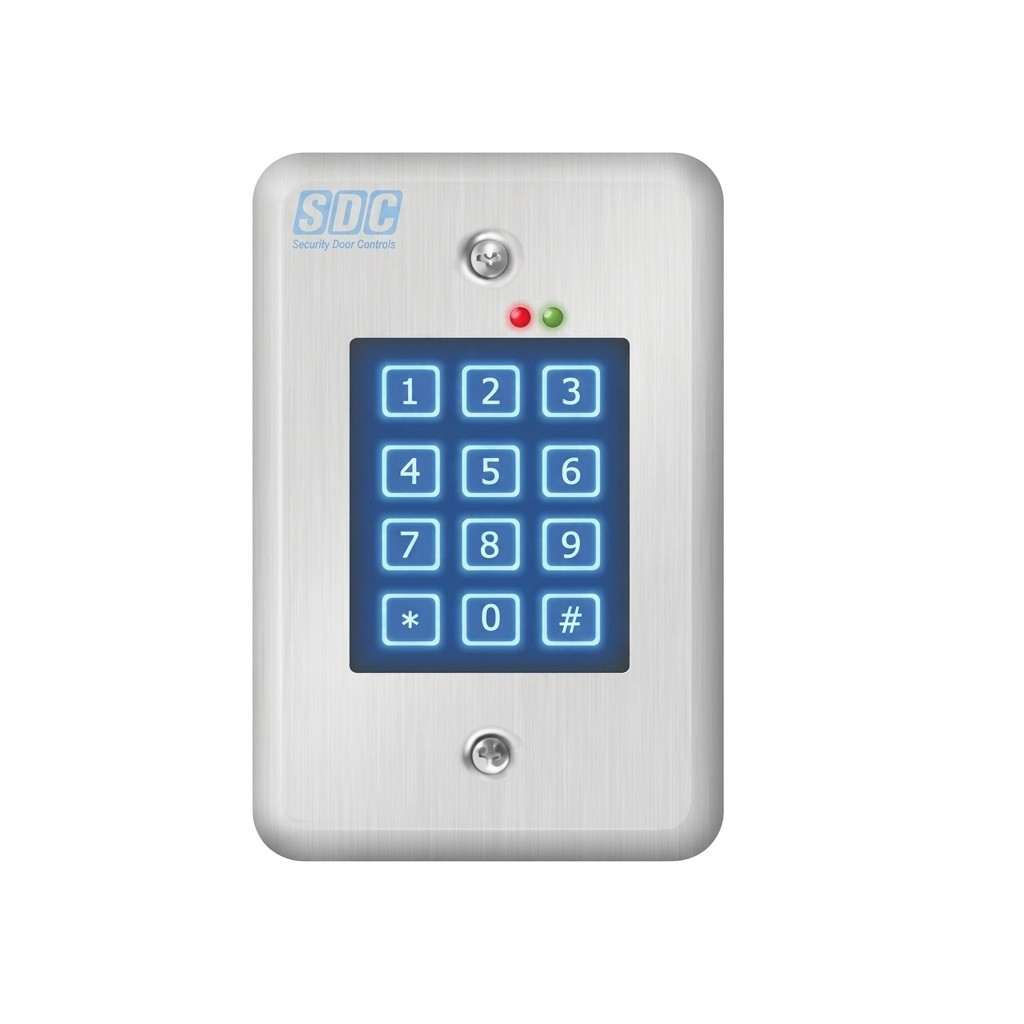
The strike sits at the end of the access-control output relay. Reader authenticates the credential, controller closes a dry contact for the programmed unlock duration (typically 3–7 seconds), and the strike releases the latch for that window.
Two integration details worth getting right: the relay contact rating must handle the strike's inrush (most controllers are fine at up to 2 A resistive, but add a snubber diode across the coil to protect the relay from back-EMF), and the request-to-exit sensor on the secure side should shunt the reader so a valid exit doesn't fire a door-forced alarm. Standalone SDC EntryCheck 920 keypads combine reader, controller, and relay in one housing for single-door installs; for networked openings, pair the strike to enterprise keypads and card readers.
For openings tied to fire alarm release, wire the strike's power through a normally-closed fire alarm relay so alarm activation kills strike power. On a fail-secure fire-rated opening that's the correct behavior — the door stays latched. On a fail-safe stair re-entry door, that same drop releases the strike as required by NFPA 101 (2024 edition).
Spec the right strike the first time and you avoid frame rework, warranty returns, and code trouble. Shop commercial electric strikes from HES, Adams Rite, SDC, and Securitron — or send us the lock model and frame photo and we'll spec the strike, faceplate, and power supply together.